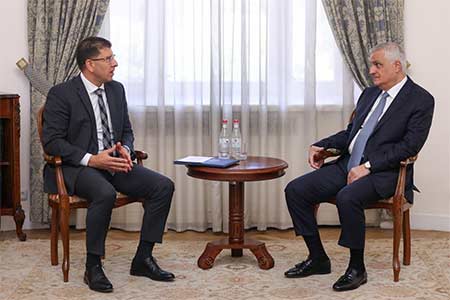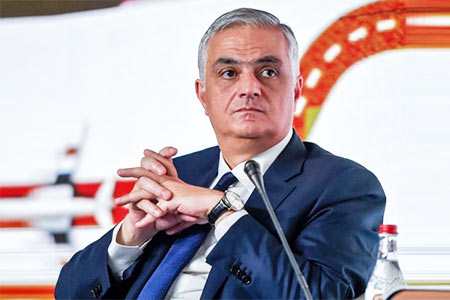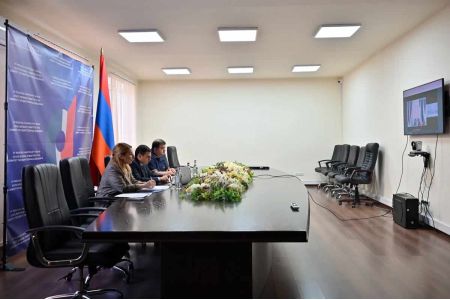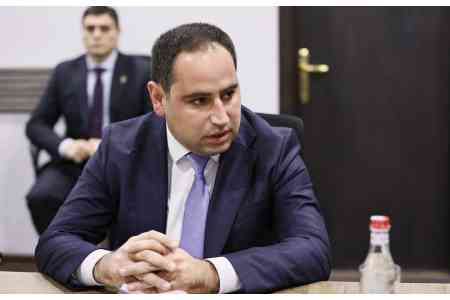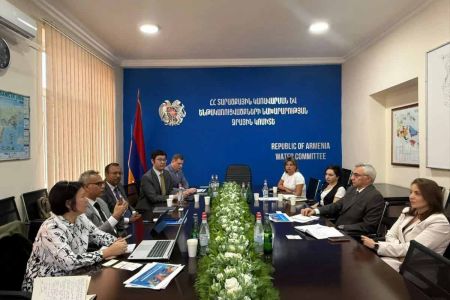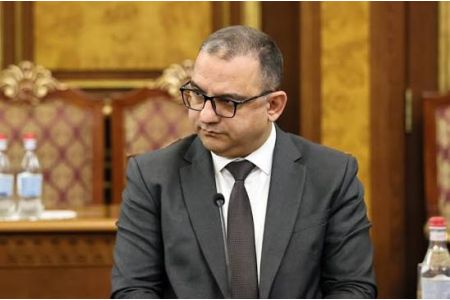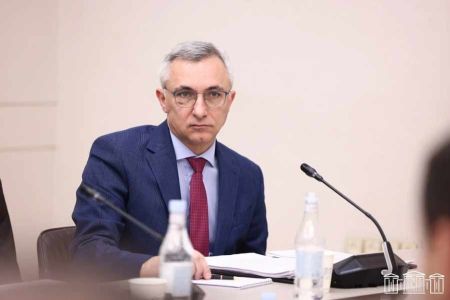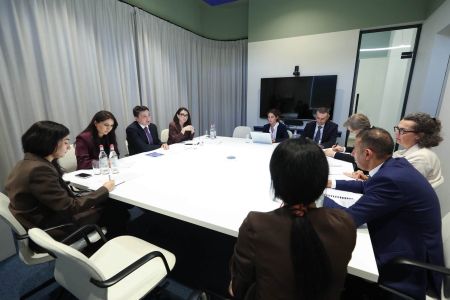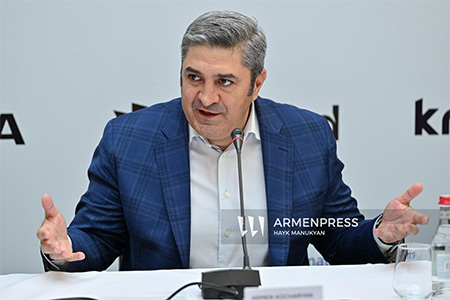


ArmInfo. Deputy Minister of Education, Science, Culture and Sports of the Republic of Armenia Karen Trchunyan received representatives of the Asian Development Bank (ADB).
According to the press service of the ministry, the deputy minister stressed that cooperation with the ADB is of great importance in terms of ensuring the continuity of support for reforms in the education system of Armenia. Karen Trchunyan informed that the National Assembly adopted the state program for the development of education until 2030, according to which, in order to achieve the goals, it is planned to develop and approve an action plan until 2026.
In the field of primary and secondary vocational education, a new draft law has been put into circulation, which establishes provisions for on-the-job training. These programs emphasize the need to strengthen the education-science-labor market linkage, which involves cooperation with the private sector.
In this context, the possibilities of ADB support in the development of effective models of cooperation between the public and private sectors were discussed.
"We appreciate your approaches and are ready to develop a roadmap for public-private partnerships using best practices with a clear goal of achieving tangible results," the Deputy Minister said.
During the discussion, it was noted that the roadmap for cooperation between the public and private sectors implies the promotion of development and management of infrastructure, the provision of services, which is also aimed at strategic plans for the education sector.
It should be reminded that the Government of Armenia and the Asian Development Bank will allocate 986 million drams, of which 80% are ADB loans, 20% are the contribution of the RA government. 46 Armenian schools have become beneficiaries of the program, 14 of which are in the capital and, accordingly, 32 are located in the regions of the country. Educational institutions were selected taking into account the year of their construction, the level of seismic safety and technical condition. After the completion of the work, the schools will become earthquake-resistant, even in the event of a 9-magnitude earthquake. It is reported that elevators will also be installed in schools and conditions for inclusive education will be provided. In total, safe educational conditions will be provided for 20,000 schoolchildren.