


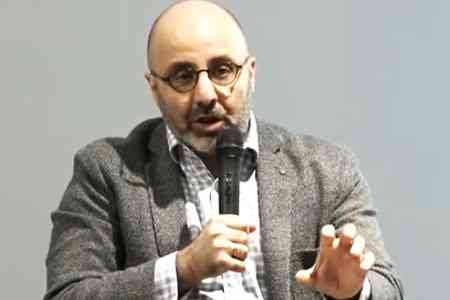
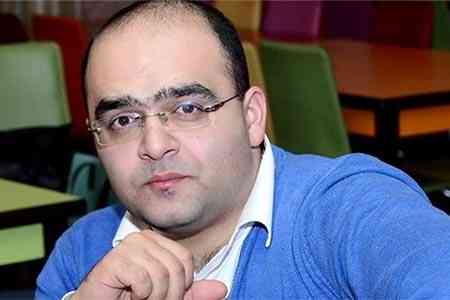
ArmInfo.Let's increase funding for an inefficient healthcare system and do a good deed. according to Tigran Jrbashyan, the Director of Management Advisory at Ameria Advisory, this is exactly how the Mandatory health insurance system model proposed by the RA government, represented by the Ministry of Health, can be described.
<When looking at the figures, one can notice that a very peculiar situation is developing in the healthcare system - it is one of the most inefficient. This is due to a number of reasons>, the economist said in an interview with civil.net.
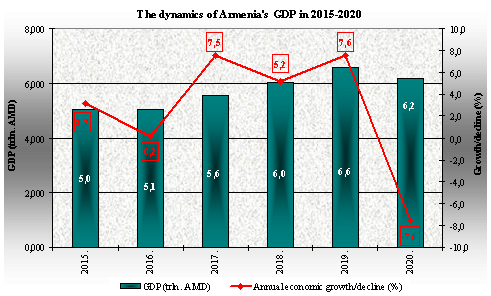
Thus, when considering the current expenditures on health care (expenses of the state, society) as a percentage of GDP, it can be noted that this indicator in Armenia for 2020 amounted to more than 12% of GDP and exceeds the indicators of such countries as Israel (8%), Italy ( 10%), Finland (10%), and comparable to France (12%) or Germany (13%). "These figures indicate that healthcare is a very expensive pleasure for the population of Armenia," Tigran Jrbashyan said.
At the same time, over the past 20 years, per capita health spending in Armenia, both public and private, has grown almost 20-fold, from $26 in 2000 to $524 in 2019. As a result, the cost of medical services in Armenia is currently much higher than in other countries of the region. According to this indicator, Armenia surpasses the indicators of both Georgia ($291) and Azerbaijan ($193). "It would seem that with such spending on health care, the situation with health care should have been more favorable," the economist said.
However, according to 2019 data, non-communicable diseases are the cause of about 93% of deaths in Armenia (with coefficient of 829, while in 1990 the figure was 528). According to this indicator, Armenia exceeds not only the world average (73%), but also the comparable countries (85%).
Armenia also regressed in terms of the healthcare quality and accessibility index - from 71 in 2016 to 63.2 in 2019. "We have created such an inefficient healthcare system that back in 2015 Armenia had 4.2 hospital beds per 1,000 inhabitants, which is more than 1.5-fold the global average of 2.7 beds. This indicator of Armenia is comparable with a number of Western European countries, including Greece (4.2), Luxembourg (4.3), Switzerland (4.4), and exceeds the similar indicator of such countries as Sweden (2.1), Norway (3.5) and Denmark (2.6).
In terms of the number of doctors per 1,000 inhabitants, Armenia (4.4 doctors per 1,000 inhabitants) outperforms both the world average (1.7) and the averages of upper-middle-income countries (2.3) and high-income countries (3.7) . Armenia occupies a leading position in terms of the number of MRIs per 1,000 inhabitants and outperforms many advanced countries in Western Europe. It turns out that we spend more, but are much inferior in quality and are similar to third world countries, he stressed.
According to the expert, the secret lies in the healthcare financing model that has been developed for many years. <For the effective implementation of state funding, it is necessary to have certain protocols, the so- called standards for the treatment of diseases. This has been discussed for many years, but the standards have not been developed>, Jrbashyan noted. As a result, the same disease is treated differently in different medical institutions, depending on the degree of closeness to the doctor or clinic management.
All this, according to Jrbashyan, has led to the fact that the system works autonomously, for itself, for its own sake, and not for the sake of achieving a result. All the beneficiaries involved in the process are interconnected, their interests coincide: government officials - in the role of distributors of funds, hospitals - in the desire to snatch an additional piece from state funding. As a result, already at the beginning of the year - in April, May, the state funding ends, and the patient has to pay out of his own pocket to receive medical services. Thus, we have a situation where everyone's interests coincide, except for the final consumer," the expert noted.
Under these conditions, as the economist noted, the Ministry of Health proposed a Concept for the implementation of universal health care, where not a word was said about the existence of the most serious tasks in the field, the need to improve its efficiency, in particular, the development of standards and the development of primary health care. For this reason, the populist idea of the authors of the document on social solidarity, under which the Universal Health Insurance of Armenia will "take away from the rich and give to the poor", will also prove fruitless, that is, working citizens will pay insurance premiums for non-working citizens, which will actually become a new type of tax. In addition, as the expert notes, for the successful implementation of compulsory medical insurance, it was possible at the initial stage to determine the threshold of income received by citizens, their property, above which they would not be available for state orders. This could unload the system, and direct the funds more targeted.
<The institute for the redistribution of benefits begins to work when, as a result of this, the beneficiaries - socially vulnerable groups, begin to receive these services. But the proposed system will not ensure this, because without the necessary reforms, the system will turn into a monster that will conserve all the inefficiency in the system and even multiply its degree. That is, we add fuel to the fire that burns taxpayers' funds", Tigran Jrbashyan noted. As the economist noted, the problem is not in the very idea of introducing CHI. Today, the most efficient system is private insurance, which is interested in controlling the quality of services provided by medical institutions. But, instead of taking advantage of the successful experience of the same liability insurance for vehicle drivers (CMPTL), the authorities decided to take the system into their own hands - to create a State Fund, where the head of the Ministry of Health will be at the helm and who will be in charge of all government orders. It should be noted that despite the fact that most independent experts consider the Concept to be unfinished, crude and not meeting the declared goals and objectives, on February 2 the document was approved by the RA government.



















































 Expert on Armenia`s international trade growth against "miserable trade pattern"
  Expert: Armenia should use Georgian, Turkish transit opportunities
 Gevorg Mantashyan: High-Tech Ministry makes consistent efforts for emergence and progress of startups in Armenia
 Bank of Georgia announces proposed acquisition of Ameriabank for $303.6 million