

ArmInfo.According to the forecasts of the American Standard and Poor's (S&P) rating agency for 2023, the prospects of the banking sector in the Central Asia and Caucasus region remain stable. This is noted in the analytical materials posted on the S&P website.
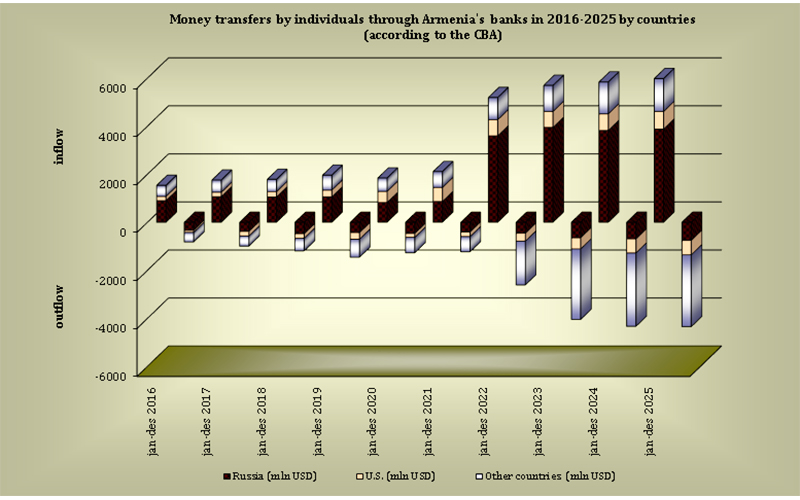
S&P expects the banking sector in Armenia, Georgia, Azerbaijan, Kazakhstan and Uzbekistan to continue post-pandemic recovery in 2023, supported by favorable economic growth prospects despite rising geopolitical tensions in the region. "The influx of immigrants, companies and remittances in 2022 has accelerated economic growth and strengthened the funding base of banks, but this impact is likely to be temporary and its magnitude will vary by country."
However, S&P analysts said a weaker-than-expected global economic outlook, especially in Europe, potentially volatile commodity prices and supply chain disruptions could dampen growth in markets dependent on commodity export earnings and undermine the solvency of some borrowers, which will have a knock-on effect on banks in the Central Asia and Caucasus region.
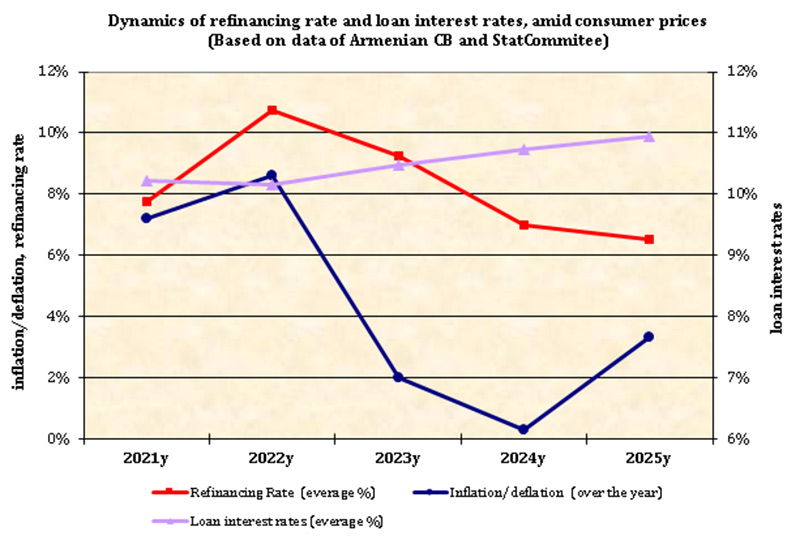
Inflation, exchange rate volatility and the need to refinance external funding remain significant risks for the region's banking sector, according to S&P.
S&P says that 2022 saw the highest number of sovereign defaults (four) in emerging market (EM) EMEA economies this century. At the beginning of 2023, the balance of forecasts for 55 EMEA sovereign bonds, estimated by S&P, remains negative at a ratio of 2 to 1, practically unchanged since the end of 2021.
However, the external environment is notably improving as lower global inflation, a weaker dollar and reopening in China support a (selective) return of portfolio capital inflows to EMEA assets.
Despite this relief, EMEA macro fundamentals remain tight. Sovereign debt is larger today than it was 2 years ago and is more expensive to service. The slowdown in inflation is uneven. Finally, a series of important elections across the EMEA region are scheduled for 2023 that will have a major impact on debt sustainability and growth.
The secondary impact of the Russian-Ukrainian war on the balance of payments the fiscal position and inflation rates of developed European countries, led to S&P issuing seven negative forecasts for sovereign states of developed European countries last year.
The relatively recent decline in natural gas prices and general inflation amid signs of resilient labor markets and demand have led S&P to conclude that most eurozone economies will be able to avoid a recession in 2023.The reopening of China is also likely to support the growth of exports to the eurozone, while the euro's 13% appreciation against the dollar will help anchor deflation and smooth the path of the ECB key rate after a couple of 50 basis point hikes in February and March.
As for trends in 2023, S&P notes that the hurdles have not yet been overcome in terms of global sovereign ratings. According to the agency's analysts, after two years of recovery and growth, the global economy will noticeably slow down, but the resumption of work in China may improve S&P forecasts.
The likelihood of rising global key rates, as S&P analysts suggest, will remain high until 2024, creating additional risks for sovereign states heavily dependent on external financing and for those with a large amount of debt.
Geopolitical uncertainty, the ongoing war in Ukraine, and a polarized social context create ongoing challenges for the global economy. And while the majority of S&P's sovereign ratings have a stable outlook, overall creditworthiness continues to deteriorate, with more than 10% of S&P's portfolio of ratings assigned since 2023 having a negative outlook.
It should be noted that the other day S&P agency retained Armenia's sovereign rating at "B+" and "B" for issuing long-term and short-term obligations in foreign and national currency, while improving the outlook from "Stable" to "Positive".
According to the agency's observations, the review of the rating forecast is due to the high growth rates of the Armenian economy and the prospect of increasing the economic potential, a significant improvement in the state budget, the public debt burden and the external situation of the economy. According to S&P, in the coming months, in the event of a high level of economic growth, as well as manageability of risks associated with fiscal policy, balance of payments and financial stability, Armenia's sovereign rating may be upgraded.
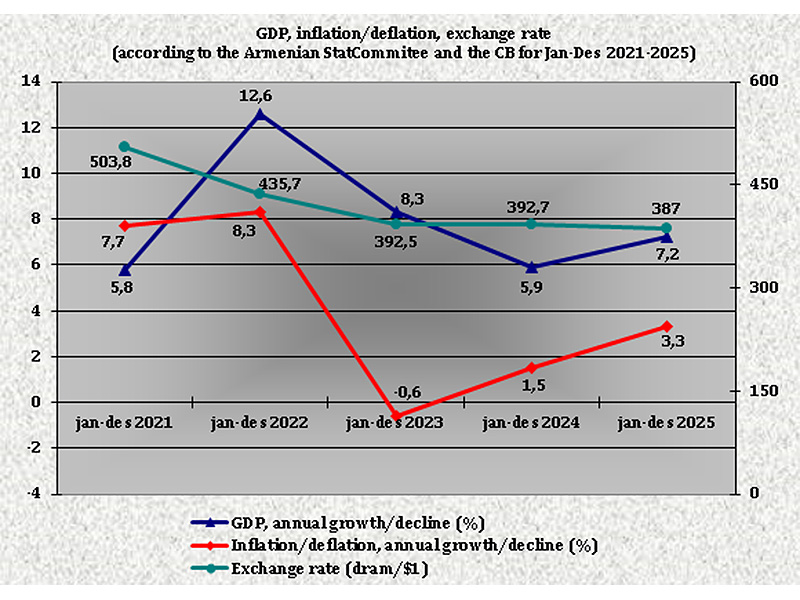
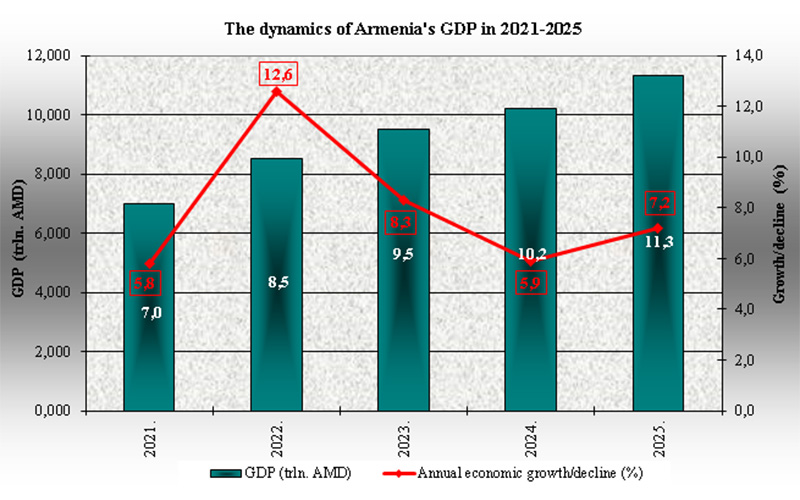
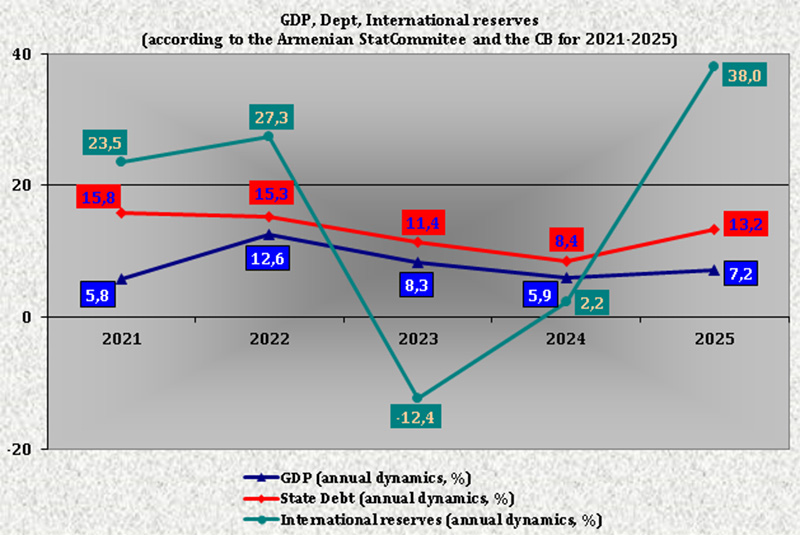
It would be appropriate to recall that S&P projected 8.6% GDP growth in Armenia for 2022, expecting an average growth of 4.3% per year in the next few years. However, according to official statistics, in Armenia, GDP growth accelerated to 12.6% in 2022 (from 5.7% in 2021). Regarding the projected prospects for a slowdown in GDP growth, the rates indicated by S&P (4.3%) do not differ much from the expectations of the Central Bank of the Republic of Armenia, the IMF and the WB for 2023 - 4.6%, 4.5% and 4.1%, respectively.