


ArmInfo. The growth rate of economic activity in Armenia accelerated to 12.2% per year in Q1 2023 (from 9.6% in the first quarter of 2022), far exceeding even the pre-Covid 6.5% growth in Q1 2019. According to the final data of the RA Statistical Committee, growth was demonstrated by all sectors, except for the energy complex, moreover, the service sector, the trade sector and the construction sector continue to be the drivers of economic growth.
Thus, the service sector showed an increase of 22.9%, the trade sector - by 21%, the construction sector - by 15.6%, the industrial sector - by 3.6%, the agricultural sector - by 1.4%. And the energy complex reversed its dynamics from double-digit growth to a 2% decline. As a comparison, we note that a year earlier in Q1 2022, the growth was recorded in the following sectors: service sector - by 22.2%, the energy complex - by 16.7%, the trade sector - by 7.6%, the construction sector - by 6.2%, the industrial sector - by 3.1%, and the agricultural sector lingered in the decline, with an acceleration of rates up to 5.4%.
Meanwhile, in March 2023, compared to February (on a monthly term), economic activity increased by 10.9% (against 8.4% growth in March 2022). Moreover, upward dynamics was recorded in almost all areas, except for the energy complex, which reduced volumes by 7.8%. In particular, the construction sector showed significant growth - by 30.6%, followed by trade and services with an increase of 18.2% and 15.9%, respectively, and the industrial sector with an increase of 6%. A year earlier, in March 2022, compared to February, the industrial sector and the energy complex (1.3-0.9%) were in decline, while the construction sector showed growth - by 25%, the service sector - by 16%, the trade sector - by 10.8%.
In y-o-y terms (March 2023 to March 2022), economic activity accelerated growth from 6.7% to 14%. Only the energy complex was in decline by 5.8%, while the rest sectors showed growth: the trade sector - by 26.1%, the service sector - by 21.9%, the construction sector - by 19%, the industrial sector - by 8.6%. A year earlier, in March 2022 by March 2021, growth was recorded in all sectors, except for the industrial sector, which was in a decline (by 6.9%): the service sector - by 25.9%, the construction sector - by 8.2%, the energy complex - by 6.8%, trade - by 6.6%.
According to statistical data in Q1 2023, the absolute leader is the trade sector with a volume of more than 1 trillion drams (2.6 billion). The service sector returned to second place with a volume of 675.2 billion drams (1.7 billion), moving the industrial sector to the third place - 556.5 billion ($1.4 billion), the fourth and fifth places continue to be occupied by the agricultural sector - 88.7 billion drams ($226 million) and the construction sector - 64.8 billion drams ($165.1 million). The volume of electricity generation in Q1 2023 amounted to 2416.5 million kWh, of which 740.9 million kWh in March alone.
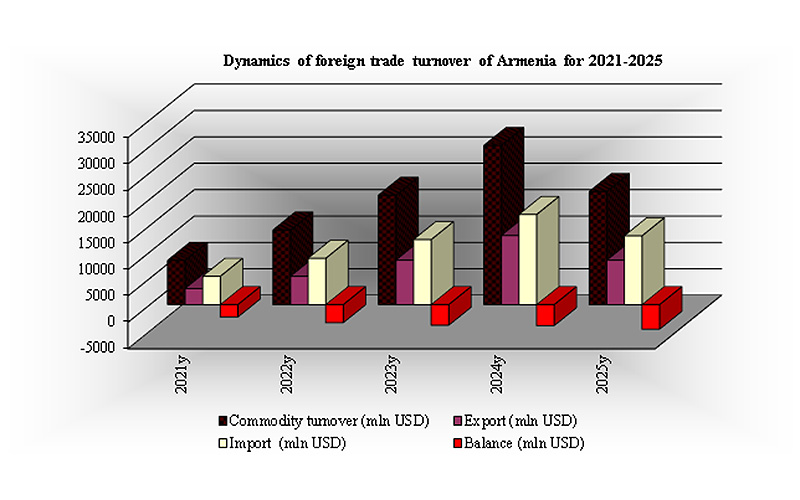
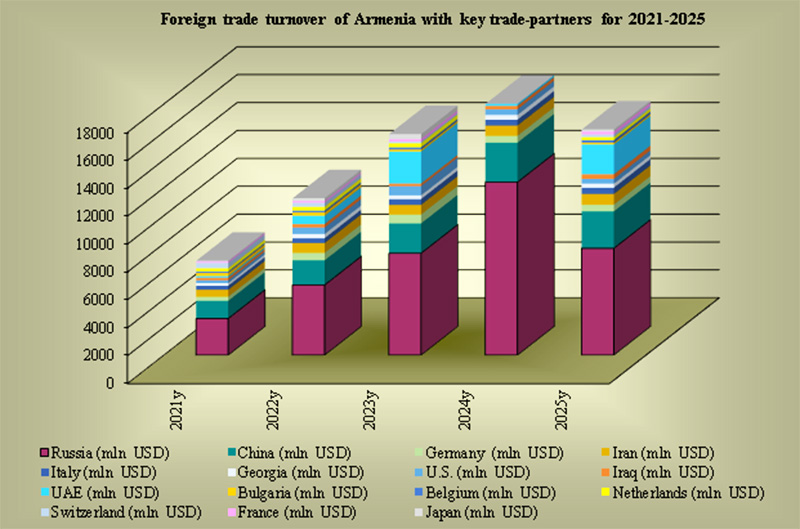
The price index of industrial products in the reporting period decreased, in particular, in January-March 2023 compared to the same period last year - by 0.4%, and by 0.7% in March alone, in March 2023 compared to March 2022 - by 2.7%. A year earlier, in comparable periods, the industrial products price index showed an increase: in January-March 2022 - by 11.3% per annum, - by 2%,in March, and by 12.5%compared to March 2021. At the same time, the foreign trade turnover of Armenia, having increased 2-fold in y-o-y terms, reached 1.7 trillion drams ($4.2 billion) in Q1 2023. This was provoked by a 2.3-fold increase in exports and a significant increase in imports by 89.1%, the volumes of which reached 653.3 billion drams ($1.7 billion) and 1 trillion drams ($2.6 billion). In March 2023 alone, foreign trade turnover increased by 23.7% due to an increase in imports by 33.3% and exports by 10.3%. In March 2023 to March 2022, a 2.7-fold increase in exports and 2.4-fold increase in imports ensured an impressive 2.5-fold increase in foreign trade turnover. A year earlier, in Q1 2022, foreign trade turnover showed a relatively modest growth - by 38.5%, coming more from imports - by 45.6% rather than from exports - by 26.9%, the decline in exports and imports by 12.2-9.8% in March 2022 reduced foreign trade turnover by 10.6%, and compared to March 2021, the growth of foreign trade turnover by 15.6% was provoked by a double-digit increase in imports by 22.5% and a modest 4% increase in exports.
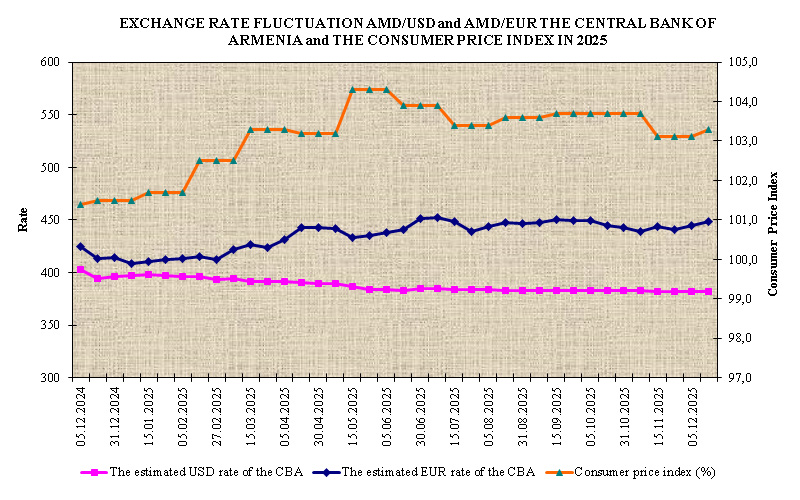
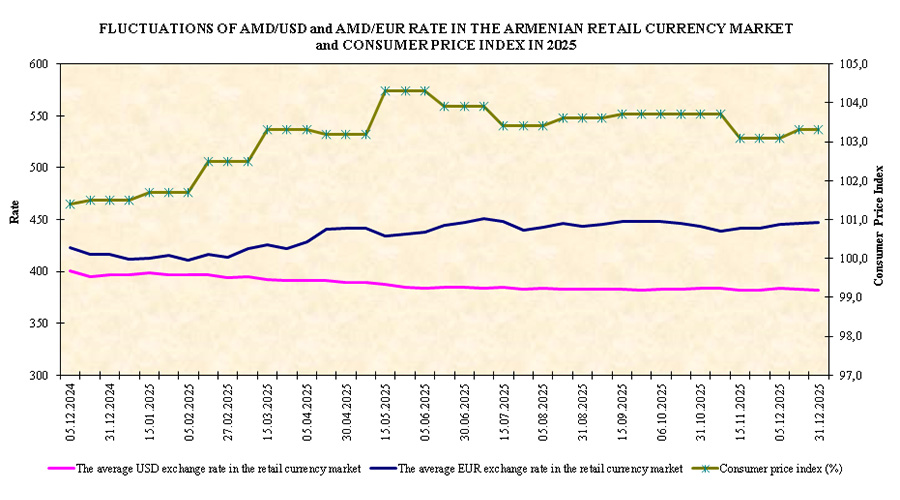
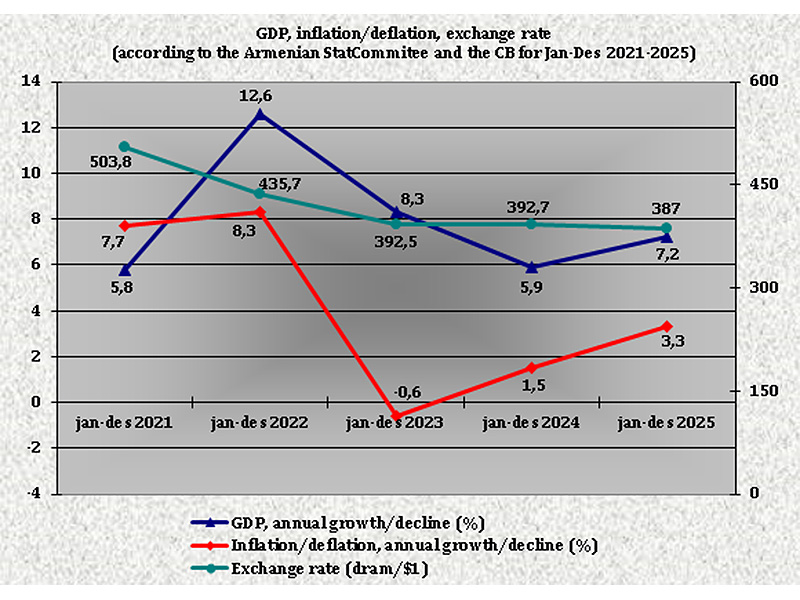
The average settlement rate of the dram in March 2023 was 388.44 AMD/$1, and 392.59 AMD/$1 in January-March, against 496.96 AMD/$1 in March 2022 and 486.40 AMD/$1 in January-March 2022.
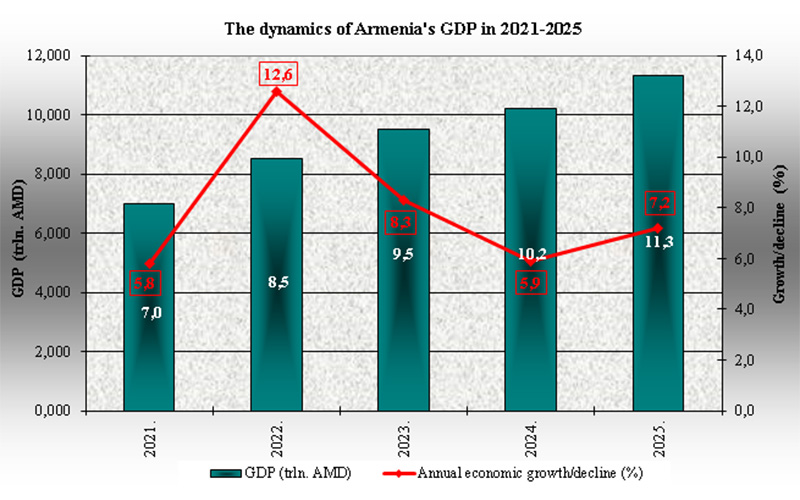
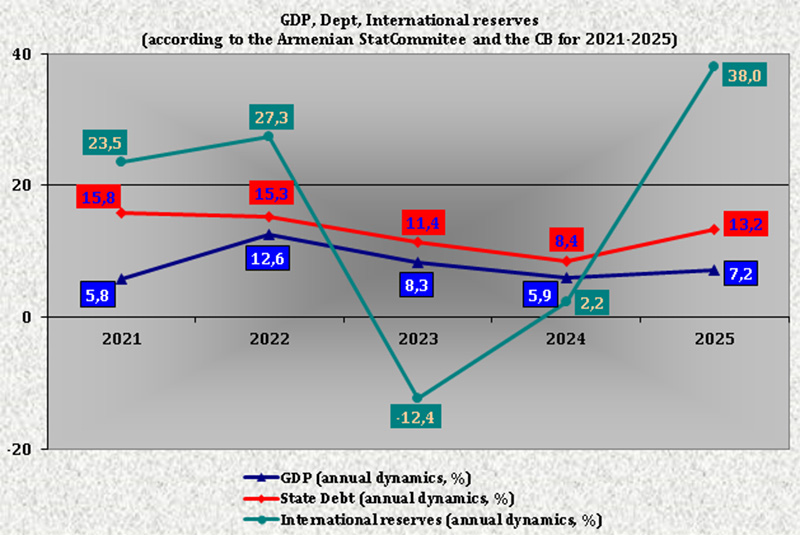
It should be noted that the Central Bank of Armenia forecasts a slowdown in GDP growth to 5.8% for 2023, expecting a slowdown in export and import growth to 14.3-14.6%. According to the forecast of the International Monetary Fund, the GDP growth of Armenia will slow down in 2023 to 5.5%, and according to the forecast of the World Bank - to 4.1%. The European Bank for Reconstruction and Development expects Armenia's GDP growth to slow down to 4% in 2023. The Asian Development Bank forecasts a slowdown in Armenia's GDP growth to 6.5% in 2023. According to the forecast of the Fitch rating agency for 2023, Armenia's GDP growth will slow down to 6.1%, and the S&P rating agency expects the Armenian economy to grow by an average of 4.3% per year over the next few years. According to actual statistics, Armenia's GDP growth in 2022 accelerated to 12.6% from 5.7% in 2021 (against a 7.2% decline in 2020).