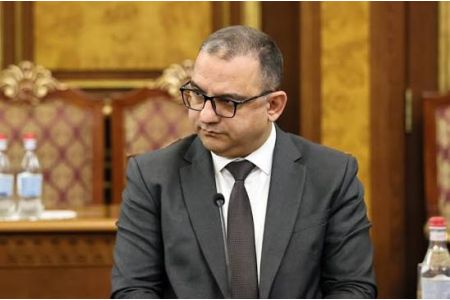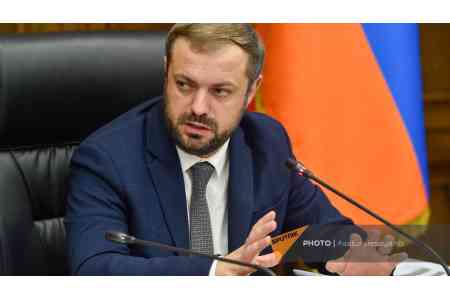
ArmInfo.In the 2024 financial year, it is planned to allocate AMD 168.022bln to the needs of the Ministry of Health of Armenia, RA Minister of Finance Vahe Hovhannisyan stated on November 6 during discussions in the commissions of the National Assembly of the Republic of Armenia when discussing the draft state budget of the country for 2024.
According to him, the indicated amount is AMD 21bln or 14% higher than the funding volumes of the current year. Next year, it is planned to allocate AMD 11.881bln for capital expenditures in the healthcare sector and AMD 156bln for current expenses. In 2024, the RA Ministry of Health planned to implement 12 programs and 49 events.
In 2024, it is planned to allocate AMD 18bln for the implementation of the universal insurance program in Metsdin. Once the details are clarified, these funds will be distributed among various activities. The minister emphasized that ultimately, all payments must be made at the expense of taxpayers. "How they will pay - in the form of income tax, profit tax, excise tax, this is a problem that needs to be solved. First of all, we are talking about the financing model, after which we will decide on the most appropriate method of raising funds for these purposes," the minister emphasized, adding that at present there is no decision on how this will happen. In this regard, Hovhannisyan pointed out the illogicality of steps to finance the universal health insurance project. In his opinion, first of all, it was necessary to decide on financing methods, and only after that resolve issues related to the volumes and directions of financing.
This February,, preparations began in Armenia for the introduction of a system of universal compulsory health insurance (CHI). According to the RA Minister of Health Anahit Avanesyan, the introduction of a compulsory health insurance system is an important part of the government program and a critical component in the implementation of the reform program in the health care system. The development of the project is due to the need for the consistent implementation of a health insurance system that will ensure the availability of medical services for citizens, the proper and timely provision of services to every citizen in need of medical care and services, regardless of ability to pay, gender, age, place of residence and social status.
The gradual introduction of a compulsory health insurance system from the point of view of medium and long-term prospects is the most optimal option. Work on the implementation of the system will begin in 2023, during which preparatory work will be carried out. In particular, during the current year it is planned to carry out measures aimed at revising the package of services, approving prices for the package, which will not be calculated as a percentage of citizens' wages, but will have an approved price for services, as well as the amount of co-financing from the state.
In 2024, Avanesyan continued, all groups of beneficiaries under the state order will be equalized, and all medical services for them will be uniform. This is necessary to ensure that one group of beneficiaries does not receive one package of services and another group another.
In 2025, pensioners will join the number of beneficiaries. Throughout this period, the process of involving those beneficiaries who participate in the program on a voluntary basis into the compulsory health insurance system will continue. In 2026, the remaining beneficiaries will be connected to the system. Thus, as the minister said, the system will be fully operational in 2027. She stressed the importance of introducing a phased system that is linked to reform programs aimed at improving infrastructure. In particular, by 2026, at least 50 medical centers will be built, renovated and equipped with the most modern equipment in Armenia. This year alone, construction of 13 such centers is already underway, and design work is underway for the construction of 20 outpatient clinics. Work is also underway to design 7 more new medical centers. All these projects in the healthcare sector are carried out at the expense of the state budget, but private business is also actively participating in the creation of modern medical institutions.