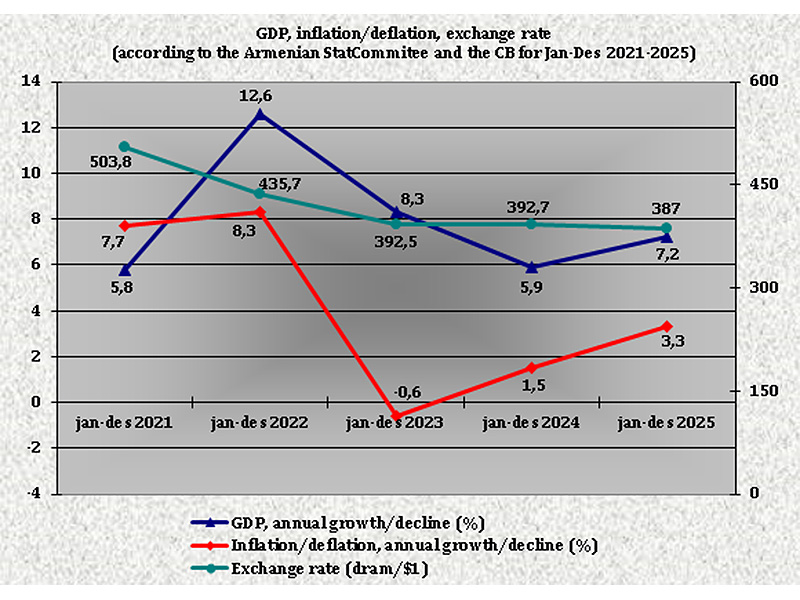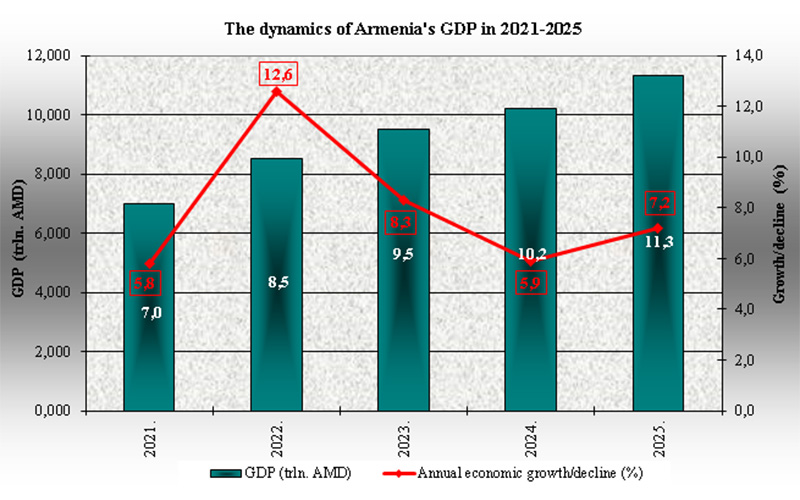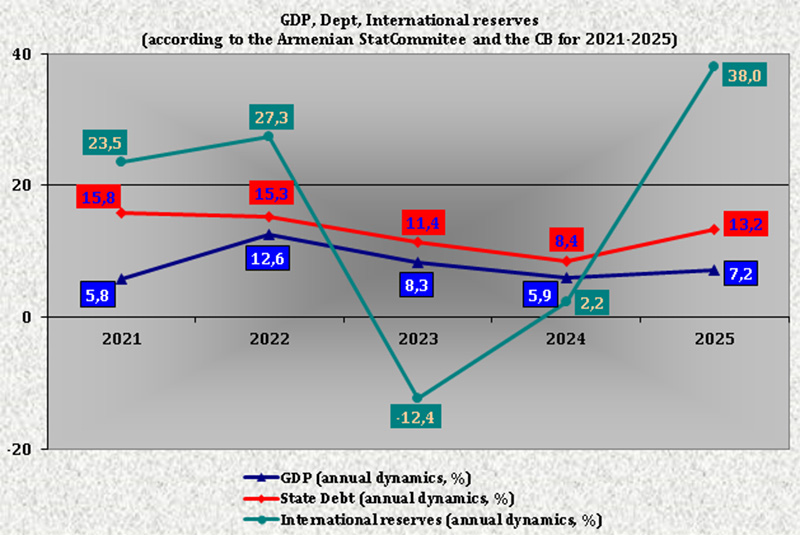



ArmInfo.Economic growth for 2023 is the result of continuation of positive factors from the previous year. However, if at the beginning of the year economic growth was quite high, in the second half of the year, starting from June-July, the growth rate of economic activity slowed down, amounting to about 6%. If the downward trend in growth continues, the 7% target could be in jeopardy in 2024, leading to budgetary difficulties as tax revenues also decline, according to an analysis by the Luys foundation.
The day before, parliament adopted the main financial document for next year. According to the document, in 2024, in conditions of ensuring 7% GDP growth, the revenues of the state treasury of Armenia will amount to 2 trillion 723 billion drams (25.9% of GDP), and expenses - 3 trillion 206 billion drams (30.5% of GDP).
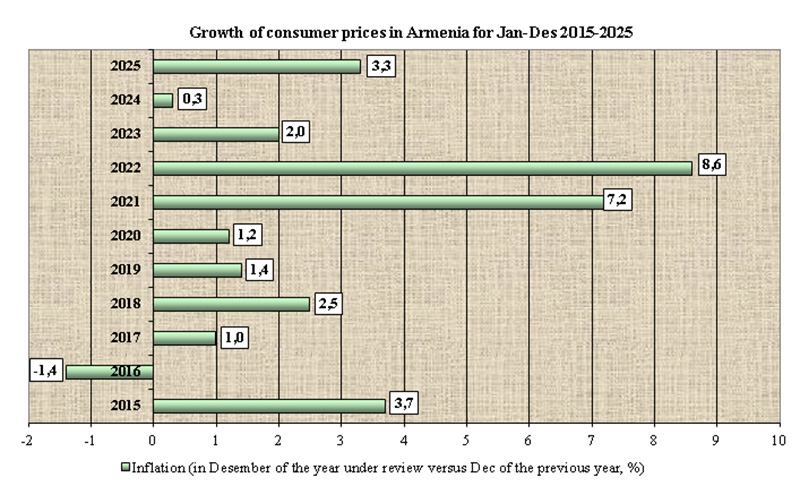
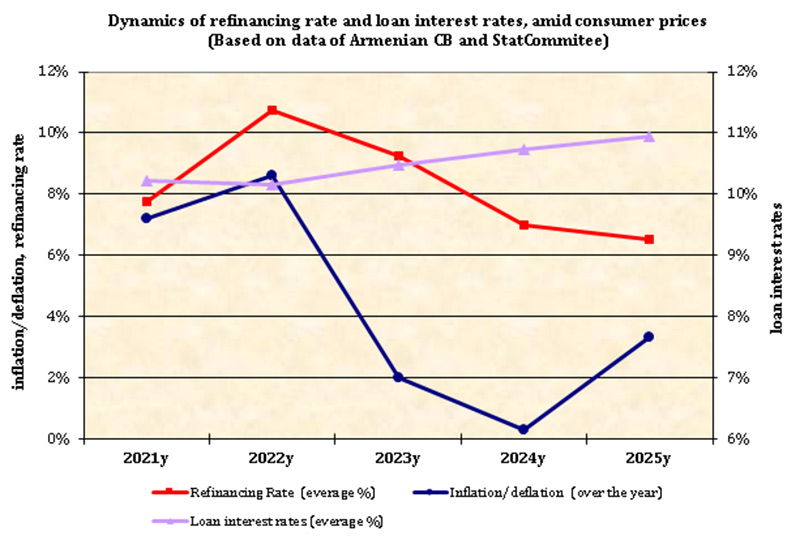
Tax revenues and state duties are projected at 2 trillion 613 billion (24.9% of GDP), 2 billion 276 million drams will be official grants and 87 billion 676 million drams will be other income. The GDP deflator will grow by 4%. The state budget deficit will amount to 482.9 billion drams or 4.6% of GDP. Average inflation is forecast at 3.2%, instead of the expected 2.2% by the end of 2023 and the actual 8.6% for 2022.
Current expenses will reach 2 trillion 511.2 billion drams (23.9% of GDP), expenses on non-financial assets will reach 695.3 billion drams (6.6% of GDP), and capital expenditures will reach about 695 billion drams and will exceed this year's figure by 27 % (6.6% of GDP). The government reserve fund for 2024 is provided at an unprecedentedly high volume - 156 billion drams. Armenia's public debt will reach 5 trillion 314 billion drams (50.5% of GDP), and the government's debt will amount to AMD 5,082.9bln (48.3% of GDP) or $11.892bln.
According to the Fund's experts, next year's budget does not include measures aimed at ensuring the necessary investment and export volumes to achieve the goal of economic growth.
It is noted that the budget is based on the expectation of a significant increase in the tax-to-GDP ratio. Achieving this goal involves significant risks. "It is planned that in 2023 taxes/GDP should improve by about 1 percentage point and another 0.75 p.p. next year. Moreover, quite a lot of emphasis is placed on improving the tax administration system, which is more uncertain and risky. In the history of the Republic of Armenia, there has not been an improvement in the tax-to-GDP ratio by 1.75 percentage points over two years. Although legislative changes to increase taxes are also planned, they will not have as big an impact on the tax-to-GDP ratio. Therefore, in this part, certain reserve "cushions" should be provided to ensure budgetary stability in the event of a possible shortfall in taxes," economists say.
The 2024 state budget calls for significant increases in both revenue and spending. Revenue growth is projected to be 13.1%, expenses - 20.8%. The increase in expenses also includes the amount of support for the forcibly displaced population from Artsakh, the volume of which is about 109.2 billion drams. Of the latter, 47.3 billion drams are intended for already adopted programs, and the remaining part, 61.9 billion drams, was transferred to the reserve fund to finance the necessary support during the year, since the need for support has not been fully assessed at the current stage.
The authors of the document believe that unrealistic capital expenditure planning continues. Capital expenditures are planned at 6.6% of GDP, against the expected 5.9% in 2023 and the actual 4.5% for 2022. However, in 2023, the implementation of capital expenditures has quite low indicators: for January- September the figure was only 57.4%, which suggests that the problem of chronic backlog of capital expenditures has not yet been resolved and will persist in the future, since no significant measures will be taken steps to solve it. It should be noted that increased capital spending is also factored into next year's economic growth forecasts, so persistent underperformance could also jeopardize the economic growth target.