

ArmInfo.Fitch Ratings has upgraded ACBA Bank Open Joint-Stock Company's (ACBA) Long-Term Issuer Default Rating (IDR) to 'BB-' from 'B+', and the bank's Viability Rating (VR) to 'bb-' from 'b+'. The Outlook is Stable. The Fitch Ratings press release received by ArmInfo reads.
A full list of rating actions is below.
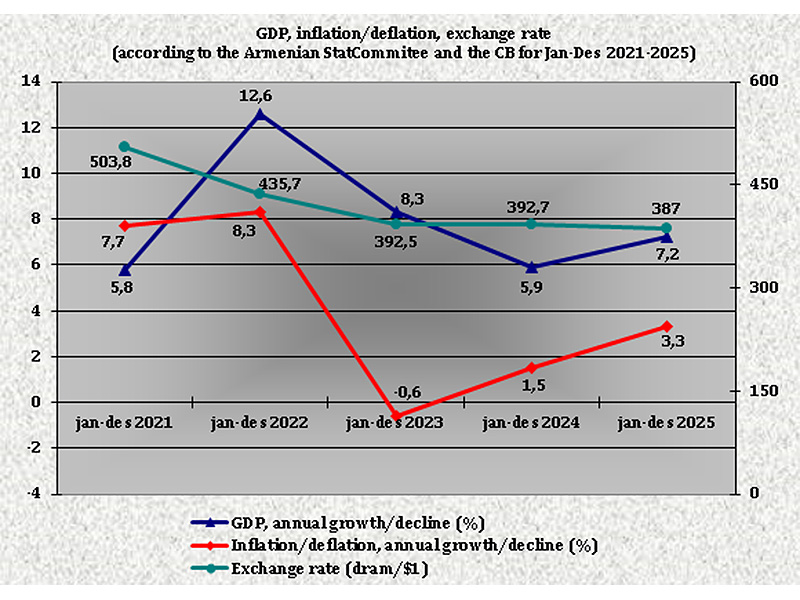
The upgrade reflects sustainable, considerable improvements in the bank's operating profitability and capitalisation for 2022-2023. This is primarily driven by Armenia's buoyant economic growth, a strengthened sovereign credit profile, and resilient local currency, aided by the positive effects of migration from Russia. These factors have supported key credit ratios of local banks (including ACBA) at above historical-average levels with reasonable stability. Therefore, we have also revised up the banking sector's operating environment score to 'bb-' from 'b+'.
KEY RATING DRIVERS
ACBA's Long-Term Foreign-Currency IDR reflects its intrinsic creditworthiness, as underlined by its 'bb-' VR. The rating also reflects the bank's notable franchise in high-risk lending to individual farmers, which is counterbalanced by solid core capital ratios and robust profitability.
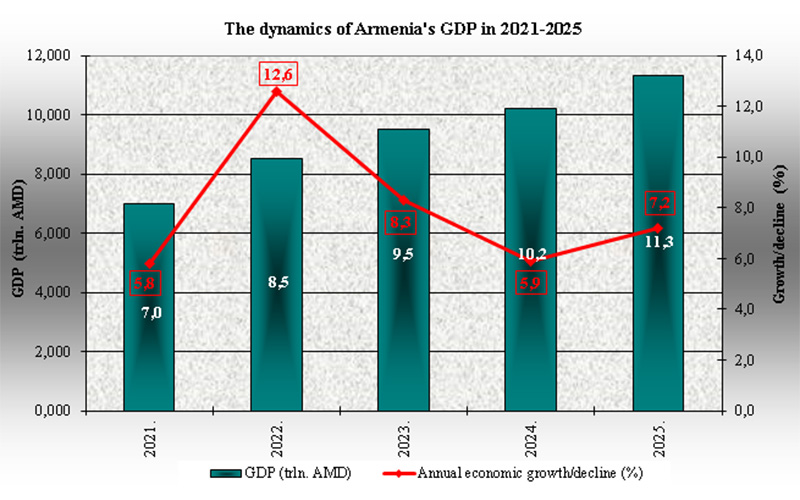
Solid Economic Growth: The operating environment for Armenian banks is supported by the country's strong economic growth. Fitch estimates the country's GDP growth at a strong 7.4% in 2023 (2022: 12.6%) and forecasts further robust growth of 6.0% in 2024. We believe increased business activity will continue to support the sector's performance at a new, above historical average level, and mitigate asset-quality risks.
Moderate Franchise: ACBA, the fourth-largest Armenian bank, focuses on agriculture, retail and SMEs, though with limited pricing power and a sizeable 12% loans share in a fragmented and competitive market. The performance of its traditional-banking franchise is highly correlated with economic cycles.
Focus on High-Risk Retail: ACBA has a significant loan exposure to inherently high-risk individual farmers and consumer finance (combined 38% of gross loans at end-2023) and SMEs (39%). ACBA's heightened risk appetite is mitigated by lower-than-average loan book dollarisation (end-2023: 28%) and high portfolio granularity with large corporates at only 13% of the loan book.
Asset-Quality Metrics Improved: Credit risk mainly stems from ACBA's loan book (69% of assets at end-2023). The impaired loans (Stage 3 plus purchased or originated credit-impaired) ratio was a low 2.6% at end-2023 (end-2022: 2.8%) due to low impaired loan generation and heightened lending growth in 2023 (17%). Coverage of impaired loans by total loan loss allowances (LLAs) was a modest 43% at end-2023. However, net impaired loans made up a limited 6% of Fitch core capital (FCC).
Performance Strengthened: Annualised operating profit increased to around 5% of risk-weighted assets (RWAs) in 2022-2023, from 2.5% in 2021. This was mainly driven by additional income earned on currency-conversion operations in 2022 and wider margins given higher interest rates in 2023. We expect ACBA's profitability to remain stronger than the historical average on the back of an upbeat operating environment.
Comfortable Capital Buffers: The bank's FCC ratio strengthened to a solid 18.7% at end-2023 (end-2022: 17.1%) on the back of strong internal capital generation. Fitch expects ACBA to maintain its capital buffers comfortably above their regulatory minimums, including additional buffers, resulting in sufficient capital to sustain future growth.
Stable Funding and Liquidity: ACBA's high 109% loans/deposits ratio reflects moderate reliance on non-deposit funding (19% of total liabilities at end-2023). Liquid assets (including cash, due from banks, and government securities), net of wholesale funding repayments scheduled for the next 12 months, covered a moderate 34% of customer deposits at end- 2023, while we believe that maturing wholesale funding could be at least partly rolled over.
RATING SENSITIVITIES
Factors that Could, Individually or Collectively, Lead to Negative Rating Action/Downgrade
A downgrade of ACBA's ratings would be triggered by a sovereign downgrade.
A downgrade could also result from a material deterioration in the operating environment, leading to a sharp increase in problem assets, which would significantly weigh on profitability and capital. In particular, the ratings could be downgraded if higher loan impairment charges consume most of the profits for several consecutive quarterly reporting periods.
A reduction of the FCC ratio to below 15% on a sustained basis, due to a combination of weaker earnings, faster loan growth and higher dividend pay-outs, could also be credit-negative. Material funding disruptions could also result in a downgrade if they translate into serious refinancing issues for the bank, which it is unable to mitigate via available local- and foreign-currency liquidity.
Factors that Could, Individually or Collectively, Lead to Positive Rating Action/Upgrade
An upgrade of ACBA`s ratings would require a sovereign upgrade, coupled with a significant improvement of Fitch's assessment of the local operating environment. In addition, an upgrade would require a stronger, more diversified franchise, and a longer record of robust performance.
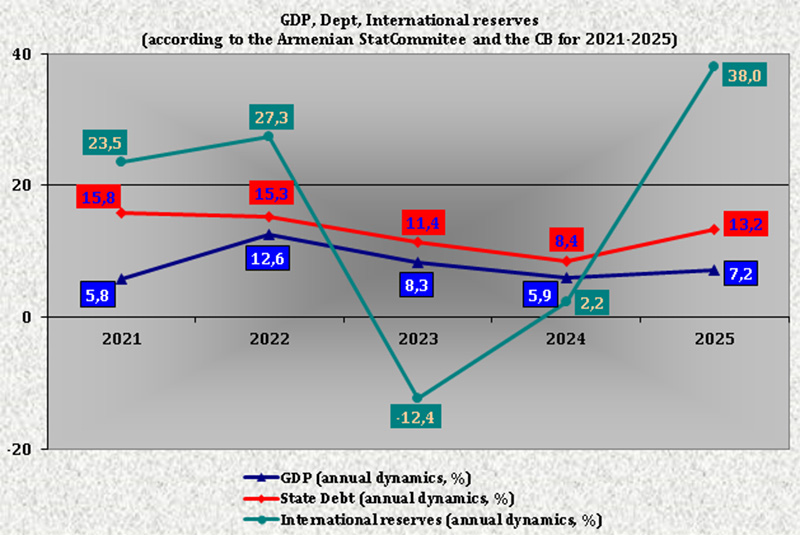
ACBA's Government Support Rating (GSR) of 'no support' reflects Fitch's view that the Armenian authorities (BB-/Stable) have limited financial flexibility to provide extraordinary support to the bank, given the banking sector's large foreign- currency liabilities relative to the country's international reserves.
Upside for the GSR is currently limited and would require a substantial improvement of sovereign financial flexibility as well as an extended record of timely and sufficient capital support being provided to local banks.
VR ADJUSTMENTS
The asset quality score of 'b+' is below the category implied score of 'bb' due to the following adjustment reason: underwriting standards and growth (negative)
REFERENCES FOR SUBSTANTIALLY MATERIAL SOURCE CITED AS KEY DRIVER OF RATING
The principal sources of information used in the analysis are described in the Applicable Criteria.
ESG CONSIDERATIONS
ACBA has a score of '3' for Exposure to Environmental Impacts against the standard score of '2'. The score reflects the bank's significant exposure to the agricultural sector (around 20% of loans) and the associated climate risks. Unless otherwise state in this section the highest level of ESG credit relevance is a score of '3'. This means ESG issues are credit-neutral or have only a minimal credit impact on the entity, either due to their nature or the way in which they are being managed by the entity. Fitch's ESG Relevance Scores are not inputs in the rating process; they are an observation of the materiality and relevance of ESG factors in the rating decision. For more information on Fitch's ESG Relevance Scores, visitwww.fitchratings.com/esg.
According to the Financial Rating of Armenian Banks as of December 31, 2023, prepared by ArmInfo IC, Acba Bank is included in the TOP-5 in terms of main balance sheet indicators: assets - 4th place ($1.9 billion), credit investments - 3rd place ($1.3 billion), total capital - 4 plaace($329.3 million), total liabilities - 4th place ($1.6 billion), liabilities to customers - 3rd place ($1.2 billion). The bank took the 3rd place in terms of net profit for 2023, ensuring it at the level of $70.6 million, with y-o-y growth of 26.6%. The volume of agricultural lending by Acba Bank reaches 35% of the total lending of banks in this sector, and the share of agricultural loans in Acba Bank's credit portfolio exceeds 18%. In terms of lending volume to the agricultural sector, Acba Bank traditionally holds the lead by a large margin from other participants in the banking market. Acba Bank is also a leader in the volume of SME lending, covering over 20% of total lending by banks in the SME sector, and the share of these loans in Acba Bank's loan portfolio reaches 45%.
The shareholders of Acba Bank are: "Sacam International" SJSC with participation in the bank capital of 4.55%, ACBA Federation CJSC, the biggest shareholder, 81.6%, and the remaining 13.85% shares belong to legal entities and individuals, including employees of ACBA Federation, ACBA Leasing and Acba Bank. The bank has been operating since 1996.