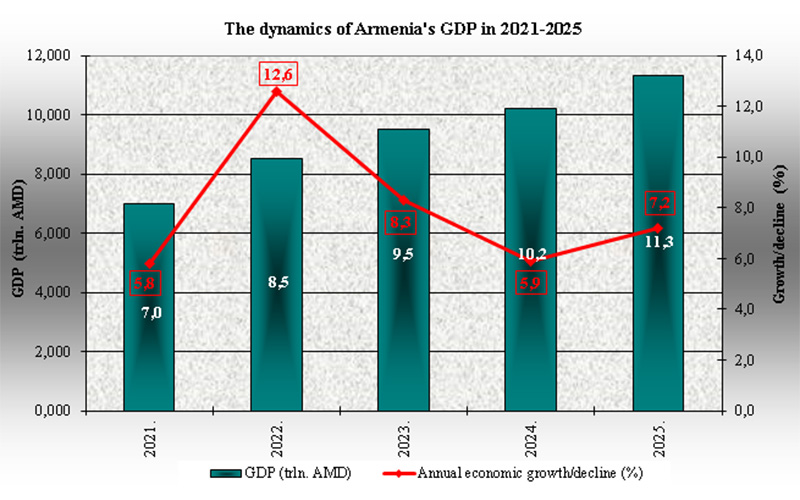


ArmInfo.The World Bank has improved its forecast for Armenia's GDP growth for 2024 from the previous 4.7% to an updated 5.5% (against the actual slowdown in growth in 2023 to 8.7% from 12.6% in 2022). For 2025, the economic growth forecast has also been improved, but less noticeably - from the previous 4.5% to an updated 4.9%. Over the medium term, GDP growth will gradually approach the potential 4.5%, and average inflation will rise to the targeted 4%.
This is noted in the " Europe and Central Asia Economic Update, April 2024: Unleashing the Power of the Private Sector" Report published by the World Bank.
As the WB Outlook notes: "Growth is expected to ease to 5.5 percent in 2024 as the surge in investment mod erates and net exports remain negative. Growth in the medium-term is projected to gradually converge towards the 4.5 percent potential growth rate. Average in flation is forecasted to gradually rise to ward the inflation target of 4 percent in the medium term. The budget deficit is projected to deterio rate to 4.7 percent in 2024 (owing to sup port to refugees amounting about 2 per cent of GDP), followed by fiscal consol idation in the medium term. Capital ex penditures are expected to increase over the medium term as a percent of GDP to address the infrastructure gap. The cur rent account deficit is projected to deteri orate to 3.2 percent of GDP in 2024 but to remain manageable at around 3.5 percent in the medium term. Due to robust economic performance and low inflation, the UMIC poverty rate is projected to decline gradually to 47.7 percent in 2024. Downside risks are related to ongoing ten sions with Azerbaijan, geopolitical tur moil, integration of refugees, and a possible slowdown in trading partner economies."
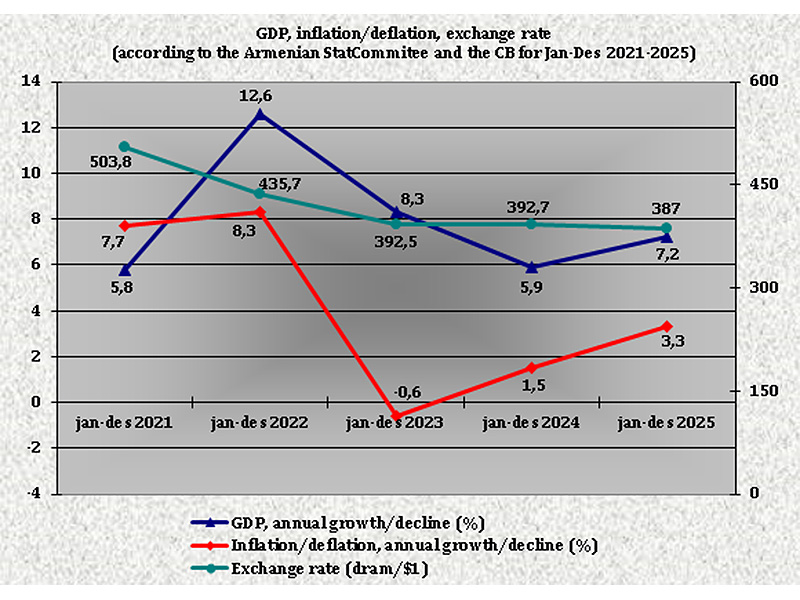
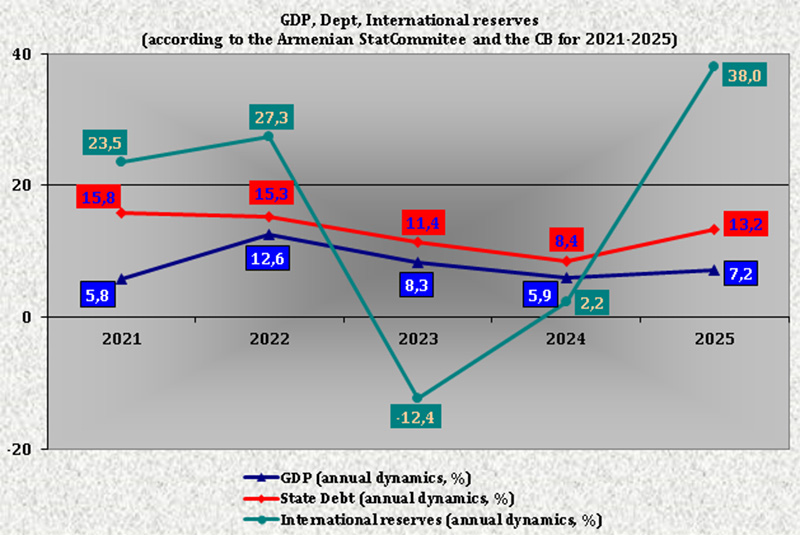
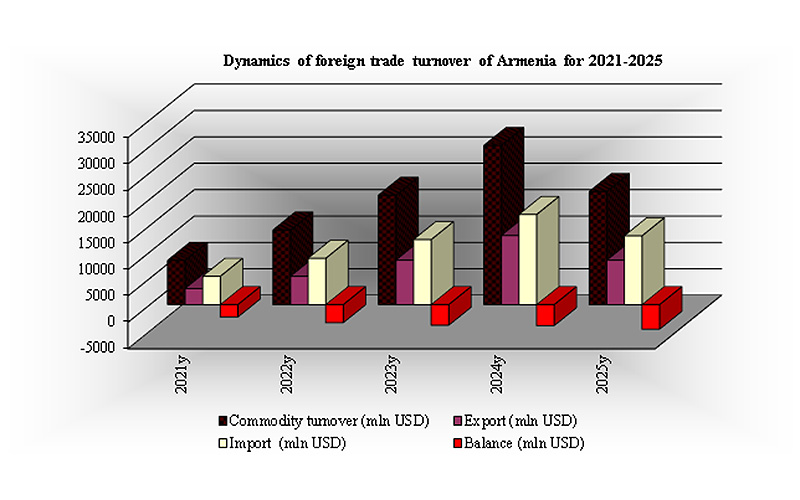
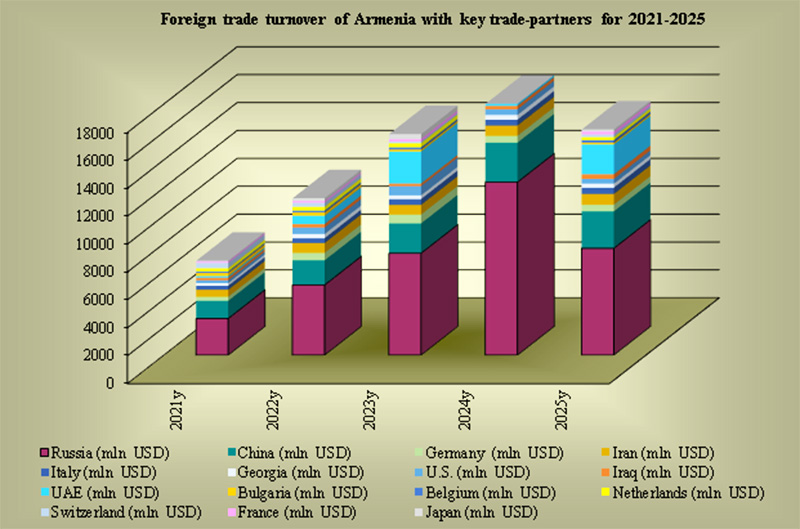
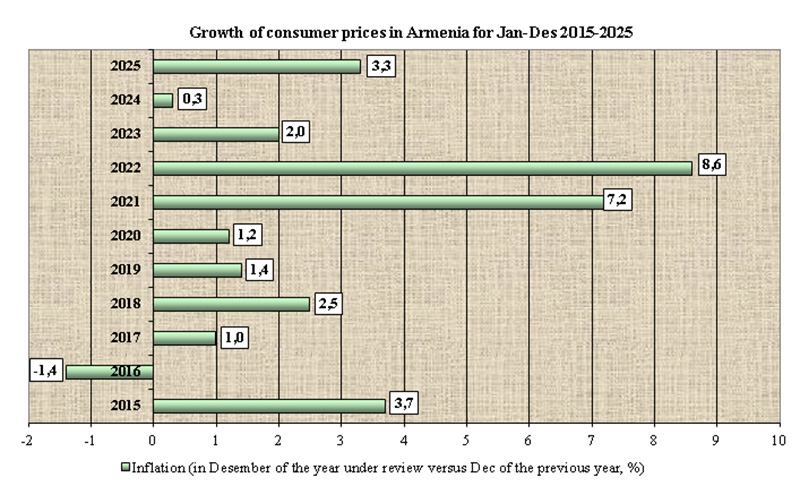
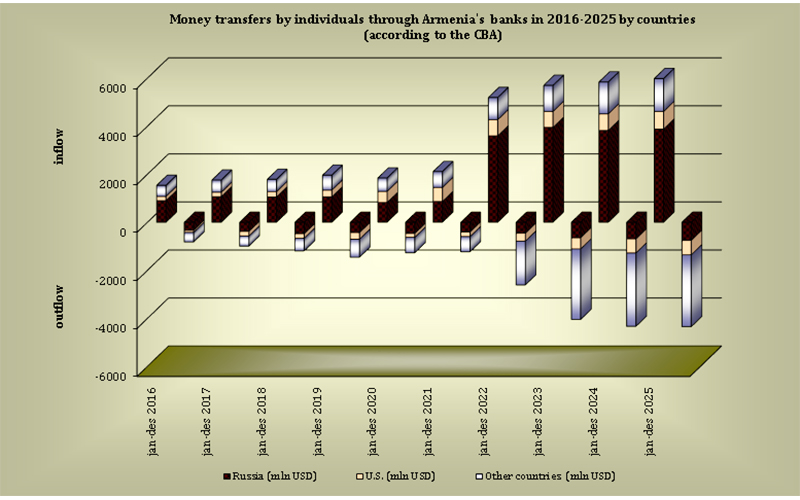
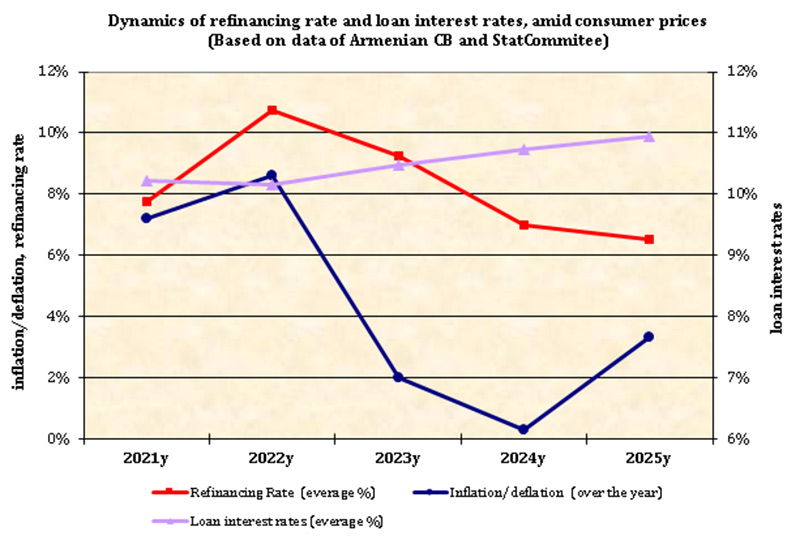
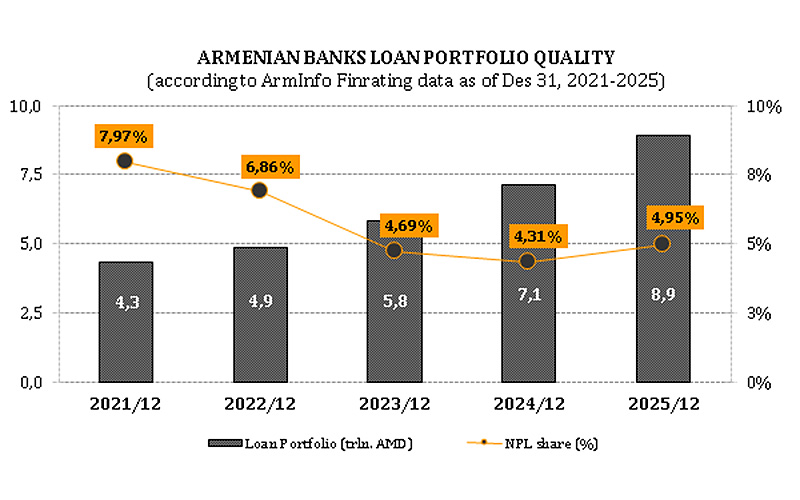
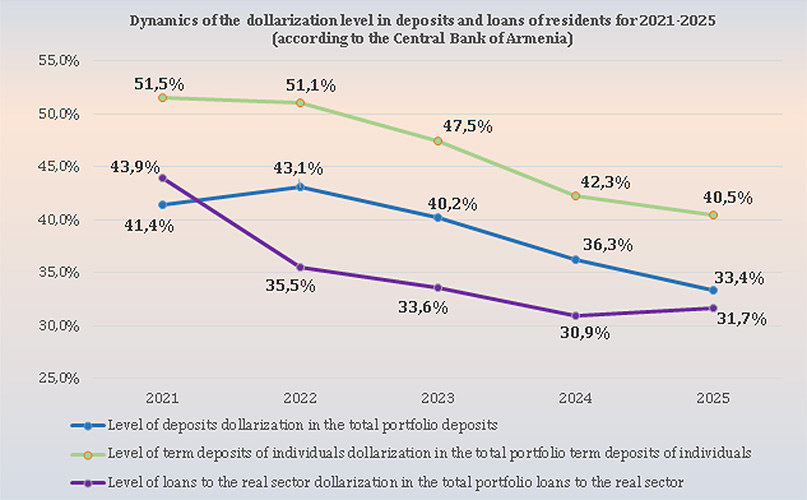
Recent developments: Growth reached 8.7 percent in 2023, exceeding expectations. On the demand side, private consumption grew by 6.3 percent (yoy), contributing to half of total growth. Public consumption and investment (up by 18 and 10 percent, respectively) had a similar combined contribution. Private consumption was fueled by a 12.5 percent increase in real average wages, improve ments in employment, and cash transfers provided by the government to refugees in Q4 2023. On the supply side, growth was driven by an 11 percent (yoy) in crease in services, primarily due to growth in trade and ICT services. Growth in industry slowed to 5.5 percent (yoy) due to a 6.6 percent contraction in the mining sector and a slowdown in man ufacturing growth. Construction grew by 16 percent, (yoy), while agricultural growth remained flat. The unemployment rate decreased from 13.7 percent in 2022 to an average of 12.5 percent in the first three quarters of 2023, benefitting from strong economic activi ty. The poverty rate, measured by Upper Middle-Income poverty line (UMIC), de creased by 0.4 percentage points, to 51.3 percent in 2022. Average inflation dropped from 8.6 per cent in 2022 to 2 percent in 2023, largely driven by declines in food and transport prices. The Central Bank of Armenia has gradually cut the policy rate by 200 basis points since January 2023, to 8.75 percent by the end of January 2024. Credit to the economy in 2023 increased by 22 percent in nominal terms (yoy), dri ven mostly by an increase in dram-denom inated loans. This lowered loan dollariza tion to 36 percent as of end- 2023. Financial stability indicators remain sound, with the Capital Adequacy Ratio at 20 percent and the Non- Performing Loans ratio below 2.5 percent. However, the profitability of the banking system declined in 2023. The budget registered a 4.1 percent of GDP deficit in 2023, all financed by domestic sources on a net basis. Total revenues over performed by 3 percent compared to the original plan, supported by a 17 percent (yoy) nominal increase in tax collection, fu eled by strong economic growth. Current expenditures (including social transfers to refugees) and capital expenditures in creased by 22 and 27 percent (yoy) in nom inal terms, respectively. The government debt increased from 46.7 percent at end-2022 to 48.1 percent end-2023. In the first nine months of 2023, the ex port and import of goods remained ro bust, increasing by 34 and 43 percent (yoy in nominal USD), respectively, large ly driven by re-exports. However, in this period the trade deficit increased to 8.8 percent of annual GDP, from 6.3 percent in the same period of 2022. Remittances dropped to 4.6 percent of annual GDP, from 7.7 percent in the same period of 2022 (affected by a 44 percent rise in the net out flow of non-commercial money transfers). Tourism-related service inflows increased by 47 percent (yoy) in the nine months of 2023 and partly mitigated the deterio ration of the current account deficit, es timated at 2.8 percent of GDP in this period. The Armenian dram started to gradually depreciate in late 2023 and by end-2023 was 2.9 percent weaker against the USD (yoy). Gross international re serves decreased by USD 510 million in 2023 and reached USD 3.6 billion, covering 3 months of import.
ey conditions and challenges Armenia has weathered multiple crises since 2020. Thanks to sound macro economic management (inflation target ing, adherence to a fiscal rule, and sound financial sector oversight) and government mitigation measures, Arme nia was able to recover from the signif icant contraction in 2020 resulting from the Covid-19 pandemic and the military conflict with Azerbaijan, while maintain ing macroeconomic stability. Meanwhile, large money transfers from Russia con tributed to high average annual growth of 10.7 percent in 2022-2023. In recent years, the authorities aimed at reducing corruption and improving the business environment, in particular through improvement in tax and customs administration; however, important struc tural challenges persist, resulting in an undiversified economic structure, a nar row export base, insufficient private in vestment, low productivity, challenges to attracting FDI, and limited human capi tal. Armenia also faces significant geopo litical tensions and is highly vulnerable to climate related hazards."
"In the South Caucasus, Armenia and Georgia remained among the fastest growing ECA economies even though the pace of economic expansion slowed. In Azerbaijan, growth weakened sharply to 1.1 percent last year from 4.6 percent in 2022 as oil production stagnated because of lower output in the existing oil fields," the Bank notes.
The IMF forecasts a slowdown in GDP growth for Armenia to 5% in 2024, and the Asian Development Bank to 5.7%. International rating agencies' forecasts for Armenia's GDP growth for 2024 look a little more optimistic; in particular, S&P Global Ratings expects the pace to slow down to 6.2%, and Fitch Ratings - to 6%. The Central Bank, with the transition to a new system for developing monetary policy (FPAS MARK II) from 2024, began to calculate the GDP forecast for several scenarios and indicate the expected growth not at one specific level, but in a range. In particular, according to the forecast of the Central Bank of Armenia, GDP growth in 2024 will be in the range of 5.3-6.4%.