ArmInfo.The Eurasian Fund for Stabilization and Development (EFSD) prepared a new working paper, "Assessing the Potential Impact of Natural Disasters on Debt Sustainability in Armenia, Kyrgyzstan and Tajikistan."
In the part of the document concerning Armenia, EFSD analysts noted that in the country the main types of natural disasters that can have a significant impact on economic sustainability are earthquakes and drought. Between 1992 and 2023, the most common natural disasters in Armenia were storms (38%) and floods (23%).
At the same time, an analysis of data on the economic impact of natural disasters for the period from 1992 to 2023 showed that the maximum damage was caused by drought ($170 million in 2022 prices). It is also worth separately noting one event - the Spitak earthquake of 1988, when the total damage amounted to $34.6 billion (in 2022 prices), and the number of victims and victims was about 25 thousand and 1.6 million people, respectively. "Taking into account the analysis of the frequency of natural disasters and the damage they cause, we can conclude that earthquakes and drought are the main types of natural disasters that can have a significant impact on the economy and, as a result, on the debt sustainability of Armenia," EFSD analysts noted.
According to the analysis, in 2012-2021 the air temperature in Armenia increased by 1.6ñC, while the amount of precipitation decreased by 4.7%. The observed increase in temperature has led to a rapid reduction in the area of glaciers in the mountainous regions of the republic: their spatial extent is decreasing by approximately 8 m per year. In the future, the Republic of Armenia expects steady warming in all seasons. The average annual precipitation will likely remain at a level close to the current one, however, an increase in precipitation intensity is predicted in February - May, and a decrease in the summer months. The least amount of precipitation is expected in the eastern and southern regions.
For Armenia, altitude is a factor determining the spatial distribution of temperatures and precipitation. Minimum temperatures are usually observed on mountain ranges, while maximum temperatures are typical for lowland areas (in areas such as Ararat, Armavir and Aragatsotn). The highest peaks can receive up to 1,000 mm of precipitation per year, while in lowland areas the amount can be as little as 200 mm.
At the same time, Armenia is characterized by an increased risk associated with earthquakes, which is due to a high degree of vulnerability, including the average degree of susceptibility of the country, insufficient degree of socio-economic development, high level of social imbalance, and high vulnerability of the population. The country has weak disaster recovery capabilities, high levels of social disruption, low government efficiency, poor health care, average adaptation capabilities, and low levels of research and investment opportunities.
According to the peak ground acceleration (PGA) indicator, which is used to reflect the level of seismic hazard of territories, most of the territory of Armenia is prone to earthquakes, with the southern part of Lori region being the most vulnerable. In case of a major earthquake, capital loss is possible. For example, in the event of an earthquake with an intensity of 6-7 points in the Yerevan region, potential capital losses could amount to $5.7-9.1 billion, or up to 9.8-15.7% of the value of all assets of the country. The average annual damage from earthquakes in Armenia is $166.8 million, including $44.2 million in Yerevan (the highest figure in the country).
According to the Statistics Committee of Armenia, as of the end of 2022, the country's permanent population is estimated at 3 million people. Almost two thirds of the population lives in cities. According to data as of January 1, 2022, the largest part of the population lived permanently in Yerevan (36.9%), in the regions of Armavir (8.9%), Ararat (8.7%) and Kotayk (8.5%). The smallest is in the Vayots Dzor region (1.6%). Armenia's GDP level in 2022 was $19.5 billion.
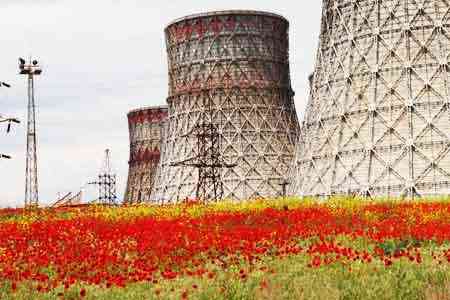
In the structure of gross value added for 2022, the largest weight was accounted for by the manufacturing and mining industries - 16.8%, wholesale and retail trade, car and motorcycle repairs - 12.9%, agriculture and forestry, fishing - 11.6%, financial and insurance activities - 8.9%, real estate transactions - 8.8%, construction - 7.6%. In 2022, the country produced 8.9 billion kWh of electricity. The largest share was accounted for by thermal power plants - 44%, by the Armenian nuclear power plant - less than 32% and by hydroelectric power plants - 22%.
ArmInfo previously reported that the portfolio of the Eurasian Fund for Stabilization and Development in Armenia reaches $533 million. Currently, the country is undergoing a process of modernization of the irrigation system, which is already in its final stage. Within the framework of the fund's projects, 10 initiatives are being implemented in Armenia, the total cost of which is more than half a billion dollars. One of such projects is the modernization of the irrigation system, covering all regions of the country. This $40 million project is aimed at reducing water losses and increasing the irrigated area.
Executive Director of the EFSD Project Block Andrey Shirokov noted the importance of investing in agriculture, which accounts for more than 10% of Armenia's GDP and is a key source of income for many households. Thanks to the implementation of the irrigation project, the area of irrigated land in Armenia will increase by almost 35 thousand hectares. In addition, the project will restore 340 thousand meters of canals, which will help reduce poverty and increase employment in rural areas. EFSD is also financing the construction of sections of the North-South transport corridor, an important transit route for the republic. $150 million has been allocated for the construction of the 4th stage of this corridor. In addition, the fund supports social projects in the areas of healthcare and energy efficiency.
The EFSD is currently considering another $300 million worth of Armenian projects, including the construction of the Kajaran Tunnel and financial budget support worth $100 million. These measures are aimed at increasing the country's economic growth potential and sustainable development.
The Eurasian Fund for Stabilization and Development was founded in 2009 to provide financial support to participating countries. The fund finances strategic investment projects and social programs.