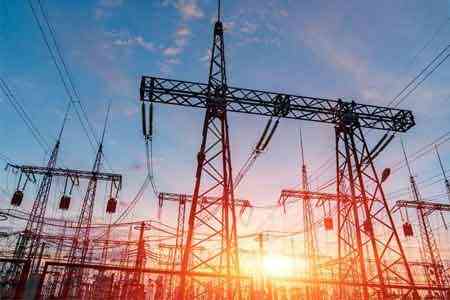
ArmInfo.The Armenian government has decided to return to the initial route of laying the Armenia-Georgia power line with the construction of an electrical substation near the village of Ddmashen. Previously, the issue of making changes to the project and, instead of the Ddmashen substation, to build a similar station at the Hrazdan Thermal Power Plant with the connection of the American General Electric and Chinese companies was discussed.
However, as sources close to the project told ArmInfo, today the Cabinet of Ministers, by its internal decision, decided to return to the initial version of the project, that is, to build a power line in Ayrum from the Ddmashen substation.
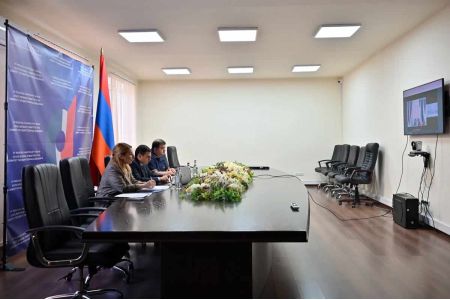
Based on today's decision of the RA government, the negotiations that took place with the German KfW bank yesterday ended successfully. The bank's delegation is in Armenia these days.
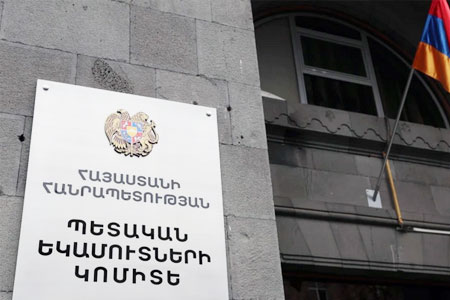
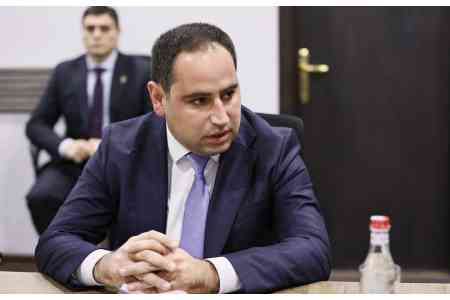
Earlier, the Armenian authorities reported a failed tender to select a contractor for the construction project of this substation. According to the Deputy Minister of Territorial Administration and Infrastructure of the Republic of Armenia Hakob Vardanyan, two companies - Siemens and ABB, participating in two lots in the pre-qualification tender, did not submit financial proposals for the construction of both the substation itself and the DC insert. The German bank KfW, which financed the project, insisted on conducting direct negotiations with specialized companies. The bank previously considered it necessary for exclusively European companies to participate in the tender as a condition for providing a loan. Against the background of the Russian-Ukrainian conflict and the emergence of electricity shortages, European countries began to pay more attention to the construction of renewable generation facilities, mainly wind power plants, in which European companies participating in the tender were also involved, which announced their workload until 2028. The Armenian side already intended to involve Chinese companies and the American General Electric concern in the construction, negotiations with which are not yet ongoing, since it was necessary to make changes to the project, and instead of the substation in Ddmashen, build a similar substation at the Hrazdan Thermal Power Plant.
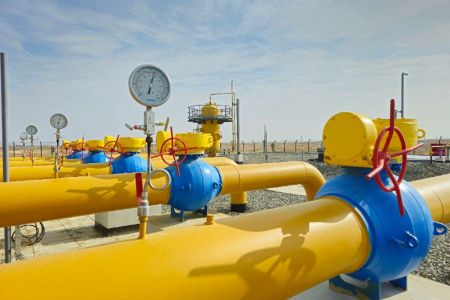
The project for the construction of the North-South energy corridor, designed to unite the electric power systems of Iran, Armenia, Georgia and Russia, has encountered a number of problems. Initially, the construction projects of 400/500 kilovolt power lines Iran-Armenia and Armenia-Georgia were planned to be completed by the end of 2019. Meanwhile, as of today, the work on the Iran-Armenia power line has been completed by 20-25%, and the construction of the Armenia-Georgia power line has not yet begun. According to the project, it is planned to build a 400 kV Iran-Armenia and 500 kV Armenia-Georgia power line. For these purposes, it is planned to build 2 "Ayrum" and "Ddmashen" electrical substations on the Georgian border. According to the FICHTNER company the preliminary cost of the Armenia-Georgia power transmission line construction program is 326.9 million euros, 10% of which should be part of the Georgian contribution. For these purposes, three loan agreements were signed in 2014-2015. In particular, the German KfW bank allocated 168 million euros in the form of a loan, and another 10 million euros will be provided by the European Investment Bank. It is expected to receive another 10 million euros in grant from the European Commission.
As for the Iran-Armenia high-voltage power line, this project is financed by the Iranian side, the total cost of the program is $107 million. However, taking into account the new sanctions imposed by the United States against Iran, there is concern about a reduction in the volume of this investment program.