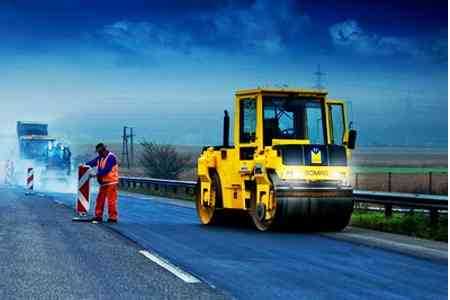
ArmInfo. The European Bank for Reconstruction and Development (EBRD) is lending EUR 236 million to Armenia to finance the construction of the southern section of the Sisian-Kajaran road.
This is the largest road infrastructure project ever financed by the EBRD in Armenia. This was stated by Bank President Odile Renaud-Basso at the 33rd Annual Meeting of the EBRD in Yerevan.
As the Bank's press service reports, It was previously complemented by technical cooperation funding generously provided by the European Union (EU). These funds were used to undertake the feasibility study as well as the environmental and social impact assessment.
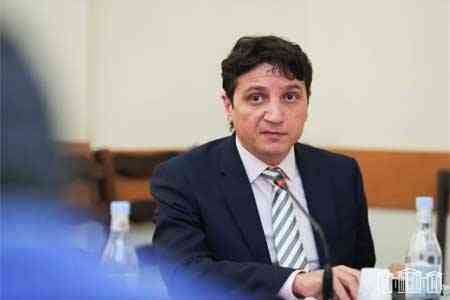
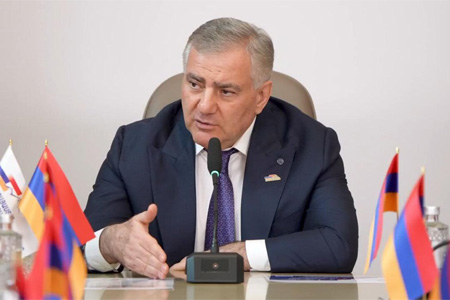
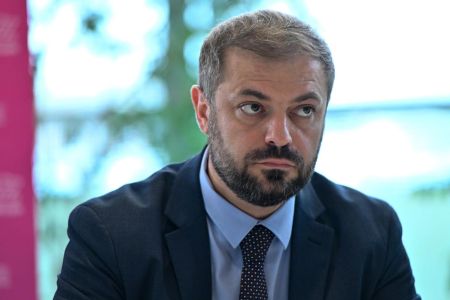
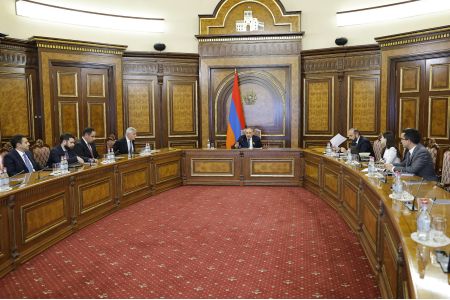
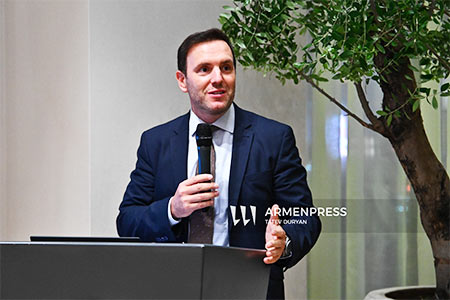
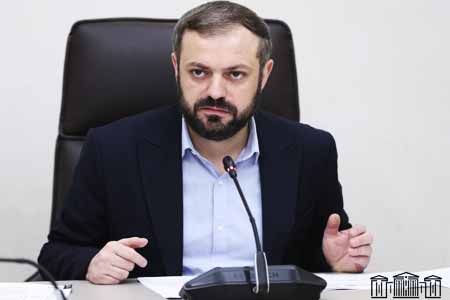
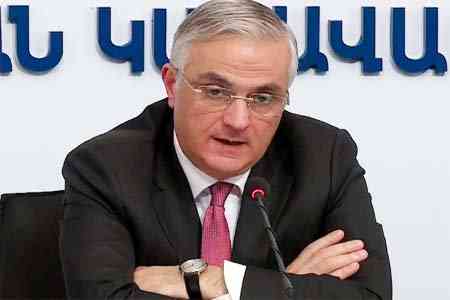
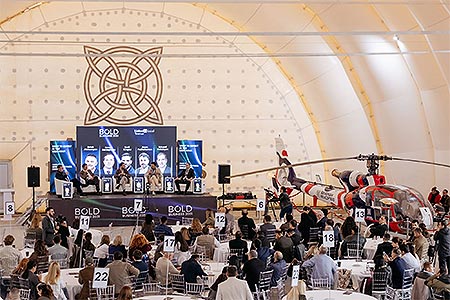
The loan agreement was signed today by the Minister of Finance of Armenia, Vahe Hovhannisyan, and EBRD Managing Director, Sustainable Infrastructure Group, Nandita Parshad during the EBRD Annual Meeting and Business Forum in Yerevan. The signing took place before the Armenia Investment Outlook session, in front of more than 200 official guests.
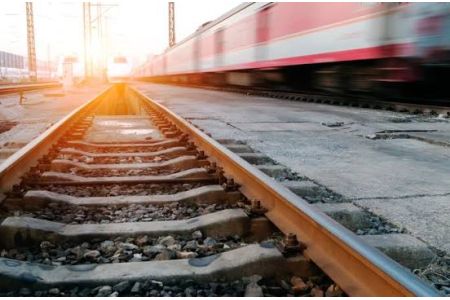
The funding will allow the Government of Armenia to build 24 kilometres of a new southern road section between Sisian and Kajaran, which is part of the North- South Road Corridor. The new road will enhance Armenia's local, regional, and international connectivity, and the country's access to international markets via the Black Sea. This important infrastructure project is aligned with EU flagship initiatives for improved land transport connectivity and building resilience in the southern regions of Armenia. The EBRD actively supports the EU Global Gateway strategy. The road will also enhance local and inter-regional connectivity by providing a faster and safer connection between the Syunik region and Yerevan, reducing the travel distance and time by half.
As Armenia is landlocked, solid road infrastructure is crucial for an efficient flow of trade that can support the value chain, increase diversification and accelerate the growth of the private sector and the economy as a whole.
EBRD Managing Director, Sustainable Infrastructure Group, Nandita Parshad said: "We appreciate Armenia's aspiration to develop a transport and logistics infrastructure that will enhance its regional connectivity and integration with external markets. We support this project because it meets our strategic objectives in Armenia and the region. We are also grateful to our partner, the European Union, which provided technical cooperation support to ease the implementation of this important initiative."
The EBRD is one of the largest institutional financiers in Armenia. For the past five years the Bank has invested EUR640 million in the country, supporting private sector development, infrastructure enhancement, renewable energy generation and rural digitalisation. To date, the EBRD has invested over EUR 2.1 billion in 211 projects across Armenia. Notably, that the new 60-kilometer Sisian-Kajaran road, which will be of the second technical category, will pass through difficult mountainous terrain and will include 27 bridges with a total length of 4.7 km and 9 tunnels with a total length of 12.5 km (the longest is Bargushat tunnel, approximately 8.6 km long). From the total package of financial assistance from the EU to Armenia in the amount of 2.6 billion euros, 600 million euros will be allocated for the construction of the Kajaran-Sisian road in the next five years. Another $150 million will be provided by the Eurasian Fund for Stabilization and Development.
The "North-South Road Corridor Investment Program" is a major infrastructure project in Armenia which aims at reducing the distance from the Iranian border to the Georgian one from 556 to 490 kilometers. The road will significantly facilitate access to the Black Sea not only for Armenia, but also for Iran. The project will provide access to the Black Sea and European countries through the territory of Armenia (Meghri-Kapan-Goris-Yerevan-Ashtarak-Gyumri-Bavra) and Georgia. Construction of the corridor was originally scheduled to be completed in 2019. The cost of the program was constantly revised upward. Meanwhile, in September 2012, when construction of the highway began, the amount quoted by representatives of the Armenian government was several times less - $962 million.