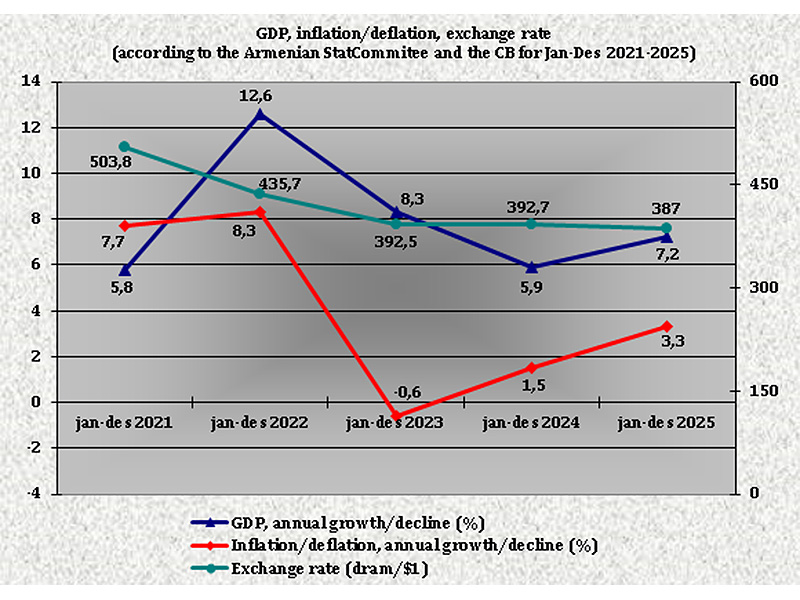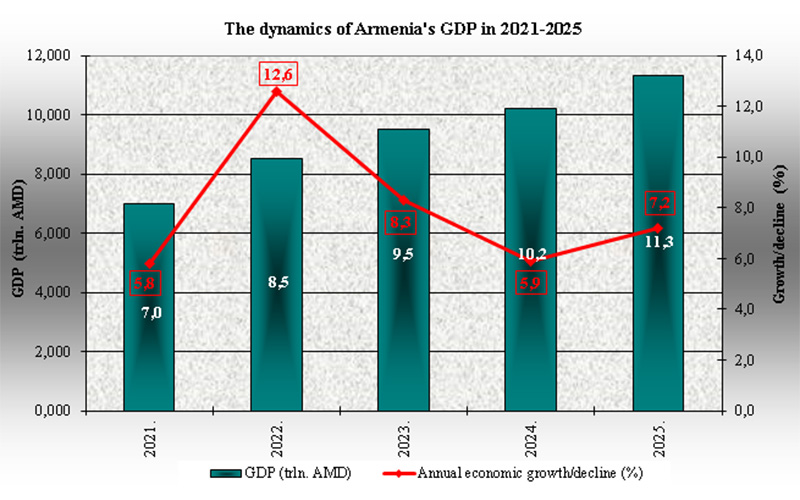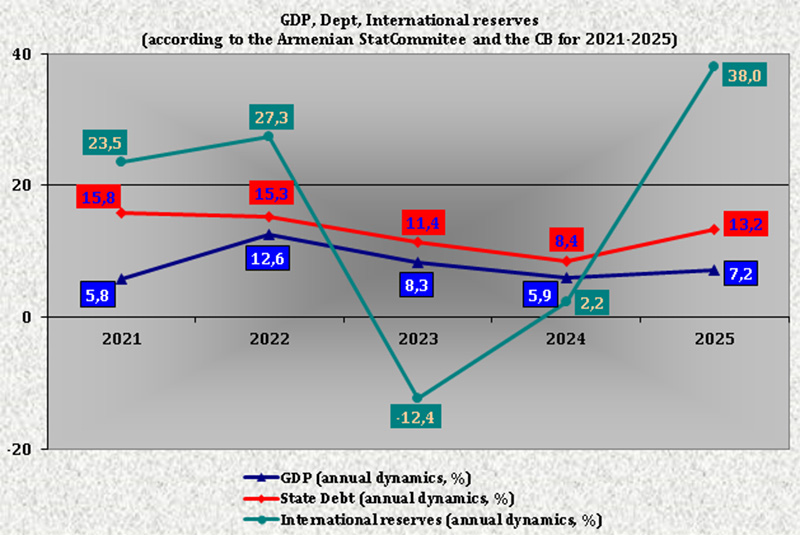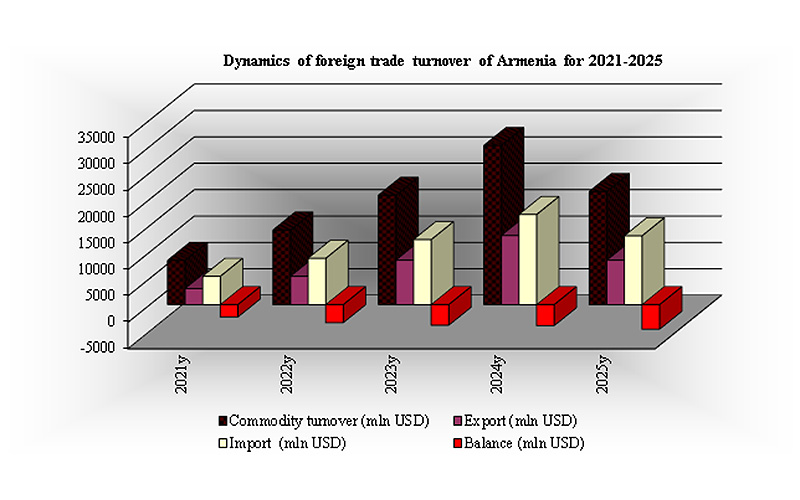


ArmInfo. In recent years, the economy of the Republic of Armenia has recorded a great growth. Since the non-violent Velvet Revolution of 2018, the Armenian economy has grown by almost 30%, state budget revenues have increased by more than 91%, and about 200 thousand jobs have been opened, which means an increase in the total number of jobs by about 37%.
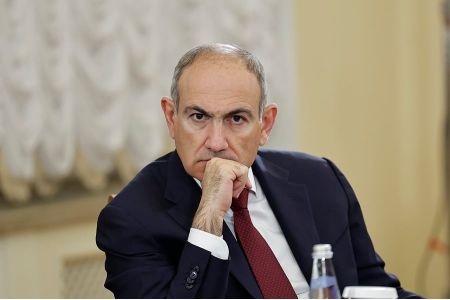
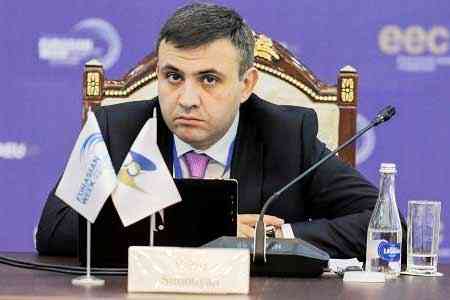
Prime Minister of the Republic of Armenia Nikol Pashinyan stated on May 15, speaking at the Annual Meeting of the European Bank for Reconstruction and Development.
According to him, the average nominal wage has increased by about 87% compared to 2017, and GDP per capita has almost doubled. "And keep in mind that during this time we also experienced the coronavirus epidemic, a 44-day war, a humanitarian crisis and the deportation of more than 100 thousand Armenians from Nagorno-Karabakh, the occupation of more than 200 square kilometers of the sovereign territories of the Republic of Armenia, internal political and regional escalation. But thanks to reforms, we were able to cope with all the problems mentioned. I must, however, note that high economic indicators were recorded precisely thanks to the changes that the non-violent, velvet revolution of 2018 brought and the government's adherence to the course of popular reforms. It was after the revolution that all businessmen in Armenia got the opportunity to conduct economic activities freely and without restrictions. Prior to this, the most profitable sectors of the economy in the Republic of Armenia were actually subject to shadow quotas; the import and export of many products was impossible without the permission of the political authorities. Since 2018, these phenomena have been eradicated in Armenia, and now in our country all those people who have the necessary skills, abilities and desire can make a profit. It is thanks to these people that the economy has developed, state budget revenues have increased, and these people are the locomotive of the development of our country," Pashinyan said.
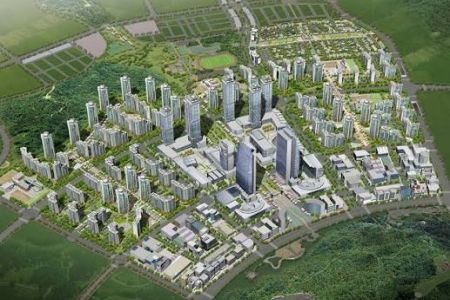
He noted that economic growth is influenced by various factors. "But in Armenia, by and large, the rate of economic growth is directly proportional to the progress of democratic reforms. We have significantly reduced the shadow, we are tirelessly fighting corruption. In Transparency International's Global Corruption Perceptions Index, the Republic of Armenia has risen by 45 points since 2018, rising from 107th places at 62nd. As a result of all these measures, the potential of the Armenian economy has increased significantly, and the realization of this potential is a new challenge for our country, since its proper implementation is of paramount importance from the point of view of the future development of Armenia. To solve this problem, we set three key tasks: reforms in the education sector, development of institutional capacities, implementation of the peace agenda. He, in particular, noted that in the field of education, Armenia is at the most active stage of improving the content and physical infrastructure. "We have adopted new standards for preschool education and general education, and have begun certification of teachers, one of the key goals of which is to double teachers' salaries by checking their qualifications. Also, in order to ensure accessibility of education throughout the republic, we have undertaken the construction of 500 kindergartens and 300 schools, and by the way, in the implementation of this project we often feel gaps in the education sector. In any case, the fact is that compared to 2017, the budgetary funding of the education sector has more than doubled in 2024, or more precisely, increased by 119%. Funding for science has increased by 147% compared to 2017, and even here, the processes of sometimes tripling scientists' salaries are underway. In this context, we attach particular importance to reforms in vocational education and training, as well as higher education. We are in the active stage of discussing the Academic City construction project. The idea is to build an academic city from scratch, which will concentrate the country's university and IT center, and will also become a favorite place for intellectual entertainment. I would like to draw the attention of investors to this project, the preparation of a master plan for which will be completed in the near future. Reforms in the field of education are key for us, since a new quality of education is necessary from the point of view of ensuring the further progress of our country. Education is also a tool for democracy, anti-corruption practices and institutional capacity building. After all, the work on all these agendas is done by people, and the more highly qualified specialists there are, the easier it is to implement any, even the most ambitious projects. But the idea is not only that the next generation will have a much higher level of education and will be more competitive in the global and local labor market and thus make our economy more competitive. The problem is that during the reform of the education sector, we also learn, and in general, our strategic concept of the education sector is to make education a lifelong process and a state ideology. As I have already said, on the way to implementing the reform and development program, we very often feel gaps in our education system, in our established attitude towards education, both in the public and private sectors," the Prime Minister noted.
Pashinyan emphasized that the private sector in Armenia today also needs highly qualified specialists, and this is often necessary to reduce production costs, enter new markets, and develop production and work standards. "Of course, the government implements programs aimed at all this, but also our abilities to implement and improve these programs need to be developed. And development is not possible without education, without learning.No creative change is possible without learning," said the head of the Armenian Cabinet.