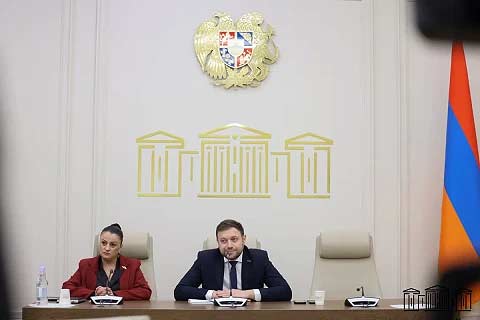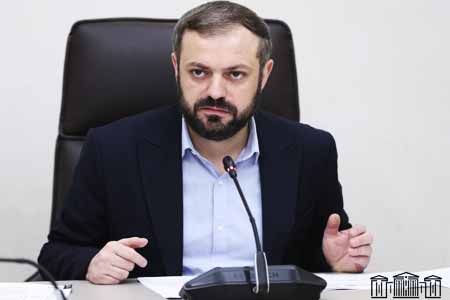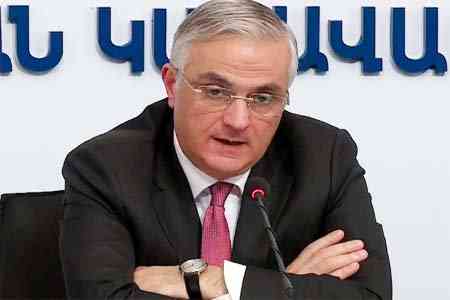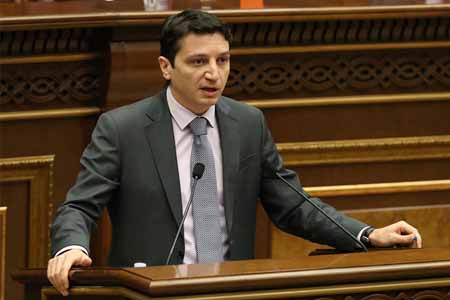
ArmInfo.Due to fears of harming representatives of small and medium- sized businesses, the Armenian authorities decided not to follow the path of eliminating the turnover tax system, but to "motivate" businesses to voluntarily transition to the general tax field. This was stated by the head of the Ministry of Finance Vahe Hovhannisyan on May 31 in parliament, commenting on the double increase in the turnover tax rate initiated by the Cabinet.
According to Hovhannisyan, despite opinions on the advisability of immediately abandoning the turnover tax system, the Ministry of Finance, taking into account the fact that the changes affect more than 50 thousand business entities, insisted on the proposed option. "If liquidation has a negative impact on even 5 thousand business entities, or if we harm at least one thousand, we may face problems. As a result, we decided to take the path of reducing the attractiveness of the system and neutralizing risks using other tools," the minister indicated.
The head of the State Revenue Committee, Rustam Badasyan, in turn, noted that if he ever decides to start a business, he will not work within the framework of the turnover tax. This system does not allow business development, Badasyan believes.
Responding to the concerns of a number of parliamentarians due to the fact that the state treasury of Armenia, due to various tax benefits, annually receives less income in the amount of approximately 600 billion drams, Vahe Hovhannisyan indicated that this amount is formed, among other things, due to preferences in the field of healthcare and education.
The government of Armenia plans to review the turnover tax system from October 2024, and from 2025 to narrow the scope of beneficiaries of the micro-enterprise system. Currently, turnover tax (replaces VAT and income tax) is paid by business entities whose annual turnover does not exceed 115 million drams (from January 1, 2020, Armenia returned to non-taxable annual turnover up to 115 million drams). This group includes SMEs, individual entrepreneurs and notaries. We are talking, in particular, about payments of 5% from the turnover of commercial activities and 3.5% from industrial activities. Now the Ministry of Finance proposes to double the turnover tax rates established for main types of activities, providing the opportunity to reduce the tax payable through documented expenses.
The authorities also plan to expand the range of activities prohibited from taxation under the microenterprise tax and turnover tax systems. In particular, from 2025 it is recommended to limit; the opportunity to engage in notary, lawyering and organizing lotteries in the value added tax system; in the micro-enterprise taxation system, the activities of taxpayers engaged in the purchase and sale and/or rental of real estate in the regions, hairdressing services, body care, car maintenance services, intermediary services, software development and construction work, assessment and measurement of real estate , activities related to the organization of baths and saunas. The adoption of the project promises the state treasury an annual increase in turnover tax revenue of approximately 17.8 billion drams.
Earlier, representatives of SMEs told ArmInfo that the share of small and medium-sized businesses in Armenia's GDP, according to the latest data, is about 25%. Meanwhile, the figure in developed countries is usually in the range of 50-60%. And instead of developing additional tools to support SMEs, the RA authorities are tightening conditions in the form of a double increase in the turnover tax rate with a further abandonment of the system as a whole. As pointed out by the President of the SME Cooperation Association Hakob Avagyan, the bill was adopted by the Cabinet of Ministers without taking into account the risks and assessing its impact, which will lead to higher prices for services, an increase in the "shadow" and the closure of a number of business entities.