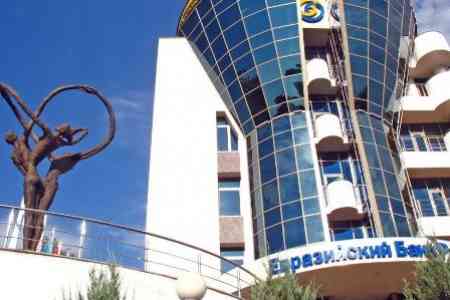
ArmInfo.The Eurasian Development Bank (EDB) presented a report on the Eurasian Transport Framework. The presentation took place as part of the bank's annual meeting and business forum taking place in Almaty.
According to the report published on the Bank's official website, the Eurasian Transport Framework is a network of interconnecting latitudinal and meridional international transport corridors and routes that ensure internal and transcontinental connectivity of the countries of Eurasia. The basis of the Eurasian transport framework is formed by international transport corridors in the east-west and north-south directions, connecting Asia, Europe and the Middle East.
The Eurasian transport framework includes five main international transport corridors - the Northern, Central and Southern Eurasian corridors, the TRACECA ITC and the North-South ITC, supplemented by branches and regional routes with a total length of more than 50 thousand km.
The concept of the Eurasian transport framework includes 10 system elements: Synergy of transport corridors and routes; Transport crossroads in Central Asia; Priority of intraregional economic connectivity; Impulse for realizing agro-industrial potential; Insurance for global trade and logistics chains; Reducing imbalances in the geography of trade; From competition between corridors and modes of transport to their interaction; Particular attention to the nerve nodes (transport nodes); Increase in containerization; Improving soft infrastructure.
As noted in the report, over the past few years of its activity as a key regional institution for the development and implementation of various infrastructure projects, the EDB has conceptually substantiated the concept of the Eurasian transport framework and brought it out for discussion in the public space. The concept of the Eurasian Transport Framework is based on the idea of the importance of connecting and complementing Eurasian transport corridors, which increases transport connectivity, reduces trade costs and simplifies access to international markets - especially for landlocked landlocked states.