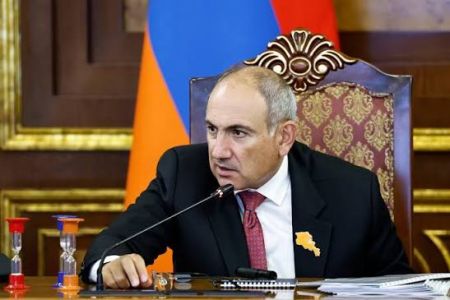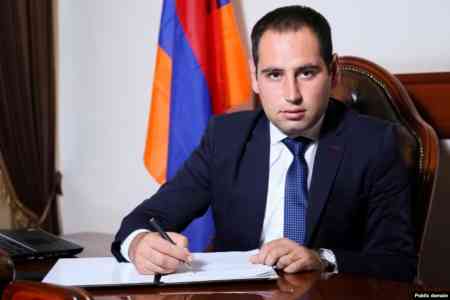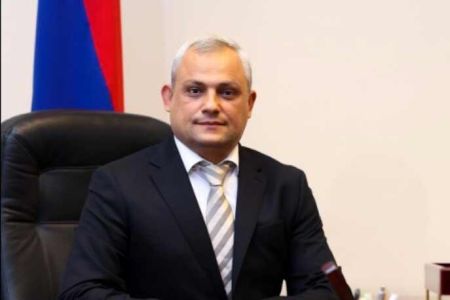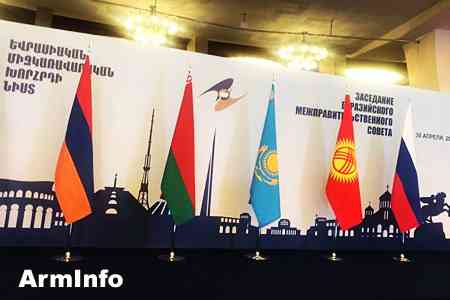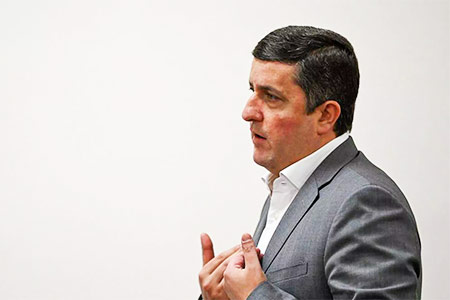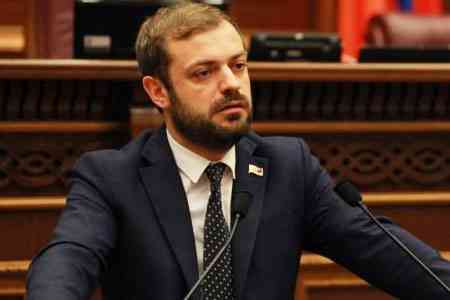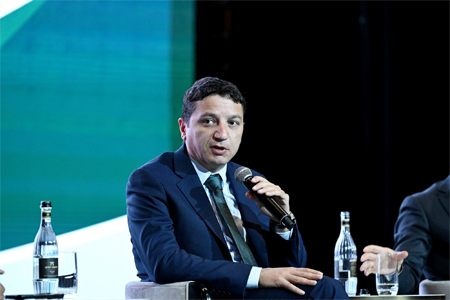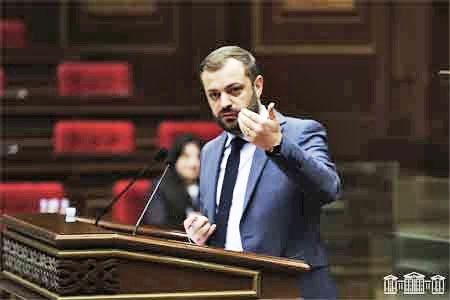


ArmInfo. Regional economic integration can yield additional economic benefits for the countries of the region if these processes mature and develop on the basis of mutual coordination of the national interests of all participants, and not under the sole leadership of one. This was stated by the deputy of the opposition faction of the National Assembly , economist Tadevos Avetisyan.
Now that they have achieved military success and dominance, and Armenia is facing serious security and socio-economic problems, the Turkish-Azerbaijani tandem proposes lifting the embargo as the next step in advancing their national interests. In this context, it is also noteworthy that after the last elections, the current government of Armenia formulated in its five-year plan the goal of lifting the blockade of the region as the basis for mutually beneficial coexistence of our country, expecting a constructive position from Turkey. At the current stage of geopolitical and regional events, this goal-setting is accompanied by a populist and unrealistic program of the so-called "Crossroads of the World", but in fact it does not have a comprehensive foundation and framework for implementation arising from the interests of Armenia's sustainable development," he wrote on the social network.
Thus, touching upon economic cooperation with Turkey, Tadevosyan believes that, in general, it will be implemented within the framework of its sole leadership and subordination to the prospective interests of the other side, expansion of the Turkish economy with the simultaneous displacement of natural allies from the region, the imposition of geopolitical interests through a unilateral economic blockade. Gross encroachments on the sovereign territory of Armenia are possible with the threat of using Turkish- Azerbaijani military force, as well as irreversible losses of statehood in the context of considering the Republic of Armenia as an obstacle to the implementation of Ankara's strategic plans.
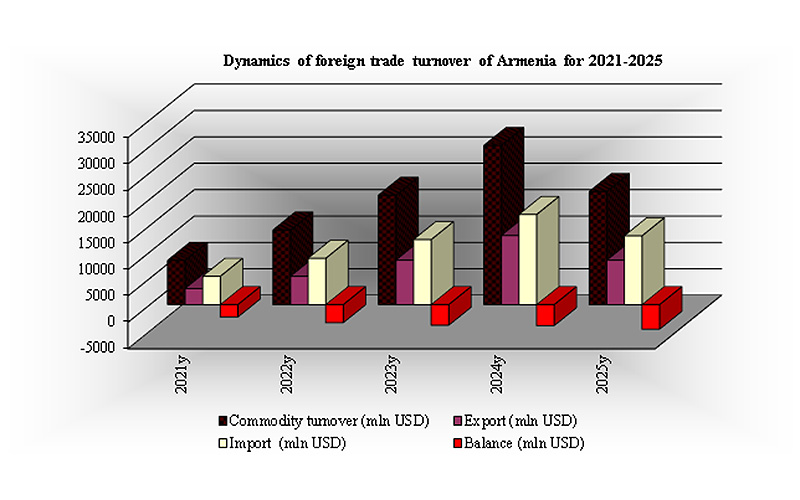
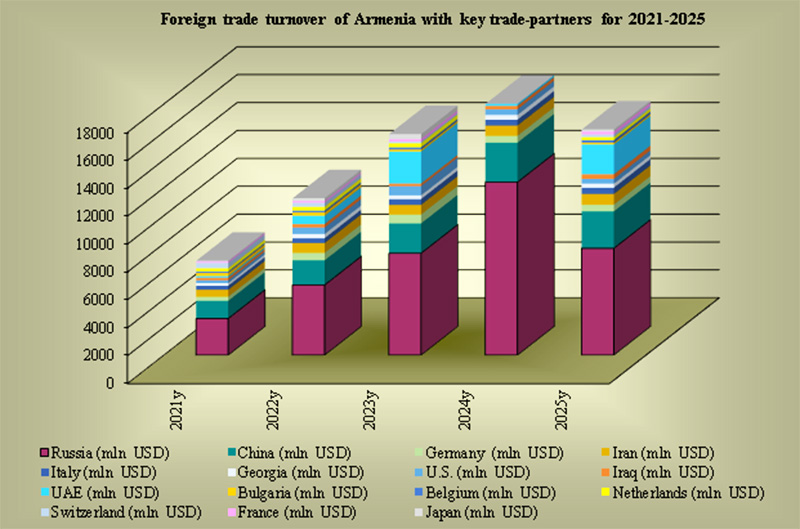
Turning to the indicators of trade and economic activity, Avetisyan recalls that in the ten years preceding the 44-day war (2010-2019), imports from Turkey to Armenia amounted to $2.151 billion, with a trend of sustainable growth, with exports of $13.9 million, which is 150 times less than imports (Turkey's share in the import structure is 5%, in the export structure - 0.1%). In particular, in 2021, under the embargo on imports of goods of Turkish origin to Armenia, imports amounted to $73 million, in 2023 imports reached $337 million, increasing by 30% compared to last year, while Armenian exports, meanwhile, decreased 10 times - to $6.4 million. In January-October 2024, imports from Turkey amounted to $272 million, exports from the Republic of Armenia were only $397 thousand, which is 690 times less than exports, while the total volume of Armenian exports doubled - to $11.55 billion, of which 22.5% came from Russia. At the same time, over 10 months, the share of EU countries in the structure of RA exports decreased by 2.5 times, to 4.3%, the share of the EAEU decreased by 2.5 times, to 23.7%, exports to Iran fell by half - to 0.8%, to the USA - a decrease of 2 times, - to 0.4%, the share of Georgia also decreased by half - to 1.2%.
, the MP noted. Threats in the form of imitation of regional integration to the detriment of economic security, deepening political and economic instability, unlimited access to land ownership in border settlements also seem real.
Based on the above-mentioned general assessments and data, Tadevos Avetisyan proposes minimum principles for regulating the processes of regional economic unblocking, arising from the national interests of Armenia's sustainable development.
1. The economy of Armenia should develop not as an end in itself, exclusively by market "wild" approaches, but in order to prioritize the deepening security and socio-demographic problems; 2. Effective and mutually beneficial economic integration in the region and sustainable economic development of Armenia cannot be achieved by ignoring these problems, increasing and deepening them; 3. Investments and economic growth should become the material basis for realizing the aspiration of the Armenian people to live safely, with dignity, freely and prosperously; 4. Economic cooperation should be aimed at, and not counteract, the protection of the sovereignty and territorial integrity of the country, the use of the entire existing human and economic potential; 5. The national state with a socio-economic system must fully and steadily fulfill its positive and objective obligations; 6. National prospective interests should not be given over to either the invisible hand of the market, or to seemingly external opportunities that contradict them and are directed by the interests of others.