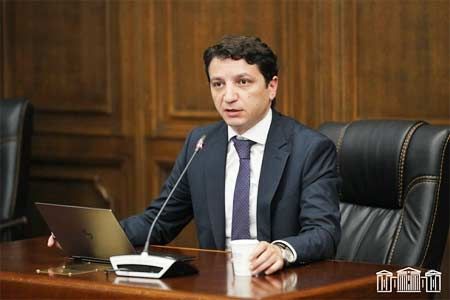
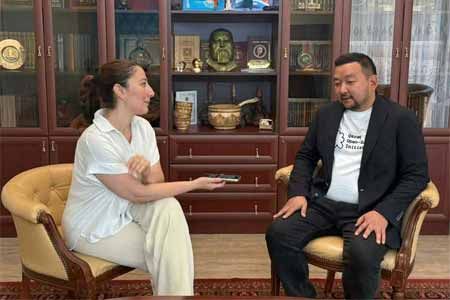
ArmInfo. Further development of the Armenian economy is possible only if the republic has good ties with both Russia and the West. Only with good relations with both poles can Armenia become a mediating bridge. This was stated in an interview with an ArmInfo correspondent by the head of the economist Suren Parsyan.
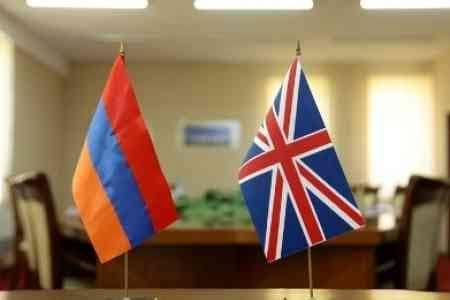
On January 9, the RA government approved the draft law "On the beginning of the process of joining the European Union", and on January 14, the Charter on Strategic Partnership between Armenia and the United States was signed in Washington.
Both documents caused a sharply negative reaction from Moscow. Russian Deputy Prime Minister Alexei Overchuk directly stated the incompatibility of Yerevan's participation in the EU and the EAEU. He also hinted at Armenia's dependence on Russian energy resources and the further development of the country's economy.
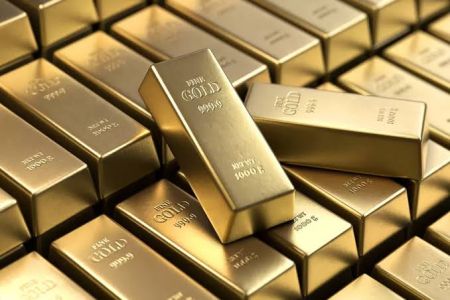
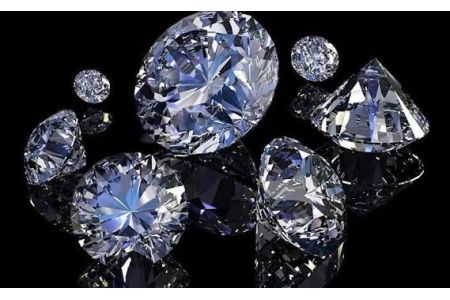
As Suren Parsyan noted, the establishment of relations with both poles began in 2022, as a result of which Armenia has become an exporting country for both the West and Russia, the results of which are used by Armenian companies that earn good money from this. A clear proof of this is that, according to data for 11 months of last year, Armenia's trade turnover with foreign countries amounted to $ 28.5 billion, 42.2% of which falls on the Eurasian Economic Union, 7.5% - on the countries of the European Union and only 1.4% - on the United States. More than a significant increase in trade turnover is largely due to mutual exports. In particular, cars, machinery, equipment come to Armenia from the United States and Europe, which are then shipped to Russia, and vice versa, gold and diamonds are exported from Russia to the republic, from where they are shipped to the same Europe, the UAE, China and India. "Thus, Armenia has become a service country for both poles, and there are bilateral interests at work here. Armenia will maintain the above- mentioned indicators if it can maintain relations with both economic units. Abandonment of any of these poles may lead to unpredictable consequences for the country's economy," the economist emphasized.
Parsyan noted that the West is a source of modern equipment, technology and machinery for Armenia, while Russia is a source of food and energy security. For example, the republic depends on supplies of grain crops (99.9%) and energy resources (80%) from Russia. Against this background, the economist continued, the country cannot refuse supplies of machinery and technology from Europe, or food and energy resources from Russia. "It is necessary to make maximum use of the existing opportunities for the development of the economy of the Armenian state. The problem is that if any of these poles is abandoned, the entire chain of relationships will begin to collapse, and the country's economy will become even more uncompetitive. In this regard, it is important to make the necessary calculations with a cool head to understand the situation and issues related to economic benefits. It is very important to show these benefits to partners from the West and Russia, to demonstrate the advantages that our country has," Suren Parsyan stated.
As an example of this benefit, the economist cited the country's banking system, through which Russian companies continue to transfer money to the West and cash it in at the receiving locations. In the event of sanctions against Armenian commercial banks, Russian companies that use these schemes will also suffer. "A mutually beneficial process is obvious here, and against this background, Armenia's desire to become a member of the EU is more of a political nature than the logic of economic calculations. This process is temporary. Moscow understands all this very well. It should also be noted that the Russian Federation is Armenia's largest investor. After the 44-day war in 2020, a number of Western companies wanted to leave the country, for example, Gronimed Mining, HSBC and Credit Agricole banks, whose places were taken by Russian companies. We constantly talk about the need to diversify the country's economy, but in fact, dependence on the Russian Federation is growing. It is very important to take steps to attract Western investment to the Armenian economy, which will make it possible to increase the level of productivity of domestic businesses. We must actively work with all partners to find honest and fair solutions," the economist said.
Answering a question about the actions of the authorities under pressure from both sides, Suren Parsyan noted that when working with partners, it is extremely important to point out the advantages that active cooperation with both poles provides, namely, the continuation of Western trade with Russia through Armenia. This is also very important for Western companies, which will sooner or later return to the Russian market. For this reason, they set themselves the task of not losing this market completely. In addition, as the economist noted, the West also views Armenia as a transit state, bearing in mind the substantial funds that are invested in the development of the republic's infrastructure. Russian companies can also take advantage of these infrastructures. For example, the construction of the North-South highway may be of interest to all parties. The European side is financing the Sisian-Kajaran section of the road, which is of great interest to Iran as well.
The economist believes that Western countries can also have a serious impact on reducing the republic's dependence on Russia in the energy sector, in which Russian capital is mainly present, with the exception of the Vorotan Cascade of Hydroelectric Power Stations, which belongs to the American side. "In a word, we must work with all parties to solve the existing problems," Suren Parsyan stated.
According to the RA Statistical Committee, Armenia's foreign trade turnover with the EAEU countries in January-November 2024 amounted to $11.9 billion, which is 68.3% higher than the figure for the previous year. At the same time, exports decreased by 10.1% to $3.1 billion, against the backdrop of a 2.4-fold increase in imports to $8.8 billion. The EAEU accounts for 42.2% of foreign trade.
The EU countries account for 7.5% of trade turnover. In particular, the volume of trade turnover decreased by 14.1%, amounting to $2.1 billion. At the same time, the volume of exports for the year decreased by 18.6% - to $551.8 million, against the background of a decline in imports by 12.4% - to $1.6 billion.