ArmInfo. As a result of the easing of some restrictions, opportunities for Armenian pension funds to invest the population's funds in the real sector of the economy will be expanded. The National Assembly of the Republic of Armenia is discussing amendments to the law "On funded pensions" in the first reading at a plenary session on January 21.
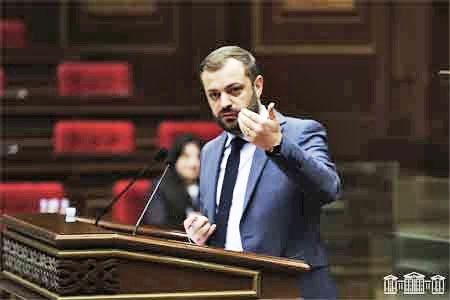
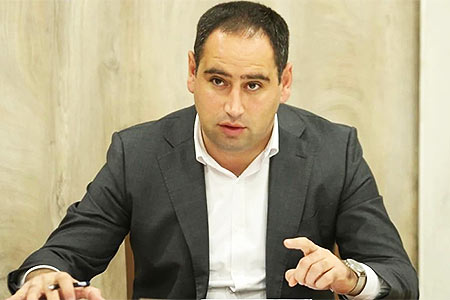
As Deputy Chairman of the Central Bank of the Republic of Armenia Armen Nurbekyan noted in his speech, currently there are limits on investments for funds, which does not allow pension funds to fully direct their funds to various investment projects, including infrastructure development, as well as to finance other sectors of the economy. Investment projects in Armenia are mainly financed through non-public (not listed on the stock exchange) financial instruments. At the same time, the opportunity to invest in non- public (not listed) instruments is provided only indirectly through other investment instruments, which limits the opportunity to invest the population's pension savings in the economy, reduces the efficiency of fund management and their ability to generate high income.
The proposed amendments to the law will expand investment opportunities for pension accumulation funds represented by two companies - C-Quadrat Ampega Asset Management Armenia and Amundi-ACBA Asset Management - by directing the funds' resources to finance the RA economy through the use of various financial instruments. The current law contains a provision according to which a pension fund manager does not have the right to manage a specialized investment fund. Meanwhile, there are sectors in the Armenian economy that require financing, and these investment projects can be financed through investment funds. At the same time, mandatory pension fund managers have professional skills to manage various investment funds. Therefore, the removal of legislative barriers will allow using these opportunities, stimulating investments in the real sector of the economy.
Currently, some investment limits set for pension funds have a negative impact on the efficiency of their management. In particular, the small limit on investments in equity securities - 25% for conservative funds does not allow funds to take advantage of the opportunity to ensure high and stable returns in the long term. Now it is proposed to increase this threshold to 35%. The law also prohibits direct investments in non- public (unquoted) financial instruments (allowed only indirectly through investments in other funds with a maximum limit of 10%). In general, as Nurbekyan noted, investment projects in the real sector of the economy can be financed using various instruments: direct investments, when the pension fund invests directly through the purchase of shares, bonds or other financial instruments, including those unquoted on the stock exchange, and indirectly, through other investment funds, which, in turn, invest in projects. However, according to the current legislation, only indirect investments in non-listed instruments are allowed, and financing of the real sector of the economy in Armenia is carried out mainly through direct investments in non-public (non-listed) instruments.
As a result, investment projects implemented in the economy remain inaccessible to pension funds. Therefore, it became necessary to include direct investments in the 10% share of investments in non-public funds, which would allow funds to jointly participate directly in financing various investment projects in the real sector of the economy.
In addition, according to the current law, the register of fund participants provides beneficiaries with information about their savings in paper form. But the problem is that a number of opportunities have already been created for a citizen to choose a pension fund online, change a fund, and receive additional information by providing an e-mail. As a result, the requirement to send information in paper form makes the administrative costs of the system unreasonably high.
In 2023 alone, these costs amounted to about 50 million drams. At the same time, about 1/3 of these costs did not justify themselves, since paper reports did not reach the participants due to incorrect addresses or other reasons. Therefore, the introduction of amendments and additions to the law is aimed at exempting from the obligation to send information in paper form, which will reduce administrative costs.
The elimination of all these restrictions, the Deputy Chairman of the Central Bank noted, will increase the investment opportunities of Armenian pension funds.
The Deputy Chairman of the Central Bank also reported that about 65% of all investments of the two management companies are directed to government securities, the rest is represented in the form of bank deposits and corporate securities. The funds also participate in the purchase of shares during IPOs, but the funds' activity in this direction is very limited and insignificant. Earlier, the CEO of Amundi-ACBA Asset Management, Jean Mazejian, told ArmInfo that the volume of assets managed by mandatory pension funds of Armenia reached 2.2 billion euros or 10% of GDP. Meanwhile, in developed countries, for example, in the Netherlands, the figure reaches 115% of GDP.
From the moment the system was introduced until today, there have been only two pension fund managers in Armenia who received licenses from the Central Bank of the Republic of Armenia to manage pension funds within the framework of the ONPS in 2013: C-Quadrat Ampega Asset Management Armenia and Amundi-ACBA Asset Management. The shareholders of the first are the Austrian investment company C- Quadrat Investment AG and the German Talanx Asset Management. In terms of assets (about 150 billion euros), Talanx Asset Management GmbH is one of the largest insurance and financial groups in Europe, represented in 150 countries. The shareholders of the second are the French company Amundi (51%), which manages assets in excess of 2.2 trillion euros in 35 countries, and the Armenian Acba Bank (49%).
Management companies offer three investment models: stable income, conservative and balanced. According to the rules, the stable income model assumes that assets cannot be invested in equity securities and derivatives based on them; according to the terms of the conservative model, the weight of equity securities and derivatives acquired for the purpose of hedging them in the fund's assets cannot exceed 25%; according to the rules of the balanced model, the weight of equity securities and derivatives acquired for the purpose of hedging them in the fund's assets cannot exceed 50%. Which of the specified strategies is used to place funds, the participant of the system decides for himself, and his transition from one model to another is free once within one year. Those who did not initially make this choice, the system automatically places in a medium, moderate risk fund, that is, conservative. As the risk level increases, so does the return on investment.