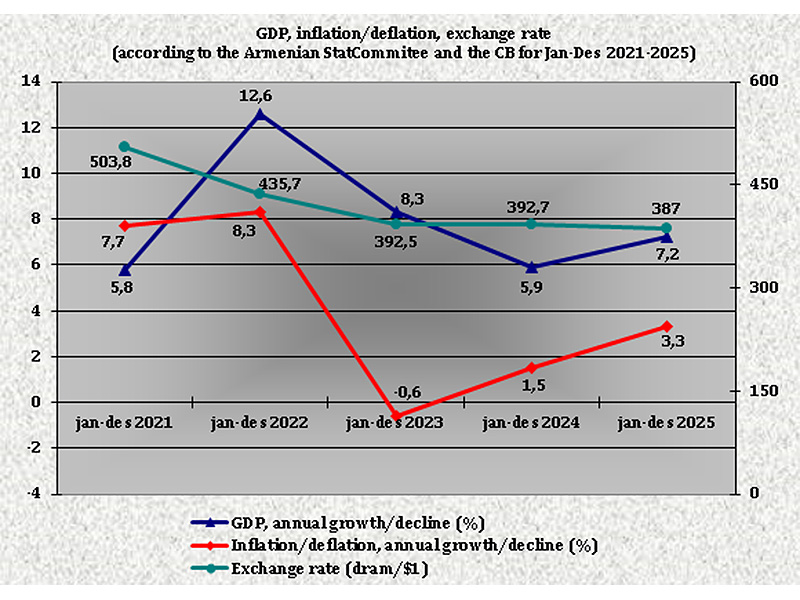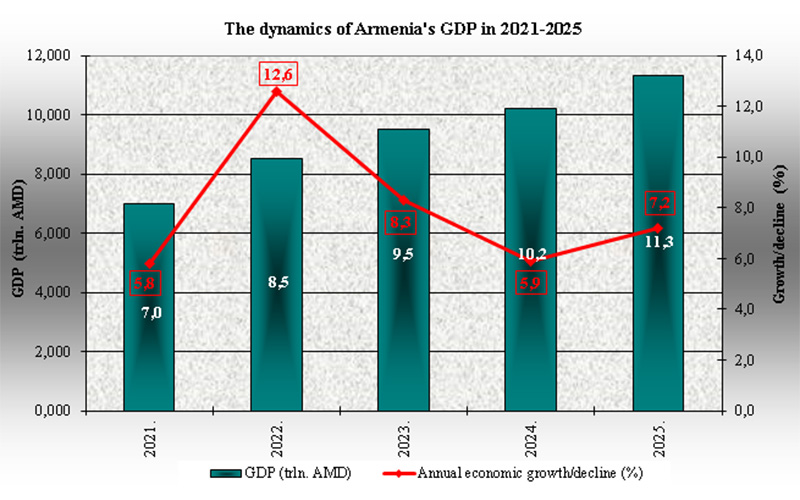


ArmInfo. Fitch Ratings has affirmed Armenia's Long-Term Foreign Currency Issuer Default Rating (IDR) at <BB-> with a <Stable> outlook, as noted in the Fitch Ratings statement. It also includes an updated forecast for Armenia's GDP growth, projecting a slowdown to 4.8% in 2025 (down from an estimated 6% in 2024 and an actual 8.3% in 2023).
Key Rating Drivers
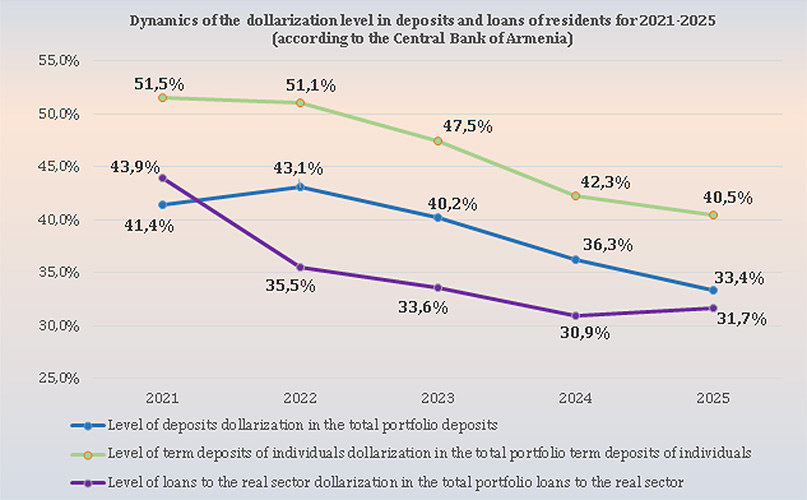
Credit Fundamentals: Armenia's <BB-> rating reflects per capita income and governance indicators that are inline with peers, stable growth prospects and a robust macroeconomic policy framework. Set against these strengths, Fitch notes the small size of the economy, large fiscal deficit relative to with peers, relatively weak external finances, high financial sector dollarization, and geopolitical risks.
Higher Fiscal Deficit: Fitch projects the government deficit to increase to 5.5% of GDP in 2025 (2024: 4.7%; current BB median:3%), reflecting an expansionary fiscal policy. This incorporates the costs of integrating about 65,000 refugees from Nagorno-Karabakh (presumably those who received social material assistance from the state, out of around 120,000 Artsakh residents forcibly displaced to Armenia in September 2023 - Ed.) and higher military spending. The planned introduction of universal health insurance program from 2026 will increase expenditure by about 1.3% of GDP/ year, keeping the deficit at 5.4% of GDP in 2026.
Adherence to Fiscal Rules: Fitch assumes the authorities will comply with the fiscal rules that are triggered when gross general government debt/GDP exceeds 50%, including moderating current expenditure growth (excluding interest payments) to below historical nominal economic growth rates. While planned capex will be larger than the fiscal deficit (both as a percentage of GDP) as per the fiscal rules, Fitch expects capacity constraints to continue to limit project execution.
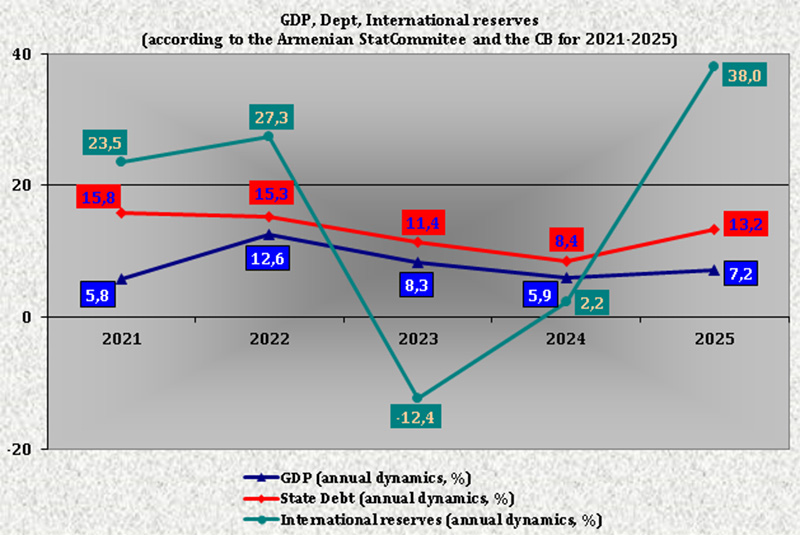
Rising Debt Trajectory, FX Risk: Fitch projects that the fiscal loosening will increase GGGD from an estimated 49.7% in 2024 to 55% by end-2026, in line with projected peer medians. Debt dynamics are heavily exposed to currency risk, given that as of October 2024, 48.6% of GGGD was foreign-exchange- denominated. However, market risks are mitigated by the fixed interest-rate structure of 85.7% of outstanding debt, and the high (75%) proportion of concessional debt owed to multilateral and bilateral lenders within external government debt. The authorities plan to issue a Eurobond in Q1 2025 to redeem a maturing $313 million Eurobond in March 2025. The authorities also plan an overfinancing on external sources (including through borrowings from multilateral organizations) and domestic markets in 2025-2026, anticipating budgetary and project financing needs.
Negotiations with Azerbaijan: Armenia and Azerbaijan have reportedly reached an agreement on certain key points for an eventual peace treaty, including border delimitation. The flexibility and willingness from both parties to resolve the outstanding issues and the timing for a potential resolution remain uncertain. Fitch does not expect a sustained military re-escalation of the conflict. A comprehensive peace treaty could potentially unlock trade routes to Turkiye and benefit Armenia's long-term growth potential.
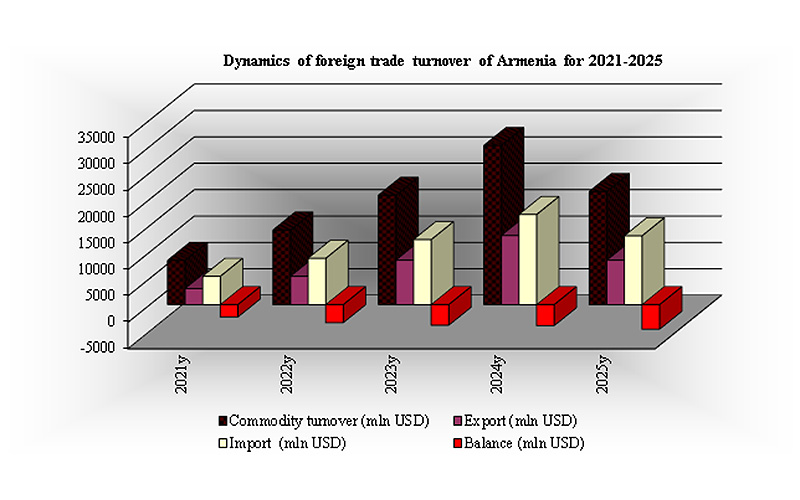
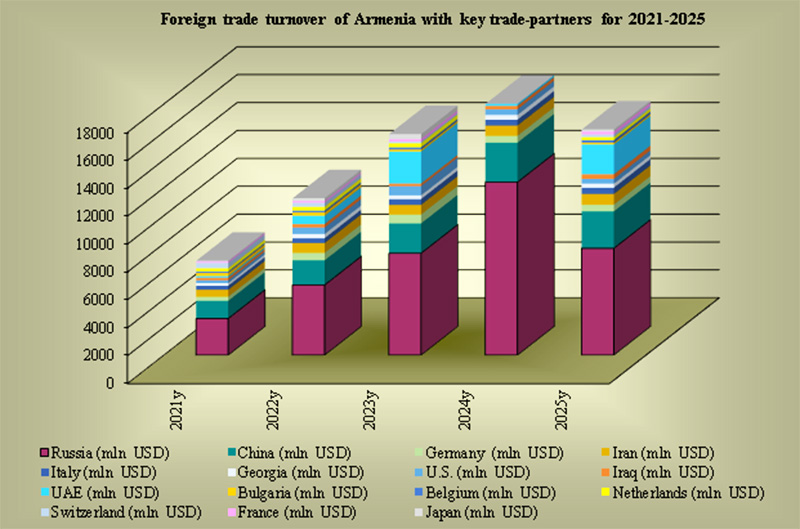
Worsening Relations with Russia: Armenia's relations with Russia appear to be worsening, as Armenia is considering EU membership, which may be incompatible with its membership in the Russian-led Eurasian Economic Union. Prime Minister Nikol Pashinyan has reportedly expressed his desire to leave the Russia- led Collective Security Treaty Organization. Fitch analysts believe, a fundamental breakdown in relations is unlikely given Armenia's dependence on Russia for energy and trade (24% of exports and 56% of imports). We expect Armenian banks to continue to comply with Western sanctions on Russia.
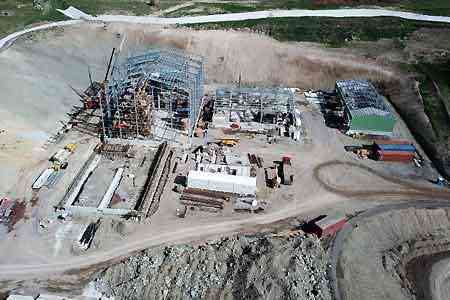
Moderating Growth: Fitch estimates the economy to have grown by 6% in 2024 (vs 8.3% in 2023; 12.6% in 2022) as the spillovers of the large increase in migration from Russia and Ukraine, as well as the refugee influx from Nagorno-Karabakh, have abated. Fitch has reduced its growth expectations for 2025 to 4.8% from 5.5%, given that the opening of the Amulsar gold mine has been pushed back to at least 4Q25 (from 1Q25). We expect growth to ease to 4.5% in 2026, as the services sector growth may be difficult to sustain, and as credit growth moderates, although production from Amulsar could provide an upside.
Weak External Balance Sheet: External finances are a rating weakness for Armenia, given its record of large current account deficits (CADs) and high net external debt relative to rating peers. The CAD was 4.2% of GDP in 1Q24-3Q24 (current 'BB' median: 2.2%). The large flow of gold re-exports (USD4.9 billion, equivalent to 47% of total Armenian goods exports) from Russia to the United Arab Emirates, in 1Q24-3Q24 has significantly moderated, and is not likely to recur. Fitch expects the CAD to average 4.3% of GDP in 2025-2026, characterised by continued large goods deficits and services surpluses.
International reserve coverage fell to just 2 months of current external payments (CXP) in 2024, although this was skewed by the large increase in re-exported gold imports. Excluding these, coverage was 2.7 months of CXP, and Fitch expects it to average 3.2 months in 2025-2026 (current 'BB' median: 4.9). Fitch expects that authorities will not draw down the USD121 million available under the IMF Stand-By Arrangement (expiring this year), and will treat it as a precautionary buffer. Net external debt will be about 2x the projected 'BB' median, averaging 26.8% of GDP in 2025-2026.
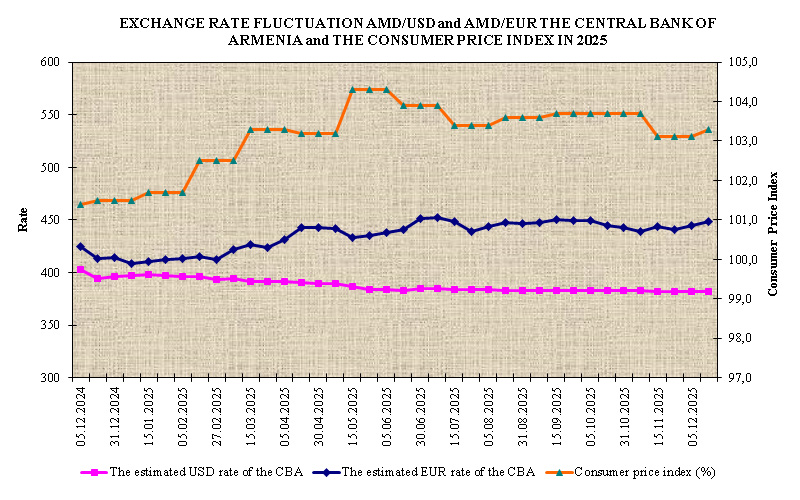
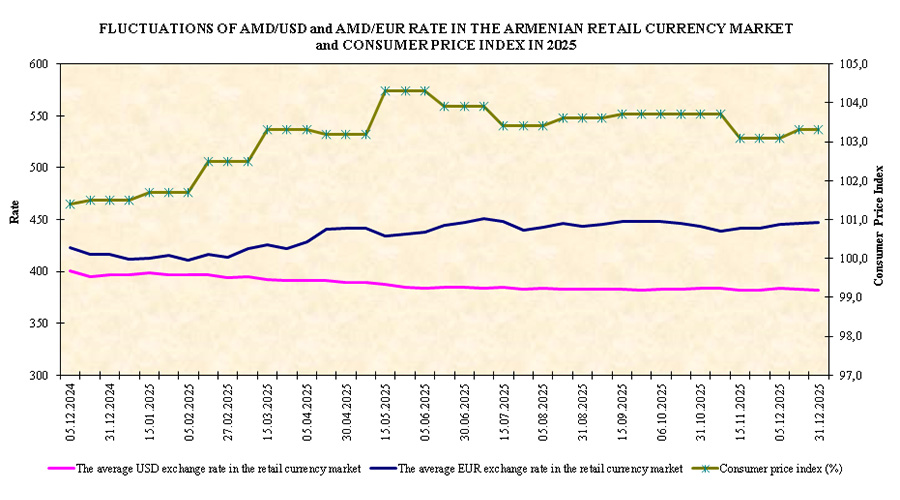
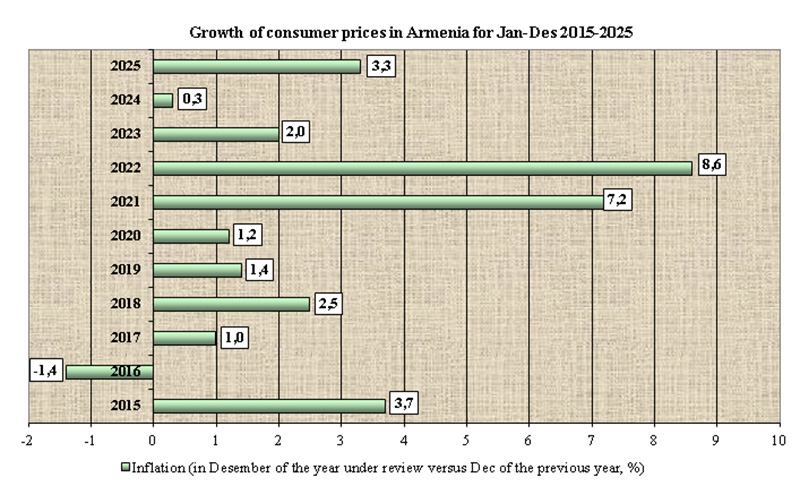
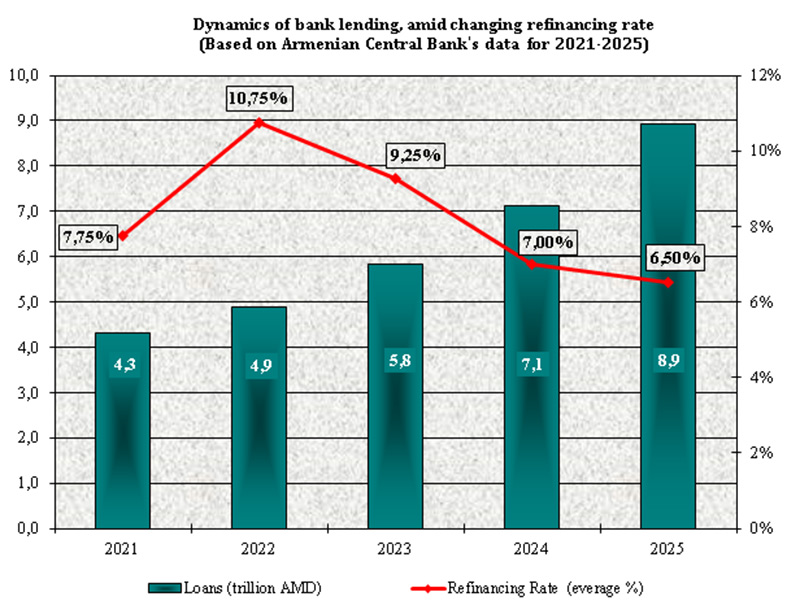
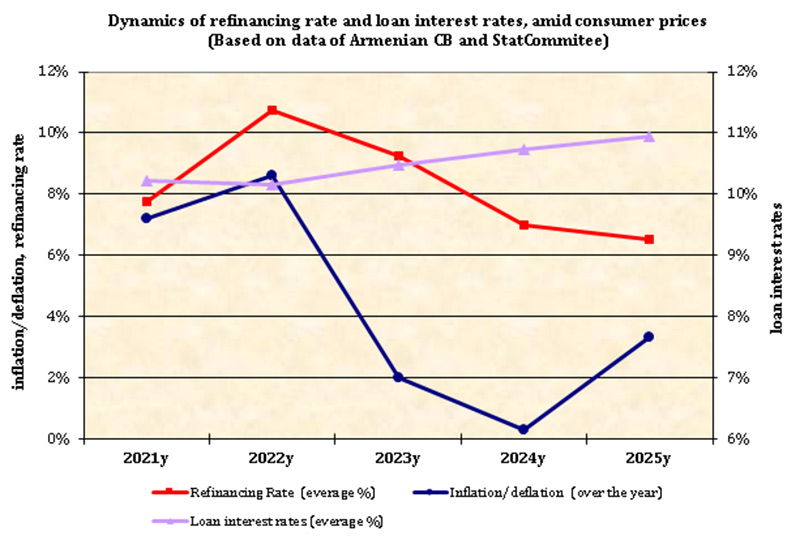
Stable Inflation and New inflation Target: Inflation averaged 0.3% of GDP in 2024, driven partly by base effects, food prices, as well as zero growth in core inflation. Inflation will average 3.3% in 2025-2026 given Fitch's expectation of a depreciation of the Armenian dram, and fiscal policy loosening. Policy rates were cut by a cumulative 225bp in 2024; the scope for further cuts is limited. Effective January 2025, the Central Bank of Armenia reduced its medium-term inflation target to 3% (with a variation band of +/-1 pp). Armenia has a record of low inflation relative to rating peers, but also has an inconsistent record of meeting the previous inflation target of 4% with a tolerance band of +/-1.5pp, which was introduced in 2006. We expect the authorities to remain largely committed to a floating exchange rate.
ESG - Governance: Armenia has an ESG Relevance Score of '5' for Political Stability and Rights, and '5+' for the Rule of Law, Institutional and Regulatory Quality, and Control of Corruption. These scores reflect the high weight that the World Bank Governance Indicators (WBGI) have in our proprietary Sovereign Rating Model. Armenia has a medium WBGI ranking at the 45th percentile, reflecting a moderate level of rights for participation in the political process, relatively high geopolitical risks, moderate levels of political stability, moderate institutional capacity and rule of law and a moderate level of corruption.
Rating sensitivities
Factors that Could, Individually or Collectively, Lead to Negative Rating Action/Downgrade
- Public Finances: Macroeconomic or policy developments that result in a rapid increase in general government debt/GDP.
- External Finances: Increased external vulnerabilities, for example as a result of a sustained decline in international reserves or wider CADs.
- Structural: A materialisation of geopolitical risks that undermines political and economic stability. Factors that Could, Individually or Collectively, Lead to Positive Rating Action/Upgrade
- Macro: Increased confidence in the sustainability of high growth rates relative to peers, for example, due to a durable decline in geopolitical risks that results in a sustained increase in GDP per capita.
- Public Finances: Fiscal consolidation that supports a decline in general government debt/GDP, and deepening of local-currency funding sources that durably reduces the FX proportion of government debt.
It should be noted that in August 2024, the S&P Global Ratings ( S&P) confirmed Armenia's sovereign rating at "BB-" with a "Stable" outlook. They also predicted a 6.2% GDP growth in Armenia for 2024 with a further slowdown to 5.2% in 2025.