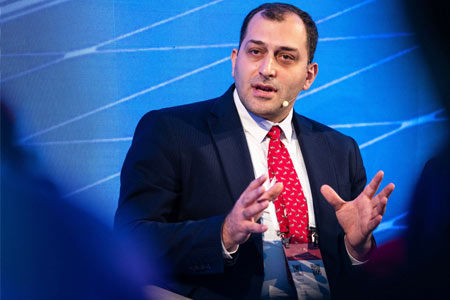


ArmInfo. The Armenian authorities do not have sufficient political will to increase the volume of electricity sales to Georgia. Political scientist Vahe Davtyan is of a similar opinion.
The expert noted that Armenia is once again recording a negative balance in electricity trade with Georgia.
He recalled that in 2024, Georgia exported 137.43 million kWh of electricity to Armenia, while imports from Armenia amounted to only 72.70 million kWh, which is 6% of the structure of Georgian imports.
According to him, for comparison: electricity imports from Azerbaijan amounted to 185.97 million kWh, or 15% of the total structure. Davtyan also drew attention to the fact that the lion's share of Georgia's electricity imports still belongs to Russia: 79% in 2024 (or 968.84 kWh).
"Electricity consumption in Georgia is showing steady growth. By 2030, the country may face a serious deficit, as demand for electricity will increase by about 73% and reach 22 billion kWh.
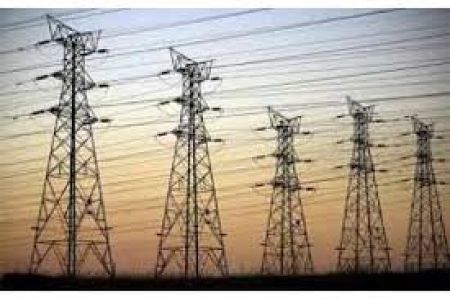
In other words, in parallel with the increase in domestic capacity, Georgia will increase electricity imports, which, in turn, dictates Armenia to step up the construction of a new power transmission line with Georgia as part of the North-South electricity corridor.
So far, the project implementation process leaves much to be desired: for the sixth year now, Yerevan has been unable to hold the necessary competition to select a contractor. The reason is the lack of political will. And geopolitical, spatial thinking. As in other issues," Davtyan summed up.
We recall that on March 11, 2024, in the National Assembly of the Republic of Armenia, the now former Deputy Minister of Territorial Administration and Infrastructure of the Republic of Armenia Hakob Vardanyan reported that the tender for the construction of the Armenia-Georgia power transmission line did not take place due to the lack of applications for the construction of an electrical substation near the settlement of Ddmashen. According to him, two companies - Siemens and ABB, participating in two lots in the pre-qualification tender, did not submit financial proposals for the construction of either the substation itself or the DC link. According to available data, the German bank KfW, which insists on holding direct negotiations with specialized companies, after holding negotiations with the Armenian side, agreed to change the conditions and the possibility of attracting contractors from other countries. Against the backdrop of the Russian-Ukrainian conflict and the emergence of electricity shortages, European countries began to pay more attention to the construction of renewable generation facilities, mainly wind power plants, in which the participating in the tender, European companies have announced their workload until 2028. The Armenian side intends to involve Chinese companies and the American concern General Electric in the construction, negotiations with which are not currently underway, since it is necessary to make changes to the project, and instead of a substation in Ddmashen, build a similar substation at the Hrazdan TPP. Negotiations are currently underway with KfW on this issue, the results of which will be known in the near future.
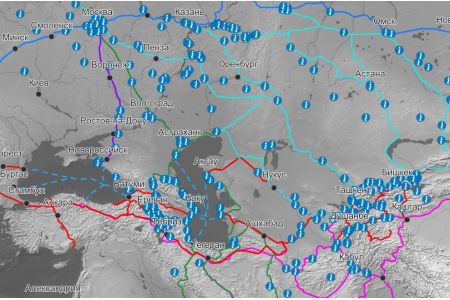
The North-South energy corridor construction project, designed to unite the electric power systems of Iran, Armenia, Georgia and Russia, has encountered a number of problems. Initially, the projects for the construction of 400/500 kilovolt Iran-Armenia and Armenia-Georgia power lines were planned to be completed by the end of 2019. Meanwhile, as of today, the work on the Iran-Armenia power line has been completed by 35-40%, and the construction of the Armenia-Georgia power line has not yet begun. According to the project, it is planned to build a 400 kV Iran-Armenia power line and a 500 kV Armenia- Georgia power line. For these purposes, it is planned to build 2 electrical substations "Ayrum" and "Ddmashen" on the border of Georgia. The preliminary cost of the Armenia-Georgia power line construction program, according to FICHTNER, is 326.9 million euros, 10% of which should be part of Georgia's contribution. For these purposes, three loan agreements were signed in 2014-2015. In particular, 168 million euros were allocated as a loan by the German bank KfW, another 10 million euros were provided by the European Investment Bank. It is expected to receive another 10 million euros as a grant from the European Commission. As for the Iran-Armenia high-voltage power transmission line, the financing of this project is carried out by the Iranian side, the total cost of the program is $107 million.