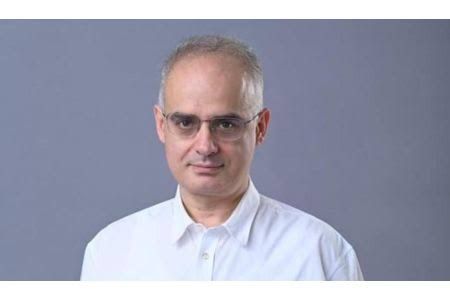
ArmInfo. The largest Zangezur Copper and Molybdenum Combine (ZCMC) min Armenia intends to implement a water recycling system at the Artsvanik tailings dump, which provides for a closed cycle of water use. Deputy Director of ZCMC for Sustainable Development Taron Navasardyan shared such plans with journalists during a press tour organized by the Club of Economic Journalists.
Recalling that a water recycling system is a legal requirement for new tailings dumps being designed, he noted that the enterprise is considering two possible options for water use: firstly, to send purified water through a recycling system directly to the processing plant for secondary use, or to drain purified water into the river, with subsequent collection. The new project, as the Deputy Director of ZCMC noted, will contain a feasibility study for two options, from which the most effective one will be selected. "Our main task is to completely purify the water we use, eliminating any emissions into the environment. This is our vision for the next year and a half," Navasardyan emphasized.
In this vein, he said that there are already sketches and 70% of the design documentation for the new station is ready. "When it starts operating, we will receive water that is suitable for drinking. Of course, our cultural stereotypes will not allow us to drink it, but at least it will not cause any problems for the environment," he said.
When asked by an ArmInfo correspondent about the construction timeframe for the new treatment plant, Navasardyan noted: "If we go down the path of designing a new tailings storage facility, then taking into account regulatory requirements, obtaining permits, and design, we can talk about a year and a half>. However, as the deputy director emphasized, the issue of building a new tailings storage facility is not yet on the table, since international companies are currently assessing the stability of the existing tailings storage facility in order to understand whether it will be possible to raise its dam. "The study is already 80- 90% ready. "Most likely, a project to increase the level of the tailings dump will be drawn up," he noted. It should be noted that the design level of the Artsvanik tailings dump is 960 meters, and before reaching this mark, as Navasardyan explained, there are 19 meters left, which can be achieved in 5 years if the enterprise operates at the same capacity. "This is a serious economic problem for Armenia, so we are taking the best path, excluding the "what if" options, and want to have justification from serious experts in the form of a sustainability assessment," he emphasized.
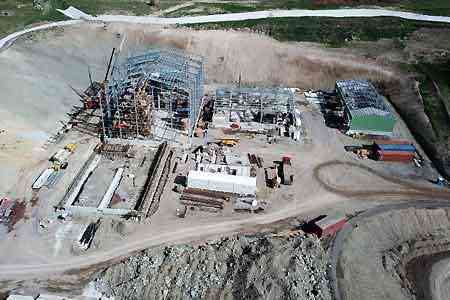
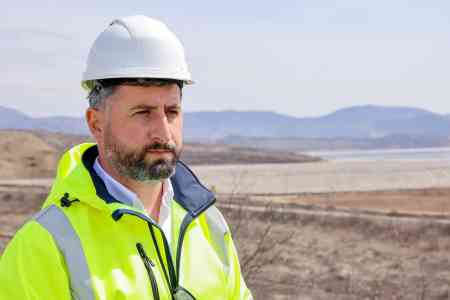
Navasardyan told journalists that the Artsvanik tailings dump has been in operation since 1977 and is located on the territory of the enlarged community of Kapan. The mirror area of the tailings dump is 350- 400 hectares. It is operated using the up-streem method. The basis for its lifting is the dried, cleaned "tails". In parallel with the operation of the tailings dump, ZCMC carries out progressive soil reclamation to avoid dust influx.
The tailings dump is washed by the zenith method. Heavy particles with mineral composition sent to the tailings dump settle on the bottom, and the purified water enters an open water body. "This is purified water, but its chemical composition does not allow its further use," he noted.
In the context of seismic resistance, Navasardyan noted that it would be wrong to talk about the complete absence of risks. But to manage these risks, in 2024 the company installed the first seismic station in Armenia on the tailings dam. Thanks to the installed sensors, information about the slightest vibrations is sent to ZCMC in real time. In this regard, he noted that at the moment there are no such risks, and the recorded vibrations indicate that everything is happening within the normal range.
In addition, the company also monitors dust flows. Last year, ZCMC purchased the relevant devices from one of the leading British manufacturers, which allow monitoring the causes and direction of dust flows and suppressing them in time. Referring to the data obtained from these devices, Navasardyan reported that the main source of dust is mining facilities that have nothing to do with ZCMC.
The Zangezur Copper Molybdenum Combine (CJSC) is the largest mining company in Armenia. The plant operates the Kajaran copper-molybdenum deposit. The plant's ore supply is about 150 years. The plant produces molybdenum and copper concentrates. Molybdenum concentrate contains 50% molybdenum, the copper content in copper concentrate is not less than 15%. The enterprise's production volume is about 22 million tons of ore per year. ZMMC's share in global molybdenum production is about 3.8%.