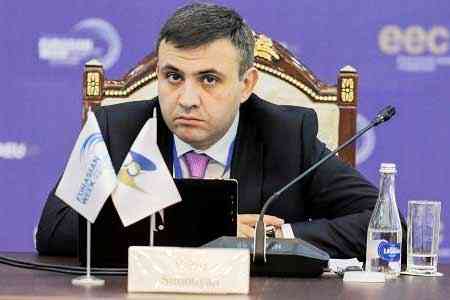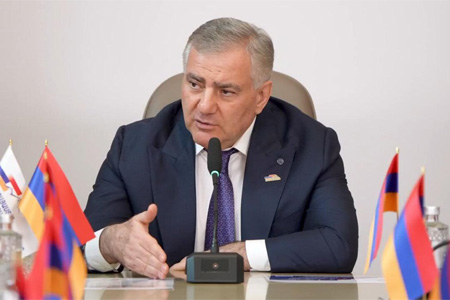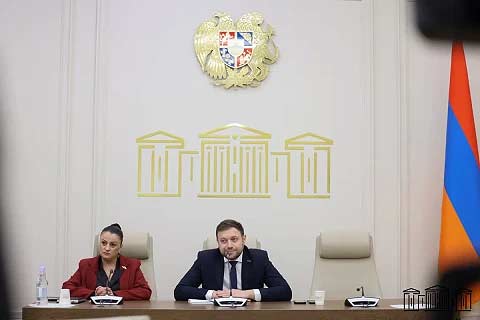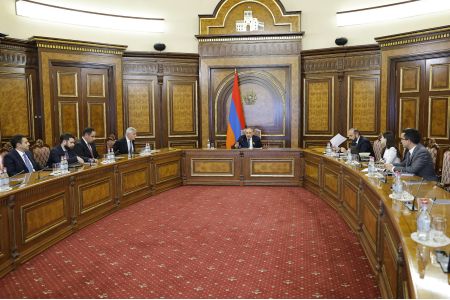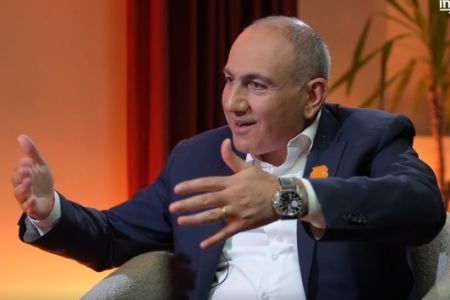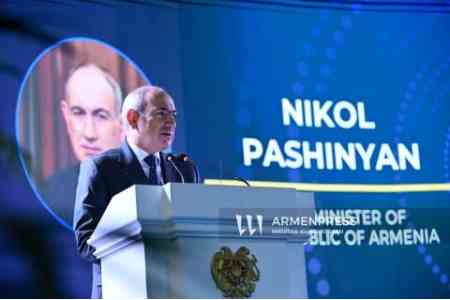
ArmInfo. One of the biggest issues in the mining industry is its image, as stated by Armenian Prime Minister Nikol Pashinyan during his speech at the 2nd International Mining Forum Armenia.
He emphasized the need to address this issue, highlighting the accumulation of problems within the industry and the prevalence of negative opinions about the sector. Understanding the reasons behind these perceptions is crucial. The Prime Minister noted that these reasons are partly due to the public perception that Armenia's mineral resources belong to its state doesn't seem to be very accurate.
In this regard, he recalled that the Armenian government, and therefore its citizens, own a stake in the Zangezur Copper and Molybdenum Combine (ZCMC), as well as the Amulsar mine. The Prime Minister pointed out the important change in the RA Law on the Budget System, according to which communities adjacent to the mine will receive 2% of the royalties. "This may seem symbolic, but the implementation of the mechanism is more important here, as it will develop over time," Pashinyan said.
Referring to ZCMC's activities, he noted that between 2018 and 2025, compared to the previous seven years, the company's payments to the state budget increased by 148%, more than doubling. Thus, as Pashinyan noted, people are developing an awareness that the subsoil belongs to them, and the people, together with the state, are receiving greater benefits from it. Ultimately, as the Prime Minister noted, these payments translate into improvements such as roads, schools, kindergartens, security, and many more.
During his speech, Pashinyan also emphasized the importance of aligning mining industry standards with international environmental best practices. Specifically, he noted that these issues will also be included on the agenda of the COP17 global biodiversity summit, which will be held in Armenia next year. Noting that mining is a knowledge-intensive industry, he emphasized that efficient production requires highly qualified specialists in numerous fields-engineers, chemists, surveyors, geologists, and others.
"I mean that mining serves as a catalyst for education and economic growth, as it leads to the operation of various entities and the development of different activities to exploit the deposits.
I simply want point out that the mining industry in Armenia provides excellent opportunities for professional growth and career advancement. And the higher we raise the standards of our industry, the more highly qualified specialists we will have," the Prime Minister added, emphasizing the high demand for skilled workers and a highly skilled workforce in the mining industry.
The next strategic challenge for the industry, he said, is extending the production chain, a task that requires close collaboration between the mining community and the Armenian government. "This means additional jobs, additional revenue for the state budget, increased demand for highly qualified specialists, additional investments in the economy and education-it means reaching a new level of prosperity," he stated.
According to the Prime Minister, upcoming processes, including regional ones, will create a more favorable environment. The established peace between Armenia and Azerbaijan and the expected opening of regional infrastructure will open up new opportunities for the industry.
Nikol Pashinyan noted that while copper ore exports are undoubtedly important for Armenia and the economy, consideration should ultimately be given to what can be done to make the agreements to establish an effective copper smelter in Armenia a reality. He emphasized the importance of identifying and exploring mineral resources in Armenia through effective technologies. "The mining industry is an area where we must work without interruption, that is, consistently, and it is this consistency that will lead to the effects we desire," he concluded.
Note that, according to the Statistical Committee of the Republic of Armenia, in January-July 2025, Armenia's mining and open-pit mining output decreased by 1% year-on-year, amounting to 265 billion drams. Metal ore mining declined by 2% totaling 245.6 billion drams.
According to the Customs Service of the Republic of Armenia, in 2024, Armenia increased copper ore exports by 20.4% to 341,500 tons (compared to a 20.4% decline in 2023). Meanwhile, the customs value of copper ore increased by 15.5%, reaching $558.3 million.
Copper ore was primarily exported to China (76.6%), Bulgaria (13.3%), Serbia (2.8%), Switzerland (2.6%), Russia (2.4%), and Iran (2.2%). Smaller quantities were exported to the Netherlands, the United Kingdom, and Australia. Exports of molybdenum concentrate increased by 2.5% during the reporting year (compared to 8.2% growth in 2023), amounting to 11.4 thousand tons, with a decrease in customs value by 4.1% - to $220.6 million. Molybdenum concentrate was supplied from Armenia to the markets of Belgium (41.6%), China (17.9%), Russia (13.2%), Hong Kong (7.7%), the Republic of Korea (6.3%), Thailand (5.3%), the Netherlands (4.9%), as well as Slovenia, Austria, India, Australia, and the United Kingdom.