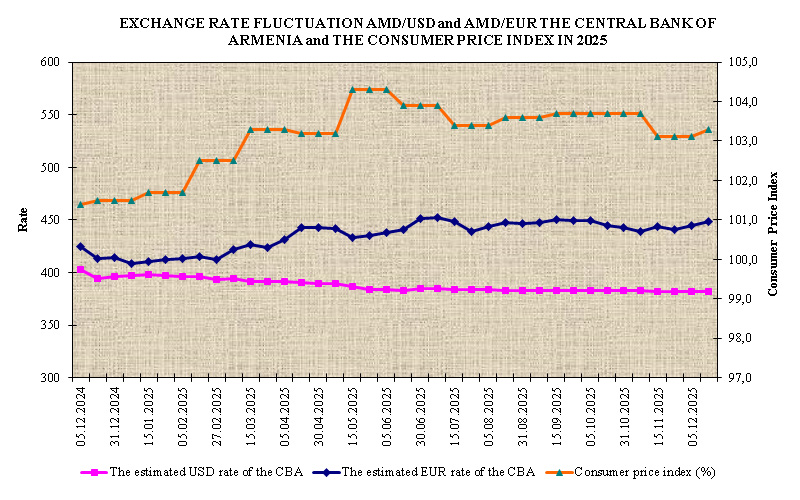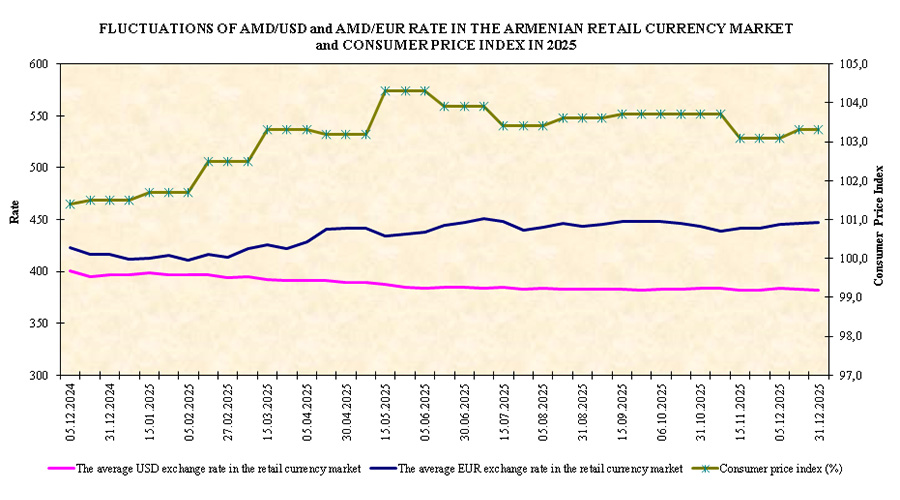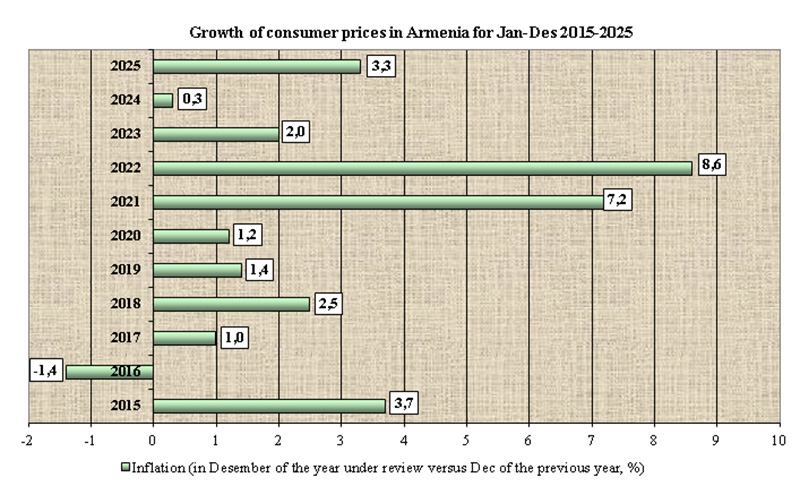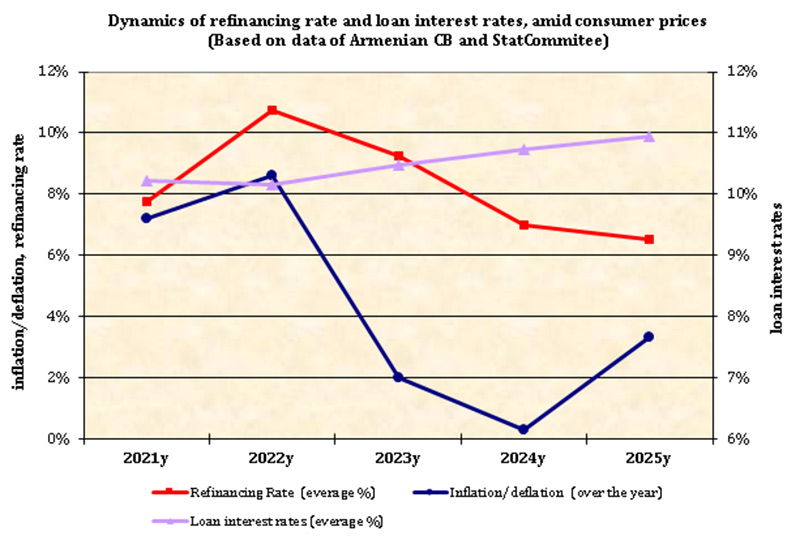


ArmInfo.In September 2025, compared to September 2024, inflation in the Armenian consumer market amounted to 3.7% (against 0.6% a year ago), driven by rising prices for food and services. In the first 9 months of 2025, inflation amounted to 1.1% (against 1.1% deflation in the same period last year), which was also the result of rising prices for services while prices for food and non-food products remained unchanged.
According to the Statistical Committee of the Republic of Armenia, in September of this year alone, inflation amounted to 0.3% (against 0.2% inflation a year earlier in the same month), driven by rising prices for food, non-food products, and services by 0.3% and 0.4%, respectively. In Yerevan, consumer prices increased by 0.4% in September, compared to a 0.2% increase in September 2024.
In the first nine months of this year, slight inflation was driven by a 3.3% increase in services prices, while prices for food and non-food items remained unchanged. In the same period last year, prices for services increased by 3.1%, while prices for food and non-food items fell by 3.4% and 2.7%, respectively. In January-September 2025, compared to the same period in 2024, inflation was 3.3% (versus unchanged prices a year ago). Specifically, food prices increased by 5.2% (versus a 2.1% decrease a year ago), services increased by 3% (the same as a year ago), and non-food prices fell by 0.2% (versus 0.4% a year ago).
In September 2025 to September 2024, inflation of 3.7% resulted from a 5.9% increase in food prices and a 2.8% increase in services, with a slight increase in non-food prices of 0.9%. A year earlier, in September 2024 to September 2023, deflation of 0.9% was recorded, driven by a 1.7% and 0.5% decrease in non-food and food prices, respectively, with a 3.6% increase in services.
Among food products, the most significant price increases year-on-year (September 2025 compared to September 2024) were: cocoa - by 21.7%, trout - by 19.4%, fish and seafood - by 18%, sunflower oil - by 15.9%, coffee - by 14.2%, butter - by 12.5%, fruit - by 12.4%, ice cream - by 10.5%, chocolate - by 10.4%, flour - by 7.2%, pasta - by 7%, bread - by 5%, pork - by 9.4%, lamb - by 4.9%, margarine - by 3.5%, tea - by 3.5%, beef - by 3.1%, vegetables - by 2.4%. At the same time, there was a year-on-year decline in the price of sugar and granulated sugar - by 8.9%, eggs - by 3%, and buckwheat - by 0.6%.
Moreover, vegetable prices increased not only year-on-year but also in September - by 1.6%, while fruit, having risen at double-digit rates year-on-year, fell by 4.1% in September alone.
Cigarette prices increased by 8.3% year-on-year, compared to a 1.3% increase the year before. Among alcoholic beverages, vodka saw the most significant year-on-year increase, up 5.4%, while wine and beer saw more modest increases, up 3.1% and 2.5%, respectively. Last year, wine fell by 2%, while vodka and beer increased more significantly, up 10.3% and 3.4%, respectively.
Bottled mineral water increased in price by 3.5% year-on-year (compared to a 1.4% increase the year before). In the non-food market, jewelry prices accelerated year-on- year, from 12.7% to 27.2%, while large and small household appliances and equipment continued to rise, up 2.5-5.1% (compared to a 3.4-2% increase the year before).
Medicines and medical equipment prices began to rise by 4.1-4.6% per annum, while a year ago medicines increased more modestly by 2.3%, and medical equipment prices fell by 3.3%. Furniture prices, after remaining unchanged last year, increased by 0.6% per annum in September of this year. Disposable household goods also began to rise in price - by 3.2% per annum (against a decline of 8.4% a year ago). At the same time, the annual decline in prices for clothing began to slow - to 2% (from 4.1% a year ago), footwear - to 0.1% (from 2.3% a year ago), and building materials - to 0.1% (from 3.1% a year ago). Gardening tools began to fall in price - by 8.7% per annum (against a rise of 3.3% a year ago). The price of tableware and kitchen utensils has not changed year-on-year (compared to a 0.7% price decrease a year ago)
Gasoline prices fell by 1.1% year-on-year (September 2025 compared to September 2024), while diesel fuel prices rose by 1.5%. A year ago, gasoline prices remained unchanged and diesel fuel prices fell by 1.5%. Over the first nine months of 2025, gasoline and diesel fuel prices increased by 0.1% and 3.2%, respectively, compared to a 5% and 7.8% decline in gasoline and diesel fuel prices during the same period last year. However, in September alone, gasoline and diesel fuel prices increased by 4.4% and 3.9%, respectively. A year ago, in September 2024, gasoline prices increased less noticeably, by 2.5%, while diesel fuel prices fell by 0.1%.
Regarding tariffs for services, a significant increase was recorded year-on-year in the areas of transportation - by 20.3% (including insurance - by 12.4%), comprehensive services for organizing recreation - by 14.7%, preschool and primary education - by 8.7%, higher education - by 8.5%. Tariffs for hairdressing and spa salon services accelerated in growth - from 5.9% to 11.3%, medical - from 2.5% to 3.2%. It is also noteworthy that dental services increased in price by 5.4%, and doctor consultations - by 7.1%. In the hotel business, services continue to rise in price, but less noticeably for two years in a row - by 1.6% (versus 1.7% a year ago).
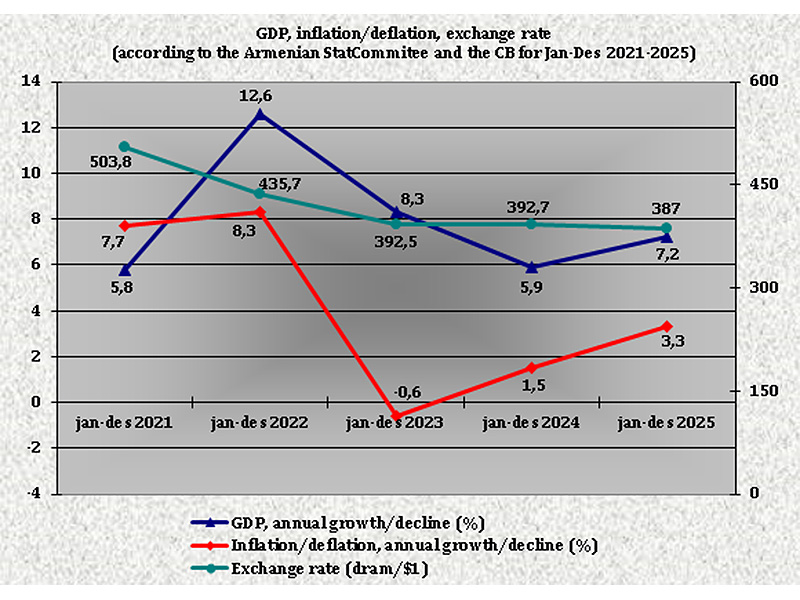
The Central Bank of Armenia's updated September forecast for inflation in 2025 is expected to be between 4.1% and 3.7%, compared to 1.5% in 2024. It will then approach the updated target (3%, +/- 1 percentage point) in 2026, reaching 3.7-3.2%. Moreover, inflation in the non-exportable goods segment, characterized by rigid prices, will decline to 2.2% in 2025 (from 2.5% in 2024), but will rise to 3.5-2.8% in 2026. According to the International Monetary Fund's forecast, inflation in Armenia will remain close to the target (3%, +/- 1 percentage point - Ed.) by the end of 2025.
As a reminder, starting in 2025, the inflation target is set at 3% with a tolerance of +/- 1 percentage point (compared to the previous 4%, +/- 1.5 percentage points). The RA Law "On the State Budget of Armenia for 2025" stipulates that the Central Bank will henceforth be guided by the new inflation target (3%, +/- 1 percentage point) when making monetary policy decisions.