

ArmInfo.Armenia needs to transition from "subsidizing stability" to "investing in innovation." It goes without saying that in public policy, rather than focusing on the number of programs or their quantitative indicators, greater importance should be placed on their interactions.
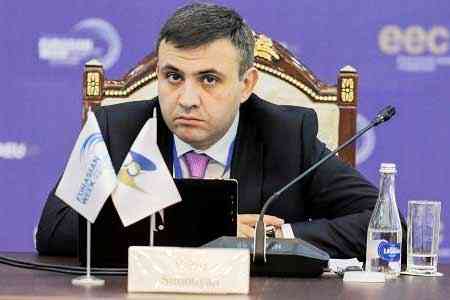
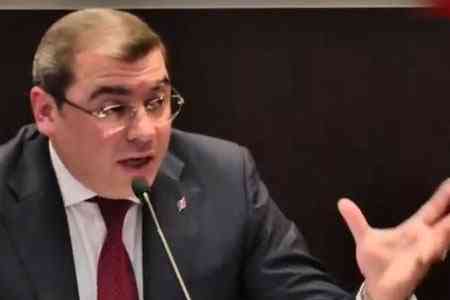
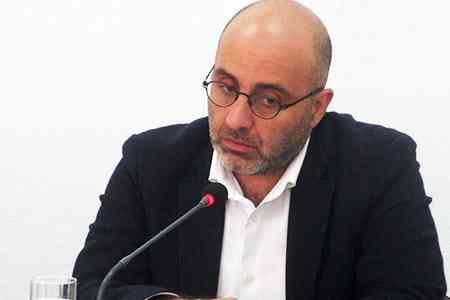
Tigran Jrbashyan, partner at Ameria and head of management consulting, writes about this in his article, discussing the lessons the country should learn from the Nobel Prize in Economics.
The expert recalled that the 2025 Nobel Prize in Economics was awarded to Philippe Aghion, Peter Howitt, and Joel Mochrie for transforming Joseph Schumpeter's idea of "creative destruction" into the modern theory of sustainable growth.
"In particular, their research confirms a key truth that even the great Schumpeter sensed with his professional intuition: economic development occurs not through the preservation of existing structures, but through their constant renewal," noted Tigran Jrbashyan.
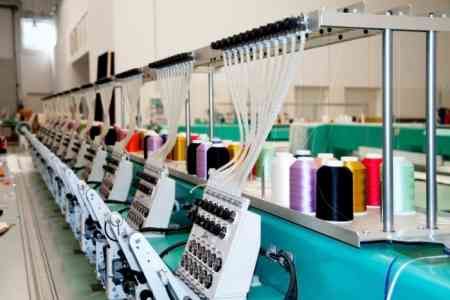
In this context, the economist asked what exactly needs to be changed in Armenia's economic policy. First and foremost, he points to the need to target subsidy programs toward innovative results. "The state subsidizes economic modernization, but considers only the newness (unused) of equipment as a criterion of modernity. As a result, our entrepreneurs often end up with obsolete technologies rather than the latest generation. I have repeatedly spoken about the need for stricter conditions for subsidized entities."
As Jrbashyan notes, the integration of science, technology, and industrial policy is also important. Currently, public policy in these interconnected sectors is developed in isolation and does not complement each other. For example, several months ago, the Ministry of Economy circulated a Strategic Program for Improving the Competitiveness of SMEs, and recently the Ministry of Education, Science, Culture, and Sports announced the public discussion of a Strategic Program for the Development of the Scientific Sphere for 2026-2030. Surprisingly, the second strategic program makes no mention of the first. However, it is necessary to stimulate research projects between universities, startups, and businesses. Moreover, universities should become true bridges for the transition from science to business," the expert noted.
The economist also pointed to the need to revise IT tax incentives to focus on genuine innovation. Jrbashyan emphasized that currently, IT tax incentives partially include subsidies for companies providing outsourcing services, which essentially subsidize the increased competitiveness of other countries' IT products, while Armenia needs to differentiate its approach, giving preference to organizations working on their own products and technologies.
Human capital development is also crucial for transformation. Currently, educational reforms are poorly connected to market changes, while employers should be actively involved in the development and implementation of programs, as well as the creation of an "innovation skills indicator" to assess the workforce's readiness for new directions.
The expert believes that changing the approach to public policy development and moving toward a flexible approach is equally important. Currently, the public administration system is slowly absorbs innovations. At the same time, it is necessary to create platforms-"sandboxes"-for policy development, where, through constant innovation, new measures can be implemented and scaled up, ensuring their high effectiveness.
In conclusion, Jrbashyan recalled the words of Schumpeter, who said: "The process of industrial mutation, which continually revolutionizes the economic structure from within, continually destroying the old and creating a new one-this process of creative destruction-is the essential fact of capitalism."