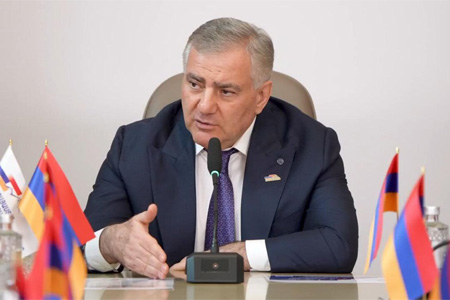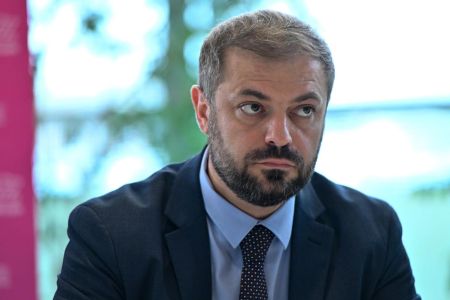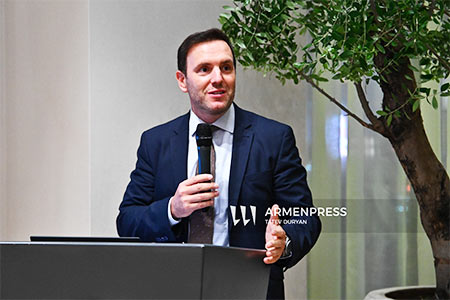
ArmInfo. All risks associated with the operation of the Amulsar gold deposit are entirely manageable, as stated by Hayk Aloyan, Executive Director of Lydian Armenia, a company constructing and operating the mine, in an interview with the Public Radio of Armenia.
According to him, environmental studies have been conducted at the mine since 2008, with ongoing monitoring and baseline data collection. During this work, all environmental risks were identified. Additionally, additional resources have been invested in studying the mine's potential impact on local flora and fauna. "Based on the results of these studies, a significant amount of work has been done to neutralize all these risks," Aloyan emphasized, wryly noting the impossibility of neutralizing such imaginary [fake risks] as the birth of two-headed children or cyanide leaks into Lake Sevan, which is located significantly above the mine, etc. According to the head of Lidian Armenia, the success of the program will be that after the mine's construction is completed and its operations begin, local residents will be convinced that everything the company promised has been realized, and that other imaginary risks will no longer exist.
Speaking about the damage the company has suffered since 2018, when its operations were suspended (for trumped-up political and environmental reasons - Ed.), Aloyan noted that as a result of those events, many investors suffered losses, and significant reputational damage was also inflicted, as Lidian International's shares were listed on the Toronto Stock Exchange, held by numerous Armenians, international organizations, and institutions, including the European Bank for Reconstruction and Development and the World Bank. During the past seven years of actual downtime, the company lost 18 heavy-duty vehicles leased from Caterpillar, for which was unable to pay $75 million due to the downtime. A total of $100 million was spent on exploration of the deposit's reserves, and another $400 million on construction work from 2016 to 2018. The deposit was expected to begin operating and generating revenue in 2018.
Aloyan also informed that approximately $250 million is currently invested in the program, with $150 million secured through state guarantees for loans from Armenian commercial banks, and $100 million that the company plans to raise from other sources. The funds will be used, among other things, to reactivate the equipment and initiate production at the deposit.
Overall, the total cost of the first, 12-year investment program for the Amulsar gold mine is $750 million. According to Aloyan, the approved reserves of the deposit are estimated at 73 tons of gold (US$84 billion at current prices) and 294 tons of silver. There are also reserves that are considered a reserve from a local perspective and a resource from an international perspective. As a result,, 150 tons of gold are planned to be mined over 25 years, and given the existing reserves at new sites, the program could be extended to 40 years. Therefore, additional exploration will be conducted in 2026-2027 to expand the reserves. Aloyan noted that the most recent exploration was conducted in 2023, when the price of an ounce of gold was US$1,800-2,000, while today its price exceeds US$4,000. Therefore, some of the initially presented figures, including those for investments, will differ, and this, according to the executive director, is positive news.
Recall, in February of this year, the Armenian government issued a loan guarantee for loans obtained by the company in the amount of $150 million. According to forecasts from the RA Ministry of Finance, the launch of the mine could potentially increase the country's GDP by 1%-1.5% annually in 2023, with daily budget revenues from the mine's operation estimated at approximately $100 million. However, given the current gold prices, these figures are expected to increase significantly.
Aloyan noted that the company will continue to take corporate social responsibility seriously and adhere to all international ESG standards. Social programs will be implemented primarily in three communities of the country-Jermuk, Vayk, and Sisian-providing approximately $7 million annually for the social infrastructure development of these regions.
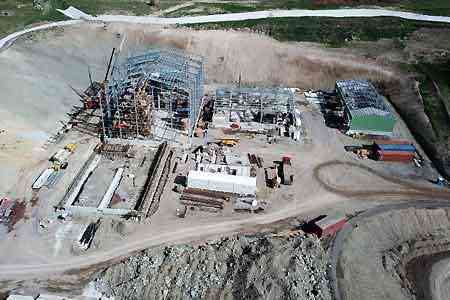
The mine is the second-largest in Armenia. According to the company, the deposit contains approximately 73,733 kg of gold with an average grade of 0.78 grams per ton, as well as 294,367 tons of silver with an average grade of 9.29 grams per ton. The mine is located in the southeast of the country, 13 km from the city of Jermuk, in the interfluve of the Arpa and Vorotan rivers.