ArmInfo. For Investor's Day, Ameriabank hosted an event dedicated to Armenia's pension system. The goal was to bring together people interested in investing, allowing them to share ideas, nuances of portfolio construction, exchange experiences, and promote the growth of an investment culture.
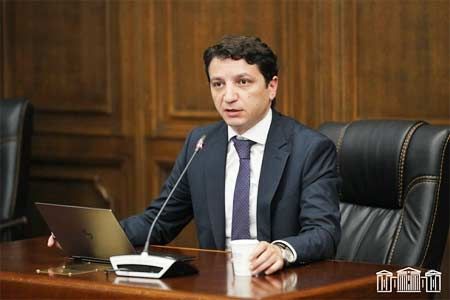
Gurgen Ayvazyan, Chief Financial Markets Analyst at Ameriabank, spoke to participants about the specifics of Armenia's pension system, represented by two players - Amundi ACBA Asset Management and C-Quadrat - including how funds are distributed, how to choose a pension fund, and presented international experience.
A panel discussion followed with representatives of Armenia's pension funds. Petros Margaryan, manager of the C-Quadrat pension funds, noted that today the difference in return between funds with higher and lower risk levels is relative. Since its inception (in November 2013 - Ed.), he noted, the lower-risk (conservative - Ed.) fund had higher returns for seven years. However, over the past five years, following the coronavirus and the outbreak of the war in Ukraine, when international markets recovered, the returns of moderate- and high-risk funds (balanced and consistently profitable - Ed.) have increased. "Therefore, this difference has compensated. And now we have a situation where all funds have similar returns," Margaryan clarified.
He noted that exchange rate volatility has the greatest impact on pension fund returns, as evidenced by research and stress tests. The manager emphasized that aggressive growth should not be expected from pension funds: "As a rule, they provide long-term stable and reliable income." Touching on the situation in the capital market, Margaryan noted that it has been developing at a fairly good pace in recent years, which cannot be said for instruments, the choice of which is still limited.
In turn, Hrayr Aslanyan, Deputy Executive Director and Fund Manager at Amundi ACBA Asset Management, noted that a week before the start of the war in Ukraine in 2022, after three years of working with the European Bank for Reconstruction and Development (EBRD), a deal was concluded to implement a hedging instrument to protect pension funds from exchange rate fluctuations. "A week before the war, no one expected the dram to strengthen so much against the dollar. We saw the significant impact that exchange rates can have on pension funds. The deal was not very large - $7 million, but our funds managed to save money.I would like it to be larger, but this is the first deal," he said, adding that other similar deals followed, in particular with the National Mortgage Company.
Regarding the capital market, Aslanyan noted that certain developments have been observed over the past few years. In this regard, he noted that several companies have already issued bonds. "I hope that the number of stock and bond issuers will increase, and it will be possible to more effectively manage pension fund investments. We have committed to developing these processes, and from 2014 to this day, we have introduced several innovations to the market that have contributed to increased management efficiency and the diversification of real investments," he concluded.