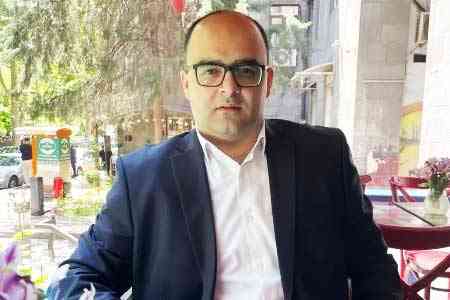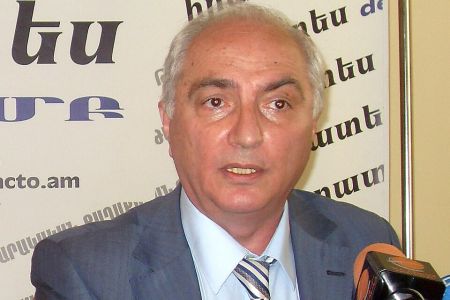
ArmInfo. Why should the Ministry of Health be involved in the insurance business? Following this logic, let the Ministry of Finance handle mortgage insurance, the Ministry of Territorial Administration handle road accident insurance, the Ministry of Urban Development handle buildings and structures insurance, the Ministry of Transport handle cargo insurance, and so on. This assessment was made by tax expert Tigran Keyan, a member of the Board of the Association of Small and Medium Entrepreneurs.
"This approach is not an improvement to the healthcare system, but rather an intrusion of government agencies into the private sector. Tomorrow they'll be involved in trade, and the day after, all other businesses. With this logic, the end result will be 'communist capitalism,' where the state is both a player and a controller," the expert wrote on social media.
Keyan reminds that the state's role is to regulate healthcare, not to become a competitor in the insurance market. Meanwhile, according to the November government decree "On Approving and Recognizing as Urgent the Draft Law on Compulsory Health Insurance and Related Laws," a state fund will be created to manage the health insurance system. It will operate under temporary management for three months, after which a state competition committee will form its board of directors (which, as stated in the Concept for the Implementation of Compulsory Health Insurance, will be chaired by the Minister of Health).
"Compulsory insurance is not a solution, but another tax with a new name," concludes Tigran Keyan. It should be noted that, as part of the Armenian Ministry of Health's initiative, the implementation of the universal health insurance system in the Republic of Armenia will be carried out in stages and will take three years. The first phase will begin on January 1, 2026. By 2028, the entire population of Armenia should become beneficiaries of this system. The state procurement system will gradually transition to compulsory health insurance. Until then, those who used the state procurement system will continue to do so.
In the first stage, the compulsory medical insurance system will cover children under 18, individuals aged 65 and older (even if employed), individuals with disabilities between the ages of 18 and 65, and members of socially vulnerable families. The state will fully cover the health insurance coverage for these categories of citizens. Citizens with a monthly income of over 200,000 drams will pay for their own insurance. Overall, the first stage plans to reach 1.6 million beneficiaries (RA citizens residing in the country for more than 183 days). Able-bodied citizens who are unemployed and do not belong to special social groups will not yet receive insurance, but in the future, it is planned to require them to pay for their own insurance. "In the future, we want to establish a procedure whereby they pay contributions even if they are unemployed.
This is consistent with our policy of stimulating employment," Health Minister Anahit Avanesyan stated at a Cabinet meeting on November 14. In 2026, the insurance will cover the most in-demand services, including outpatient services at clinics, family doctor visits, specialist consultations, and laboratory tests (a certain number per year). The list of services will be expanded and refined, covering certain surgical procedures, including ophthalmological (cataracts), cardiovascular, and other procedures. An annual medical examination will be mandatory under the system.
Compensation will apply to certain types of medications (based on the active ingredient, not the manufacturer). If citizens wish to purchase a more expensive drug, they will be required to pay extra.
The system will automatically screen individuals and enroll them as beneficiaries. They will then receive an invitation to become beneficiaries through the Armed eHealth e-health system (or through their primary care physician).
The base cost of an insurance policy in 2026 will be 129,600 drams (10,800 drams per month), compared to 164,000 drams a year ago (naturally, the policy coverage has been reduced compared to the initial draft). Part of this amount will be reimbursed from payments to the Zinap Military Insurance Fund. These payments, increased in 2021, are now returning to their previous level of 1,000 drams, regardless of salary.
Insurance payments will be made by a tax agent, meaning they will be withheld from wages in the same way as income tax, social security payments, and other payments.
The 2026 budget allocates 127 billion drams for the implementation of the health insurance system.