


ArmInfo. The Executive Board of the International Monetary Fund (IMF) approved a new three-year SBA (Stand-By Arrangement) with Armenia amounting to SDR 128.8 million, or approximately $175 million (100% of Armenia's IMF quota). The IMF also completed the previous, sixth review of the SBA, set to expire on December 11, 2025, as noted in a statement issueed by the IMF.
Upon the Board's approval of the new SBA, an amount equivalent to SDR 18.4 million (about US$25 million) becomes immediately available to Armenia. The remaining amount will be made available in equal tranches, subject to six semi-annual reviews. The Armenian authorities have indicated that they intend to treat the arrangement as precautionary
The new SBA, considered by the Armenian authorities as precautionary, aims to support the authorities efforts to maintain macroeconomic stability and advance their structural reform agenda and provide insurace in an uncertain environment.
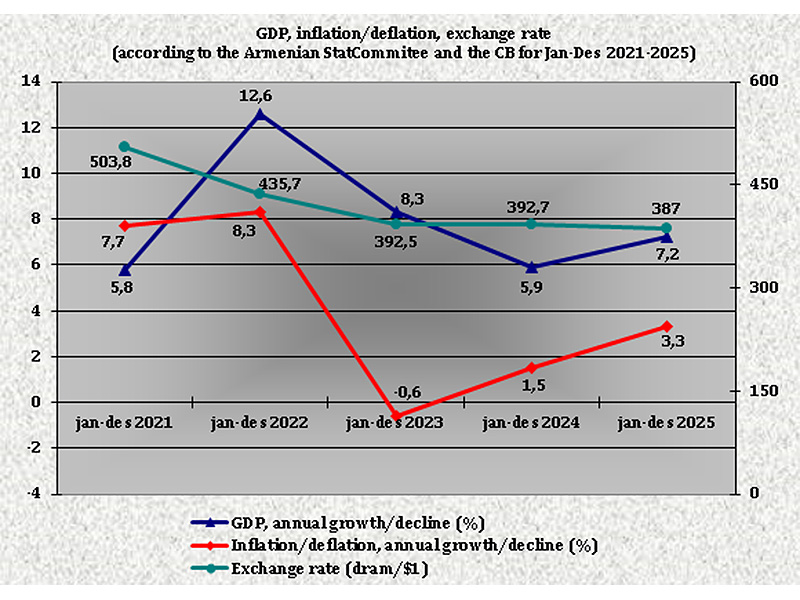
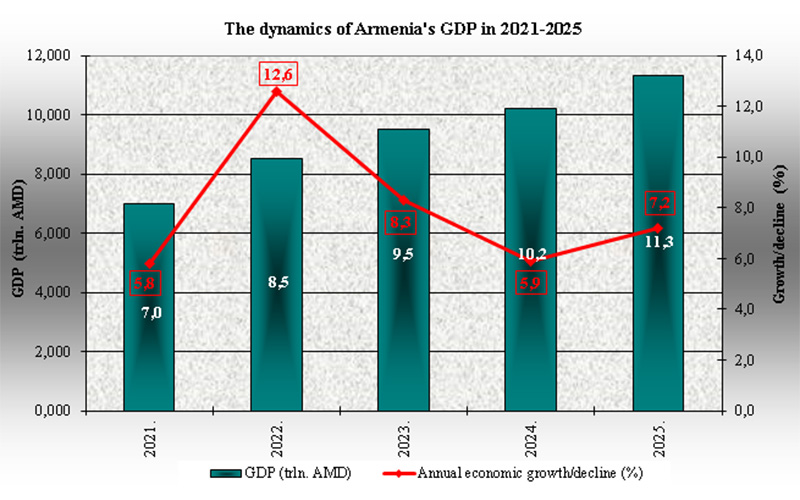
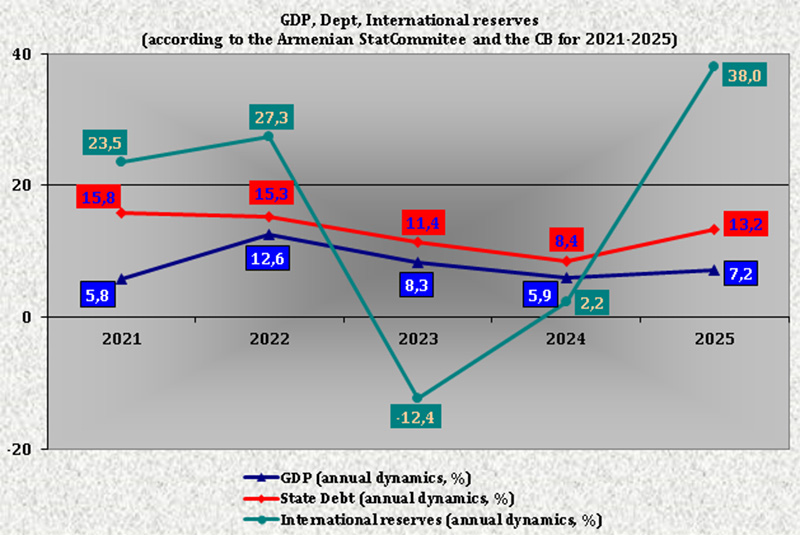
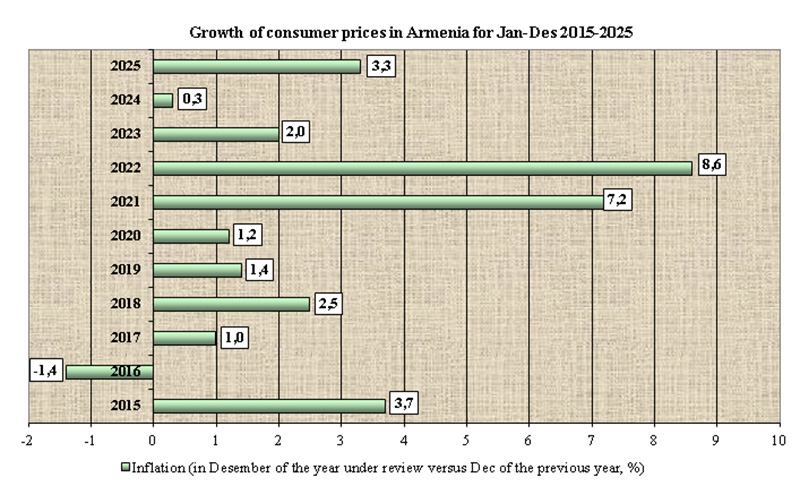
The IMF notes that Armenia's economic performance has remained strong despite a series of shocks amid an uncertain global environment. "Thanks to the authorities' agile policies and unforeseen inflows of labor and capital, real GDP grew on average by 8.9 percent annually in the past three years, and is expected to remain strong reaching about 5 and 5.5 percent in 2025 and 2026, respectively. The economic outlook remains positive, with steady growth and inflation converging to the CBA's target. Continued implementation of prudent policies and acceleration of reforms will be critical to further strengthen resilience and secure inclusive and sustainable growth in the period ahead.
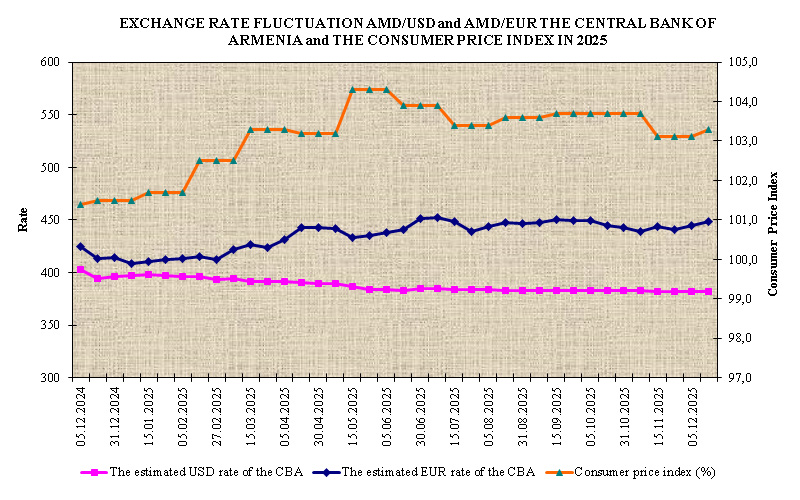
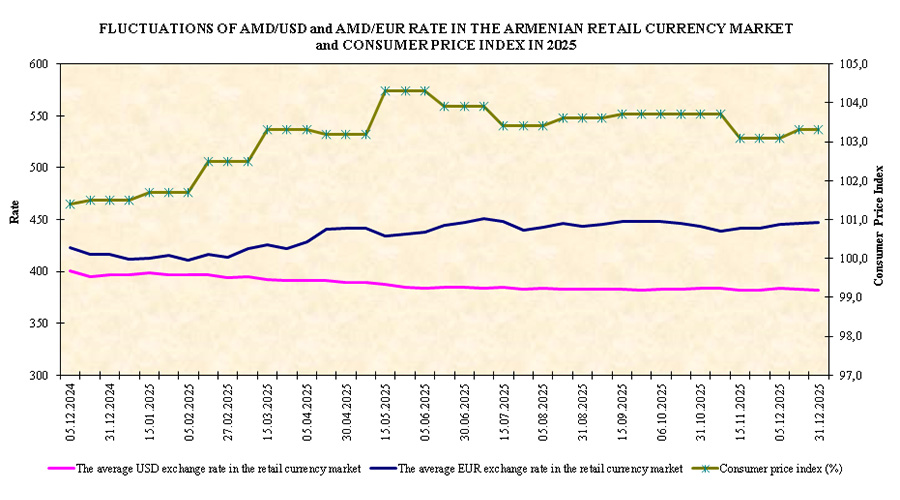
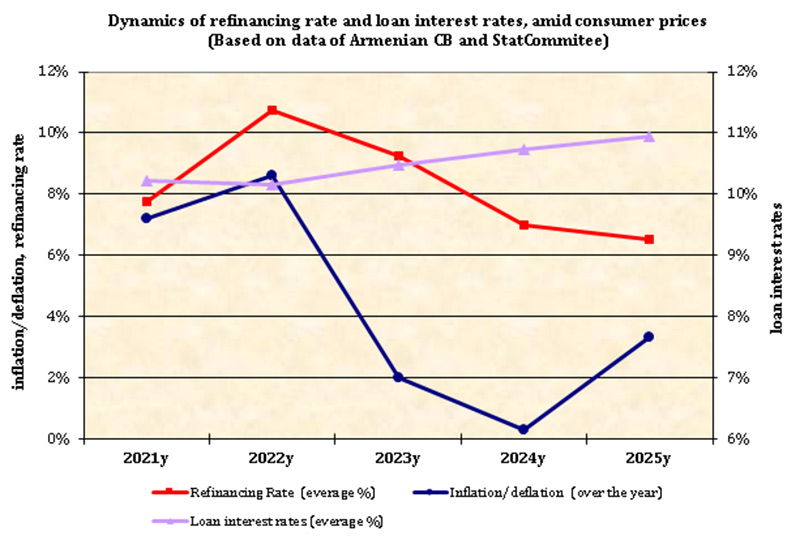
The authorities' 2026 budget and medium-term fiscal consolidation planned in the authorities' MTEF are appropriate. The planned fiscal stance in 2026 is mildly contractionary, while accommodating spending on refugee support, health, and public investment. Over the medium term, further deficit reduction while creating fiscal space for priority social and capital spending will be underpinned by additional revenue mobilization through broadening the tax base as well as revenue administration measures, and fiscal structural reforms to raise spending efficiency. The CBA's new monetary policy framework, centered on a prudent risk management approach and a high degree of transparency, supports its inflation target of 3 percent. The flexible exchange rate continues as a key shock absorber, which, together with healthy reserve buffers, will continue to serve the economy well in the event of external shocks."
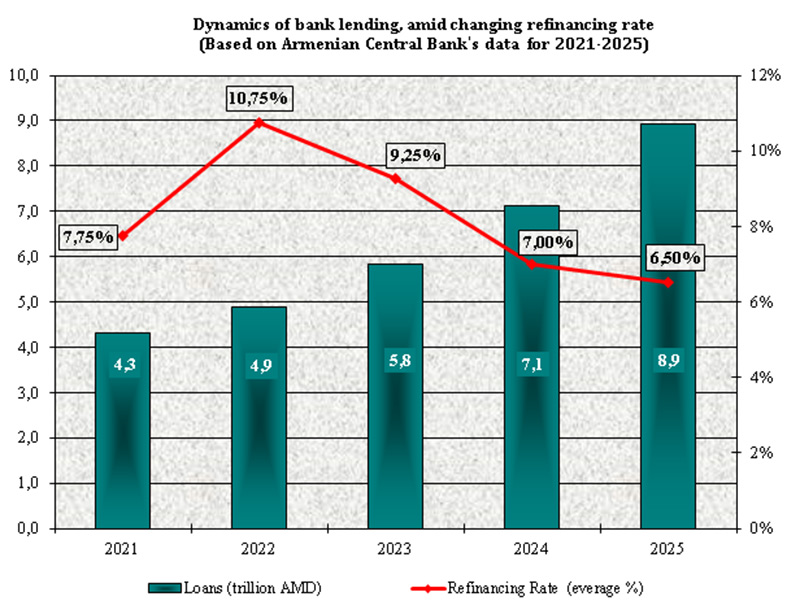
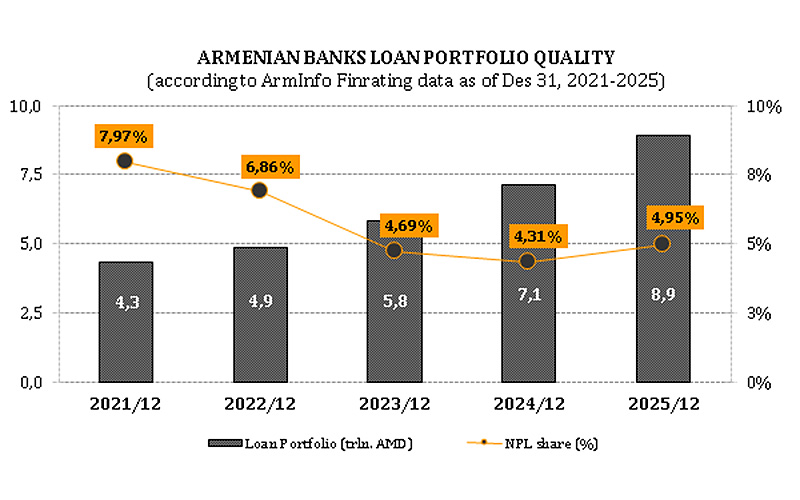
The IMF notes that the banking system is well capitalized and liquid, and mortgage growth has receded somewhat. "The CBA's monitoring and readiness to deploy its macroprudential tools will help mitigate risks arising from continued strong credit growth. Development of further macroprudential tools and further strengthening of the CBA's prudential and supervisory framework and toolkit will further buttress financial system resilience."
Additionally, the IMF emphasizes that structural reforms should be accelerated to raise labor force participation and employment, and support export diversification. Improvements in the investment climate through better governance and strengthening of the legal framework for businesses will support these reforms. Further steps to improve the quality of statistical reporting will help support decision making.
IMF Deputy Managing Director Bo Li stated: Mr. Li, Deputy Managing Director and Acting Chair, made the following statement: "Armenia has successfully navigated multiple challenges in recent years, while preserving macroeconomic and financial stability. The economic outlook remains positive, amid increased growth potential and inflation converging to target. Performance under the current Stand-By Arrangement (SBA) has been strong. Continued policy prudence and acceleration of reforms-supported by a successor SBA, which the authorities intend to treat as precautionary-will be important to further strengthen resilience and secure inclusive and sustainable growth."
He believes that the policy focus of the 2026 budget on fiscal consolidation while preserving space for policy priorities including refugee support, health, and public investment is appropriate. In the medium term, revenue mobilization and progress on structural fiscal reforms to enhance the effectiveness of public investment will create space for priority spending while reducing the fiscal deficit further, thereby ensuring that public debt remains moderate.
"The Central Bank of Armenia's (CBA) new monetary policy framework, centered on prudent risk management and combined with a high degree of transparency, supports the CBA's inflation target of 3 percent. The CBA should continue to calibrate policy rate actions to keep inflation close to target and inflation expectations well anchored. The flexible exchange rate has served Armenia well in absorbing external shocks, while building reserve buffers. With continued strong credit growth, driven by loans to the construction industry and consumers, the CBA will need to stand ready to deploy its macroprudential tools to mitigate risks to financial stability. Further enhancing the macroprudential toolkit and strengthening the supervisory framework are also key." Mr. Li stated
.
"Advancing structural reforms and strengthening governance will support sustainable and inclusive growth. The authorities' efforts to increase labor market participation and reduce structural unemployment, diversify exports, and strengthen transparency and competitiveness will enhance economic resilience and boost Armenia's economic growth potential. Improving the quality of statistical reporting will be important to support decision making," he concluded.
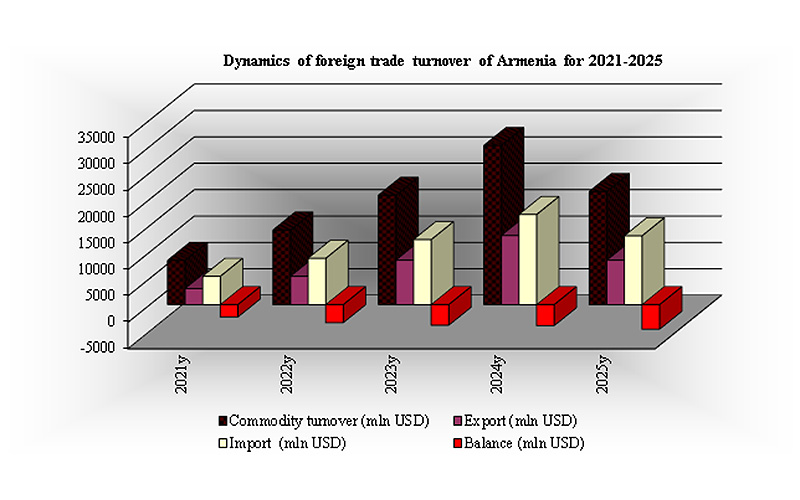
According to the updated IMF forecast, Armenia's export and import indicators will decrease by 31.1% and 28.1%, respectively, in 2025, with a return to almost equal growth in 2026 - 2.2-2.1% and a further moderate acceleration of growth rates in 2027 to 3.4-3.7%. The current account deficit to GDP ratio will remain at 4.5% in 2025-2026, with a further decline to 4.4% in 2027. The GDP deflator index will increase by 2.7% in 2025 (compared to 1.4% growth in 2024), and then grow by 3% in 2026-2027. The share of investment in GDP will increase slightly in 2025 to 24.7% (from 23.8% in 2024), but will then roll back in 2026-2027 to 23.5-23.1%. The unemployment rate in the country, according to the IMF forecast, will be 13.7% in 2025 (compared to 13.9% in 2024), and will then decrease slightly annually - to 13.6% in 2026 and to 13.5% in 2027.