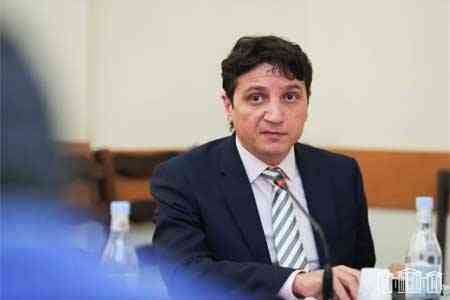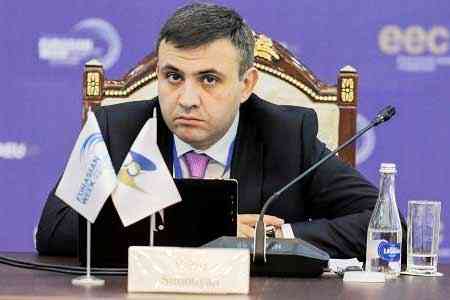
ArmInfo. Former head of the State Revenue Committee of Armenia, economist and member of the "Wings of Unity" political initiative, David Ananyan, rhetorically asks whether the Armenian economy, dependent on foreign markets, high imports, and domestic activity driven by construction, can achieve economic security.
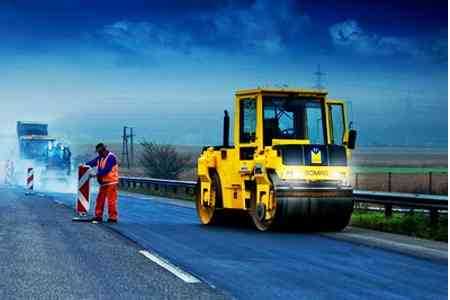
Ananyan recalled that, according to official statistics, the Economic Activity Index (EAI) stood at 8.1% in January-October 2025. "In terms of numbers, this is a high, even impressive, figure. But when we analyze what drove this growth, the picture again becomes unbalanced and vulnerable," he noted on social media. In particular, he noted, activity is once again being supported by construction and services. Thus, comparing the data for the first ten months of the year, we note that construction grew by 20.6%, services (excluding trade) by 10.8%, and trade turnover by 3.2%. These three sectors provided the main "drive" of GDP.
However, at the same time, the industrial sector is contracting again, with a cumulative decline of 3.0%. In other words, our real production base continues to weaken. (Industry: 2,408,950 million drams, or 97% of the previous year).
At the same time, the economist noted, the "revival" of industry in October creates a false illusion.
"The figure for October, +17.9% compared to the same month last year, sounds impressive. But in reality, it was achieved primarily due to the resumption of work in one sub-sector-the production of basic metals, which continues to reflect gold re-export flows." This subsector creates the false impression that "industry is growing," while most other subsectors are experiencing either decline or stagnation. In other words, we're not seeing new production or technological development, but rather isolated fluctuations in existing flows," Ananyan emphasized.
Furthermore, he noted, the growth structure doesn't provide the potential for economic protection. When economic growth is based on short-term, non-exportable sectors-construction, trade, services, and industry-and exports aren't strengthening, such growth cannot be considered sustainable. Fundamentally, he believes, the Armenian economy has flows dependent on the external market, high imports, and domestic activity based on construction, but it lacks a manufacturing backbone, exports outpacing foreign markets, and long-term protection, the expert noted.
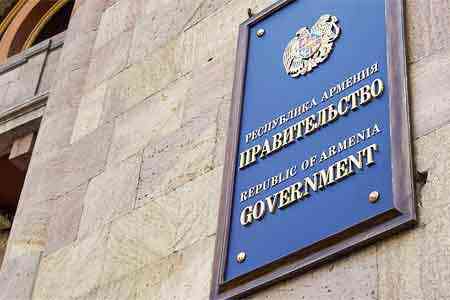
"An important question remains unanswered. The government presents growth as a success. But a simple but crucial question must be asked: can economic growth, with such a structure, strengthen Armenia's economic security and the well-being of its people in the long term?" "The numbers clearly indicate the opposite," David Ananyan concludes.