ArmInfo. The Armenian company Metalstroy, together with the Belarusian company Rukhservomotor and the Russian NPO Voyage, will launch high-tech production of components for railway transport, including high-speed trains, in the Russian Federation. This was reported by the press service of the Eurasian Economic Commission (EEC).
The project is reported to fully comply with the necessary criteria stipulated by the Regulation on the Selection of Cooperation Projects. According to the information, the Council of the Eurasian Economic Commission (EEC) approved the provision of subsidies from the budget of the Eurasian Economic Union (EAEU) for the implementation of this project under the Industrial Cooperation Financing Mechanism. Project details are not being disclosed.
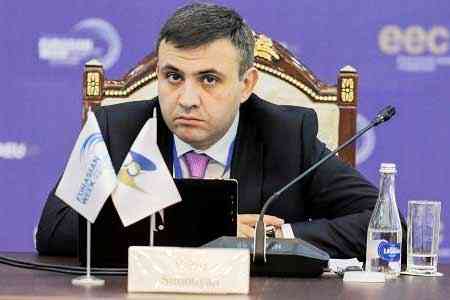
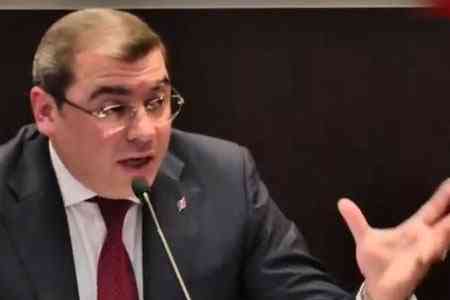
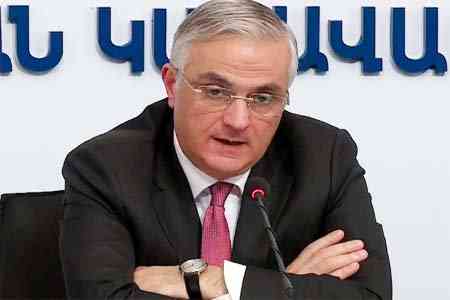
Metalstroy, based in Yerevan, is a leading provider of construction services in Armenia, specializing in the construction of hangars, industrial complexes, and residential buildings, with a variety of options for using high-quality building materials. Meanwhile, according to Goar Barseghyan, Minister of Industry and Agro- Industrial Complex, this decision by the Commission Council is the cumulative result of work on implementing the new supranational financing instrument. "Two more projects have been added to the three already approved this year. It is important that all member states are participating in the projects. I am confident that the implementation of the adopted initiatives will contribute to achieving the main objective - the development of sustainable economic ties between our countries," she said.
It is also worth noting that the EEC Council approved another project, in which the Russian company Beshtau Electronics is participating together with Nero Electronics LLC (Belarus) and Kyrgyzstan Electronics LLC (Kyrgyzstan). The project is aimed at the production of personal computer system units. As previously reported, on October 26, 2023, the Eurasian Intergovernmental Council approved regulations on the selection of joint cooperation projects in industrial sectors and the provision of financial assistance for their implementation by EAEU states. Selection criteria include meeting basic conditions. Specifically, a project may be considered if its participants are enterprises from three or more EAEU countries and the stated implementation period does not exceed five years. The subsidy amount is equal to the key rate of the national currency in which the project is financed.
The maximum subsidy amount per project per year cannot exceed the equivalent of 350 million Russian rubles. 1.8 billion Russian rubles were allocated for the implementation of such projects in 2024, and up to 3.6 billion Russian rubles in 2025. The list of financial institutions approved for participation in the financial assistance mechanism includes 63 banks, eight development institutions, and the Eurasian Development Bank.
To date, the EEC has received 16 applications for subsidies: 13 from Russia, two from Kazakhstan, and one from Kyrgyzstan, with a total value of approximately 17 billion Russian rubles. Five projects have been approved. Other applications are at various stages of review.