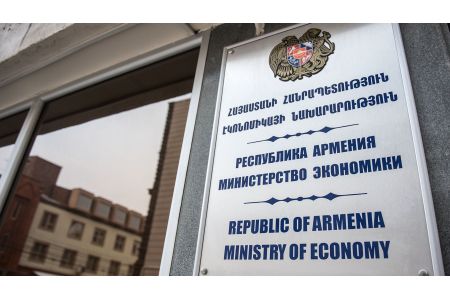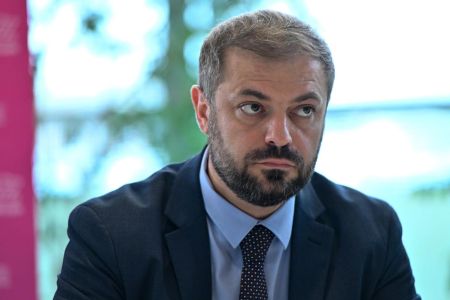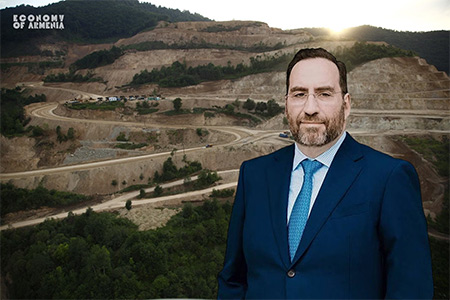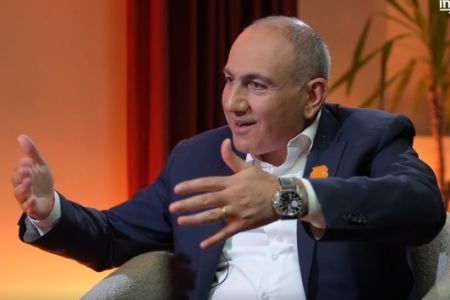



ArmInfo. The Georgian region of Kakheti annually exports $200 million worth of wine, while the Armenian region of Vayots Dzor only exports $2-2.5 million. Narek Karapetyan, coordinator of the "In Our Way" movement, stated this in a video address, when commenting on RA Minister of Economy Gevorg Papoyan's assertions that Armenia's Vayots Dzor region has become a major winemaking region.
According to the movement coordinator, officials' responses are often out of touch with reality. Vayots Dzor is indeed home to the world's oldest winemaking monuments, and the region boasts centuries-old traditions. However, it alone does not make the region an economically mature winemaking center. All of Armenia exports approximately 15 times less wine than the Kakheti region alone. According to Karapetyan, when people talk about a winemaking center, they mean tens of millions of dollars in exports and production, as well as thousands of tourists who come specifically for wine tourism. Karapetyan also questioned the Minister of Economy's professional competence, noting that he had worked in the trade sector as a marketing specialist and, in his opinion, lacks the experience to assess the true scale of the wine industry.
Karapetyan also responded to Minister of Labor and Social Affairs Arsen Torosyan's assertion that schools are not being closed, but merely "merged." According to the movement's coordinator, approximately 45 schools are actually being closed in the Syunik region. He noted that a merger can be justified when two small schools within a single community are combined. However, if educational institutions in five different communities are closed and children have to travel up to 10 km along mountain roads in the winter, it's a case of effectively shutting down schools, not merging them. Karapetyan emphasized that such a policy also leads to a reduction in teacher salaries in villages, where teachers are often the only remaining government employees. He added that this means a halt to government salaries, which seriously impacts the local economy.
In response to Syunik Governor Robert Ghukasyan's statement about people outside Syunik speaking about the region's problems, Karapetyan pointed out that the governor, before making such conclusions, had not thoroughly studied his background. He emphasized that his maternal roots are in Goris, and his family comes from the village of Tegh. According to Karapetyan, it was from the village of Tegh that hundreds of hectares of land were transferred to Azerbaijan as a result of negotiations between the current government and the current administration, without any significant diplomatic resistance. Karapetyan added that as a result, agriculture in Tegh suffered serious damage, and the livestock population was reduced by approximately half-and all of this, he said, occurred during the current governor's tenure. As a practical proposal, he appealed to the governor to resolve the water supply issue in the village of Tasik in Sisian, where residents are forced to fetch water by hand for half the year. Karapetyan proposed an agreement: if the regional authorities fail to resolve the issue, they are prepared to do it themselves- quickly and effectively, on the sole condition that the authorities do not impede the process.