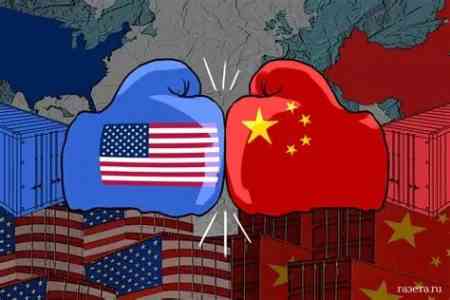
ArmInfo. Despite its refusal to join the Belt and Road Initiative, the US increased its investments in countries that did join it once they signed memoranda of understanding with China. Strategic competition is the primary driver of this investment, according to an ECONS publication based on empirical research on the Belt and Road Initiative.
It notes that China's emergence as an economic and technological superpower, as well as its strengthening of economic and political ties with other countries through the Belt and Road Initiative and other measures, have intensified US-China rivalry. The United States is seeking to offer alternatives to the Belt and Road Initiative through initiatives such as Build Back Better World, a G7 initiative to finance infrastructure in developing countries, and the Blue Dot Network, a US-funded multilateral organization established in 2019 to certify infrastructure projects worldwide to encourage infrastructure investment. It is sometimes seen as a copy of the Belt and Road Initiative, and, in the words of former US Secretary of State Antony Blinken, "it's a race for infrastructure leadership." Foreign direct investment is also part of this toolkit.
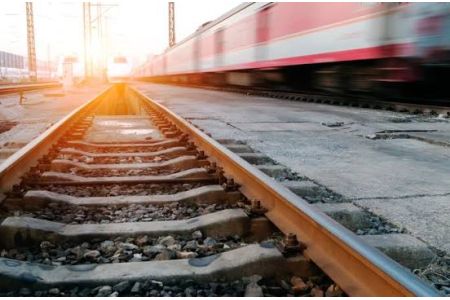
In practice, US companies and development finance institutions are targeting the same infrastructure and energy sectors where China is most active. For example, former US President Joe Biden visited Angola in December 2024 and, together with other G7 countries, initiated a 1,344-kilometer railway project. km to compete with China, which has already invested heavily in Angola's railways.
Although the UK and the Netherlands, like France and Switzerland, have signed memoranda of understanding with China on cooperation in third-country markets, they maintain a cautious approach toward China. This reflects a growing perception of political and supply chain risks associated with China, particularly since 2018, when European and US concerns about national security intensified due to growing competition with China in advanced technologies such as 5G.
For example, in 2019, the UK government's attitude toward China and the Belt and Road Initiative changed from positive to significantly negative, with "systemic problems" on China's part officially cited as the reason. The Dutch government published "The Netherlands – China: A New Balance" in 2019, which marked a shift in Dutch policy toward China: from a policy of openness to a policy of cautious engagement, particularly in critical economic sectors. The document reflected a strategic reorientation aimed at protecting Dutch interests: while the government continues to strive for reciprocity in bilateral relations, it has adopted a more proactive approach to protecting companies with advanced technologies from Chinese investors.
Researchers note that countries with autocratic regimes have attracted more FDI from both China and the United States compared to democratic countries. For China, this is explained by its preference for working with politically close regimes, where infrastructure agreements are concluded under lesser transparency requirements. As for the United States, the findings support the hypothesis that its investments in Belt and Road countries are motivated by strategic rivalry with China. Since authoritarian Belt and Road countries are more likely to strengthen economic and political ties with China, the United States has a strong incentive to invest in them. Until recently, the Belt and Road Initiative has been criticized for triggering debt crises and labor disputes in many countries. participating countries. However, as US President Donald Trump imposed high tariffs on most countries, closed USAID, and cut foreign aid, countries in the Global South are now more willing to strengthen economic and political ties with China. China quickly responded to this shift and, after a post-COVID decline in funding, increased investment in Belt and Road projects in 2024 to a maximum level; record investment growth continued in 2025.
Research findings show that Western countries have responded to the Belt and Road Initiative in different ways, both decreasing and increasing investment in countries participating in the Chinese initiative. Regardless of this increase, reducing economic ties with the Global South could lead to increased vulnerability in Western countries' supply chains. Furthermore, reducing economic ties could also weaken political ties.
Consequently, Western countries may need to change their strategic responses to the revival of the Belt and Road and strengthen economic and political ties with the Global South to enhance the resilience of their own supply chains and national security.