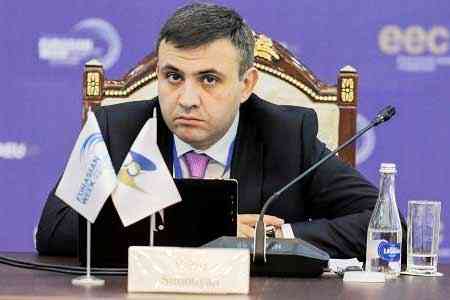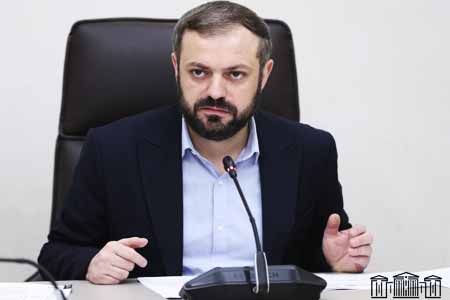



ArmInfo. According to forecasts from the Public Services Regulatory Commission, the Armenian Nuclear Power Plant's profits in 2026 will be 12.7 billion drams. Only God knows what these calculations are based on. David Ghazinyan, former General Director of Electric Networks of Armenia CJSC, publicly challenged the financial projections released by the PSRC, during at a press conference on January 9.
He stated that this year the plant will be shut down for 150 days of scheduled maintenance and refueling. Last year, the Armenian Nuclear Power Plant was idle for 30-45 days, yet the PSRC estimated its profit at 189 million drams. "It remains unclear how the plant's profit is expected to be 12.7 billion drams with a 150-day outage, but only 189 million drams with 30-45 days. I have my own comments on this topic, but it would be better if you contact the Public Services Regulatory Commission for clarification," the former company director said.
He also called on media representatives to clarify why the Yerevan Thermal Power Plant and High Voltage Networks of Armenia CJSC have postponed their loan repayment deadlines. These obligations, Ghazinyan noted, were originally slated for closure in 2026. The former general director sees two possible answers: either the state should subsidize the loan repayments, or electricity tariffs should be increased.
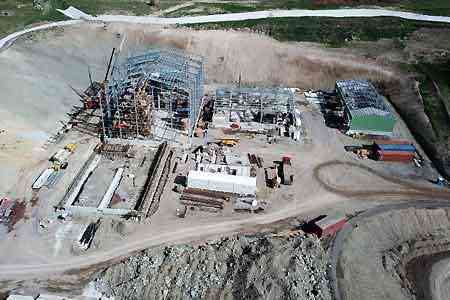
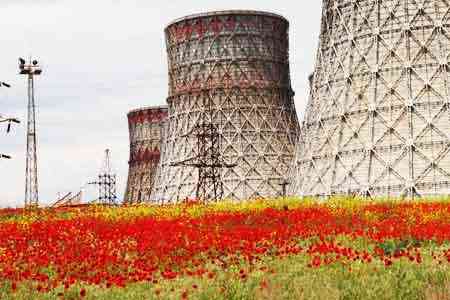
It should be noted that in 2026, the Armenian Nuclear Power Plant will enter the active phase of its program to extend the life of Unit 2 once again. The $165 million saved during the first program will be allocated for these purposes. This explains the length of the ANPP shutdown. The project will include modernization of the reactor cooling systems, safety systems, main circulation pumps, and other upgrades. It is envisaged that after the project's implementation, the unit will be able to operate until 2036. By that time, a new nuclear power unit is scheduled to be built in the country.