


ArmInfo. Armenia's Foreign Intelligence Service (FIS) predicts a high probability that the positive momentum for both economic and infrastructure projects in the South Caucasus will continue throughout 2026. In its annual report on external risks, the FIS notes that 2025 was characterized by an intense "race" among global and regional powers for influence over infrastructure initiatives in the South Caucasus. This competition, however, has fostered conditions that allowed regional nations to slightly ease tensions and pursue long-term stability.
"The dynamics of global and regional competition for such projects will likely continue into 2026. Regional infrastructure and economic projects, while not the only driving force behind the institutionalization of peace, nonetheless have great potential. On one hand they to raise the cost of military escalation in the region, and on the other hand the participation in these projects bolsters the political and economic standing of regional states on the international stage," the report states.
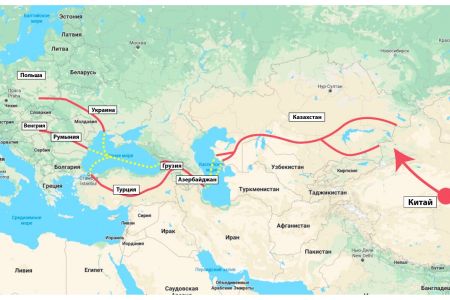
At the same time, the Armenian FIS is confident that a complete lifting of the blockade in the South Caucasus region, and particularly the possible resumption of traffic on the Kars-Gyumri railway, the implementation of the "Trump route" (TRIPP), as well as possible initiatives for bilateral transport links with Armenia's neighbors, will create broad economic and logistical opportunities. The report emphasizes that this, in turn, will lead to market diversification and expanded regional trade.
"This will lead to balanced development for border populations-specifically between Armenia and Turkey to the west, and Armenia and Azerbaijan to the east. By improving the speed and cost-effectiveness of regional logistics, the South Caucasus is expected to see a significant boost in international investment attractiveness. According to our assessment, there is a high probability that the positive dynamics of both economic and infrastructure projects in our region will continue into 2026," the report continues.
The report concludes that infrastructure geopolitics demonstrates how state actors use infrastructure to expand their influence through economic leverage and dependency. "We believe that new economic, infrastructure, and trade initiatives in our region will continue to face attacks in 2026 from various actors with conflicting interests in the region,, These threats may manifest as physical restrictions, information influence operations, and other malicious actions," the Armenian Foreign Intelligence Service stated.