

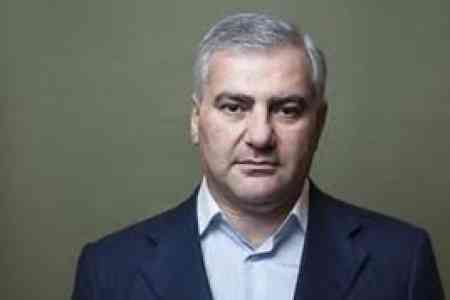
ArmInfo.The economic roadmap for the newly registered "Strong Armenia" party, founded by Russian-Armenian businessman and President of Tashir Group Samvel Karapetyan, has been officially presented. The program centers on five strategic priorities designed to anchor the party's economic platform.
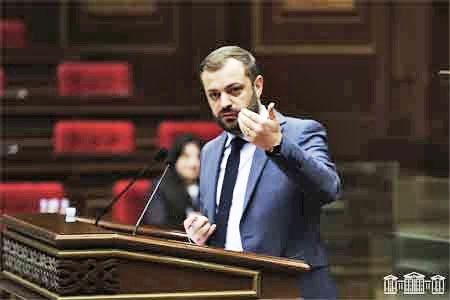
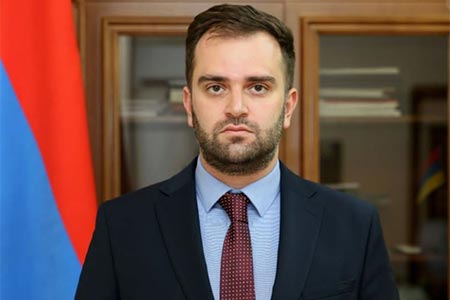
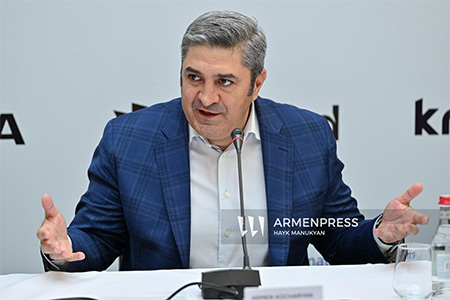
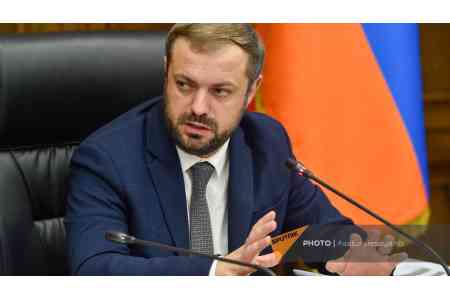
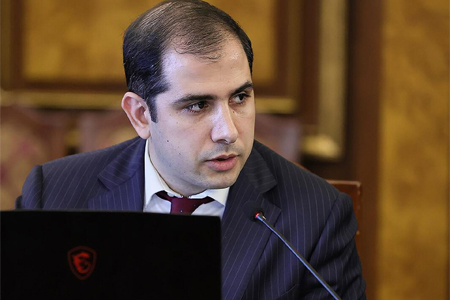
During an event held on January 20, Narek Karapetyan, Vice President of Tashir Group and coordinator of the "In Our Way" movement, outlined the core objectives: job creation in regional provinces, tax exemptions for small businesses, reducing the cost of medicine, housing support for young and large families, and agricultural development.
The program is designed for implementation over a five-year period, with significant changes expected to be felt by the second year. The first priority is the creation of 300,000 jobs in Armenia's provinces. Karapetyan highlighted that the lack of local employment is the primary driver of rural depopulation and poverty. He noted that previous state subsidies failed to prevent a decline in regional manufacturing, while Yerevan's credit-driven growth is unsustainable in the long term.
To address this, the party proposes a policy of rapid industrialization. New manufacturing plants will be established through partnerships with the China Export Company, which is prepared to finance 70% of projects if equipment is sourced from China. The remaining 30% would be split equally between the state and private investors (15% each). Karapetyan emphasized that the state would effectively recover its 15% investment through tax revenue, resulting in a net cost of only 2% to the treasury. Specific development plans have been drafted for every city in Armenia.
The second pillar of the program is the total tax exemption of small businesses. Currently, Armenia has 69,000 small business entities contributing only 2-3% of total tax revenue. "We must exempt small businesses from taxes to allow them to grow," Karapetyan stated, noting that 3,000 small companies closed last year following the increase of the turnover tax from 5% to 10%. He argued that while administrative oversight is needed to prevent medium-sized businesses from splitting into smaller ones to avoid taxes, there is no fundamental fiscal necessity to tax the small business sector. Under this proposed policy, the party estimates that up to 3,000 new small businesses could open annually. Jobs will be created through a focused policy of industrialization and re-industrialization across the country's regions. Specifically, industrial enterprises will be established in collaboration with a Chinese export company. This partner is prepared to finance 70% of project costs, provided that the production equipment is purchased from China. The remaining funding will be split equally between the state (15%) and private investors (15%).
Narek Karapetyan noted that while the state invests 15%, it effectively recovers 100% of that investment. Furthermore, funds invested in industry return to the state at a rate of 12-13% in the form of taxes. Consequently, the net state expenditure on project implementation averages only 2%. Development programs have already been formulated for every city in Armenia.
Tax Relief for Small Business The program proposes exempting small businesses from taxes to stimulate growth. Currently, Armenia has 69,000 small business entities that contribute only 2-3% of total tax revenue. Last year alone, 3,000 small companies closed following an increase in the turnover tax from 5% to 10%. The party argues that with proper administration to prevent medium-sized businesses from artificially splitting to avoid taxes, there is no fiscal necessity to tax small enterprises. This policy is expected to lead to the opening of 3,000 new small businesses annually
. Affordable Medicine and Pharmaceutical Reform Samvel Karapetyan intends to apply the Georgian model to the pharmaceutical industry, specifically transitioning to an ERP (Enterprise Resource Planning) system. This shift is designed to reduce production costs, optimize procurement, and lower operating expenses. The goal is a 20% reduction in the price of medication in Armenia.
Agricultural Support Centers A vital component of the five-year plan is the establishment of agricultural collection stations in the provinces. These stations will serve as intermediaries between farmers and commercial buyers. At the beginning of each year, the stations will facilitate contracts for crop sales and ensure farmers are provided with necessary fertilizers. This initiative aims to solve logistics and sales challenges for rural producers.
Housing for Young and Large Families To bridge the gap between local wages and high real estate prices, the "Strong Armenia" party proposes an investment partnership with construction firms. Under this scheme, the state provides land and utility infrastructure (electricity, water, gas) free of charge. In return, developers must offer housing to young or large families at an affordable, state-mandated price. Alternatively, developers can "pay" for the state assistance by providing a portion of the completed apartments to the government for low-cost distribution to beneficiaries.
"The difference between Samvel Karapetyan's proposals and Nikol pashinyan is that Samvel Karapetyan does what he says," he concluded.