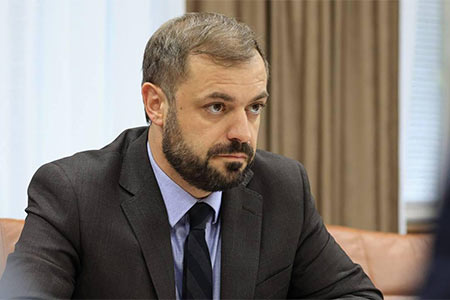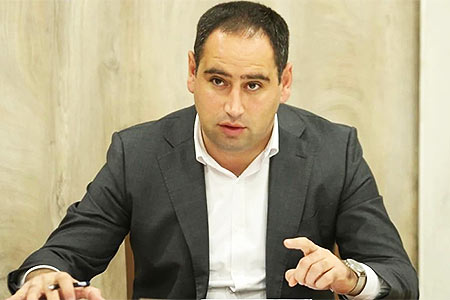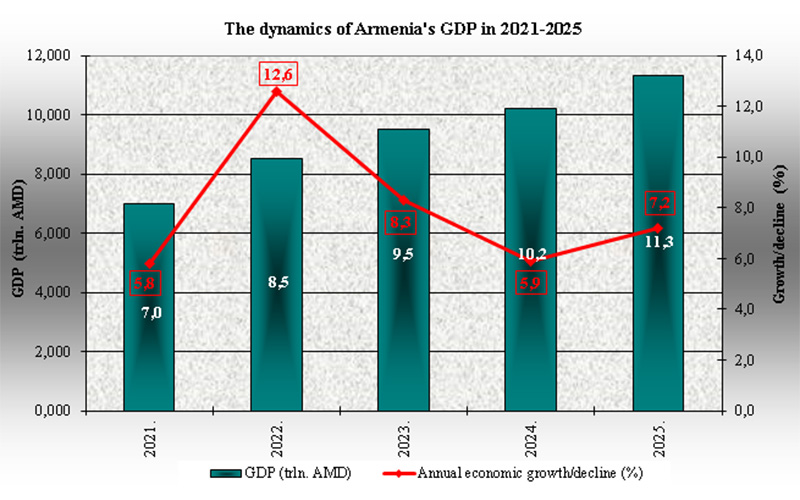


ArmInfo. Armenia's GDP growth for 2025 is estimated to reach 5.5-6%, outperforming the 5.1% target originally set in the state budget, as stated by Armenian Finance Minister Vahe Hovhannisyan on January 21 at a press conference presenting the ministry's performance outcomes for 2025.
This sustained momentum contributed to Fitch Ratings revising Armenia's Long-Term Foreign-Currency Issuer Default Rating (IDR) from "Stable" to "Positive," while affirming the rating at "BB-." This sustained momentum contributed to Fitch Ratings revising Armenia's Long-Term Foreign-Currency Issuer Default Rating (IDR) from "Stable" to "Positive," while affirming the rating at "BB-." Minister Hovhannisyan noted that maintaining these high growth rates is particularly significant given the "high base effect" from previous record-setting years.
According to the Minister, this sustained momentum contributed to Fitch Ratings revising Armenia's Long- Term Foreign-Currency Issuer Default Rating (IDR) from "Stable" to "Positive," while affirming the rating at "BB-." This sustained momentum contributed to Fitch Ratings revising Armenia's Long-Term Foreign-Currency Issuer Default Rating (IDR) from "Stable" to "Positive," while affirming the rating at "BB-." Minister Hovhannisyan noted that maintaining these high growth rates is particularly significant given the "high base effect" from previous record-setting years.
The tax/GDP ratio also exceeded the figure projected by the law "On the State Budget of the Republic of Armenia for 2025." "We aim to increase the figure by 0.5 percentage points annually. However, if everything falls within our forecasts, then, compared to 2024, we will see an improvement of 1 percentage point. We will reach 24.5%, which will bring us closer to our 2021-2026 program goal of 25%," Hovhannisyan said.
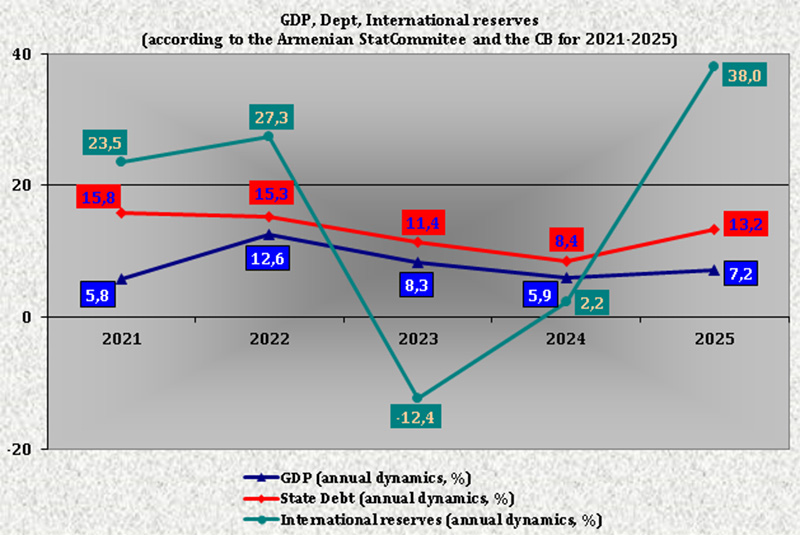
Furthermore, the deficit by the end of 2025 was at least 1 percentage point lower than expected-4.5%. This, the Minister noted, will also have a positive impact on public debt indicators. Thus, while the Ministry of Finance expected the government's debt in 2025 to exceed 50%, the actual figure was approximately 48.7%, compared to 48% in 2024.
This latter factor, Hovhannisyan emphasized, has a positive impact on public debt servicing, interest rates on government treasury bonds, and Eurobonds placed on international financial markets. "I am pleased to note that we currently have a historically low risk premium." For example, in March 2025, when we placed $750 million in Eurobonds on the international capital market, with a maturity of 10 years and a yield of 7.1%, the risk premium was 2.86 percentage points. In January 2026, this figure had decreased by 1.96 basis points. That is, if we were to enter the international financial market today, all else being equal, its interest rate would be 0.9 percentage points lower," the Finance Minister stated.
The good news doesn't end there: in 2025, budget revenues increased by 306 billion drams, while expenditures rose by 350 billion drams. A notable contributor to revenue was the doubling of duties on online casinos, which generated 23.5 billion drams-up 10.5 billion from the previous year. Capital expenditures also saw a massive surge of 151 billion drams.
Under the Ministry of Defense, capital expenditures increased by 86 billion drams to 419 billion drams, or more than $1 billion. And capital expenditures in the economic sector (excluding data from the Ministry of Defense and expenditures financed by international partners) increased by 81.7%, or 70 billion drams. "The construction of new schools had the most significant impact," the Minister emphasized.