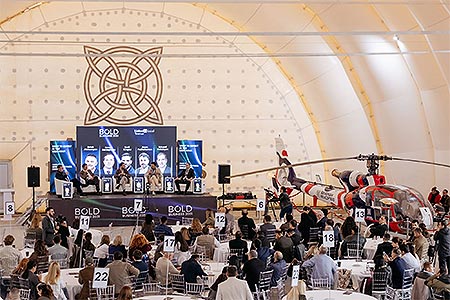


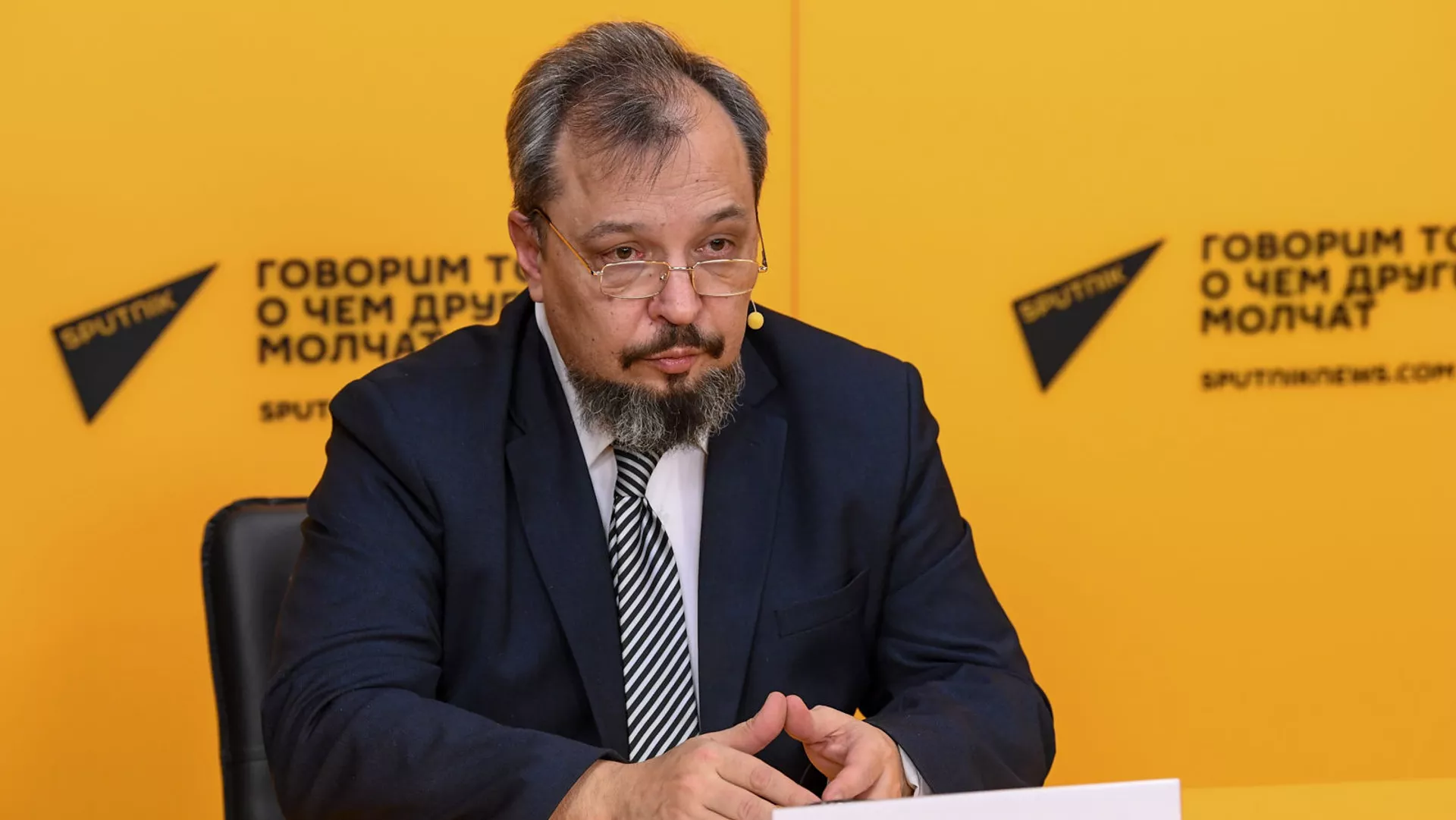
ArmInfo. Russia is the only country with its own proven technology for reprocessing irradiated nuclear fuel among those with practical experience in small modular reactors (SMRs). Boris Martsinkevich, editor-in-chief of the analytical journal GeoEnergetika Info, made this statement during a Moscow-Yerevan-Minsk-Tashkent-Sukhumi video conference on "Current Energy Issues," while addressing a question from ArmInfo.
The expert noted that a total of 80 SMR projects exist worldwide, and only two are currently operational: the Akademik Lomonosov floating nuclear power plant (in Pevek, Russia) and the HTR-PM small modular reactor in China, which is the first and experimental project (in Shandong Province). According to Martsinkevich, construction is currently underway in Yakutia on a 55 MW Ritm-200N SMR nuclear power plant, a technology already proven on the latest generation of nuclear icebreakers, andt the land-based version is being built in Yakutia. Construction of the Ritm-200N SMR is scheduled to begin in Uzbekistan in March of this year. "I don't want to criticize the Chinese project. I'll simply remind you that China still hasn't developed its own technology for reprocessing irradiated nuclear fuel, while Russia does. Rosatom's standard construction contracts typically include both fuel supply and guaranteed reprocessing of spent nuclear fuel," the expert said. Regarding cooperation with the United States, Martsinkevich noted that this is impossible, as American legislation itself prohibits it. "China promises to master the technology. They were supposed to launch the first pilot production line in December, but I haven't yet seen in the open press whether they've succeeded," the editor-in-chief of GeoEnergetika Info said.
When addressing Armenia's energy future, the expert noted that the country's high seismic activity will impose strict regulatory demands on any new nuclear project. Furthermore, he argued against the installation of large-scale (gigawatt-class) reactors. "The reactor operates at a single capacity. If you install a gigawatt reactor, how will you regulate it? You'll have to do something else, and the project will only become more expensive," he noted. In response to a question about the economic viability of small reactors, the expert noted that such a review should be conducted by a country wishing to implement small modular reactors. "This is absolutely obvious; no one will do it for you. Because who better than Armenia itself can assess whether it needs this or whether it would be better to abstain," Martsinkevich said.
Recall, three years ago, Maria Longhi, coordinator of US government assistance programs for Europe and Eurasia, reported that the US was considering the construction of small modular nuclear reactors in Armenia. "The United States is considering the construction of small modular nuclear reactors in Armenia and other Eurasian states, seeking to strengthen their energy independence," Longhi noted. She added that in several countries, including Armenia, the US is evaluating the possibility of creating small modular nuclear reactors using American technology, which could lead to greater energy independence from both Russia and China.
A day earlier, at a press conference, RA Minister of Territorial Administration and Infrastructure David Khudatyan announced that Armenia was considering SMR models proposed by Russia, the US, China, South Korea, and France. He noted that the country's authorities intend to take their time when selecting an SMR nuclear power plant. The final selection of the model, and consequently, the country of manufacture, will be made in 1-1.5 years.
Recall, the nuclear power plant operating in Armenia was supposed to be decommissioned in 2016, but its service life was extended until 2026. Authorities have since decided to further extend the service life of Unit 2 until 2036. By that date, the country must have a constructed nuclear power plant with one or more small modular reactors.