

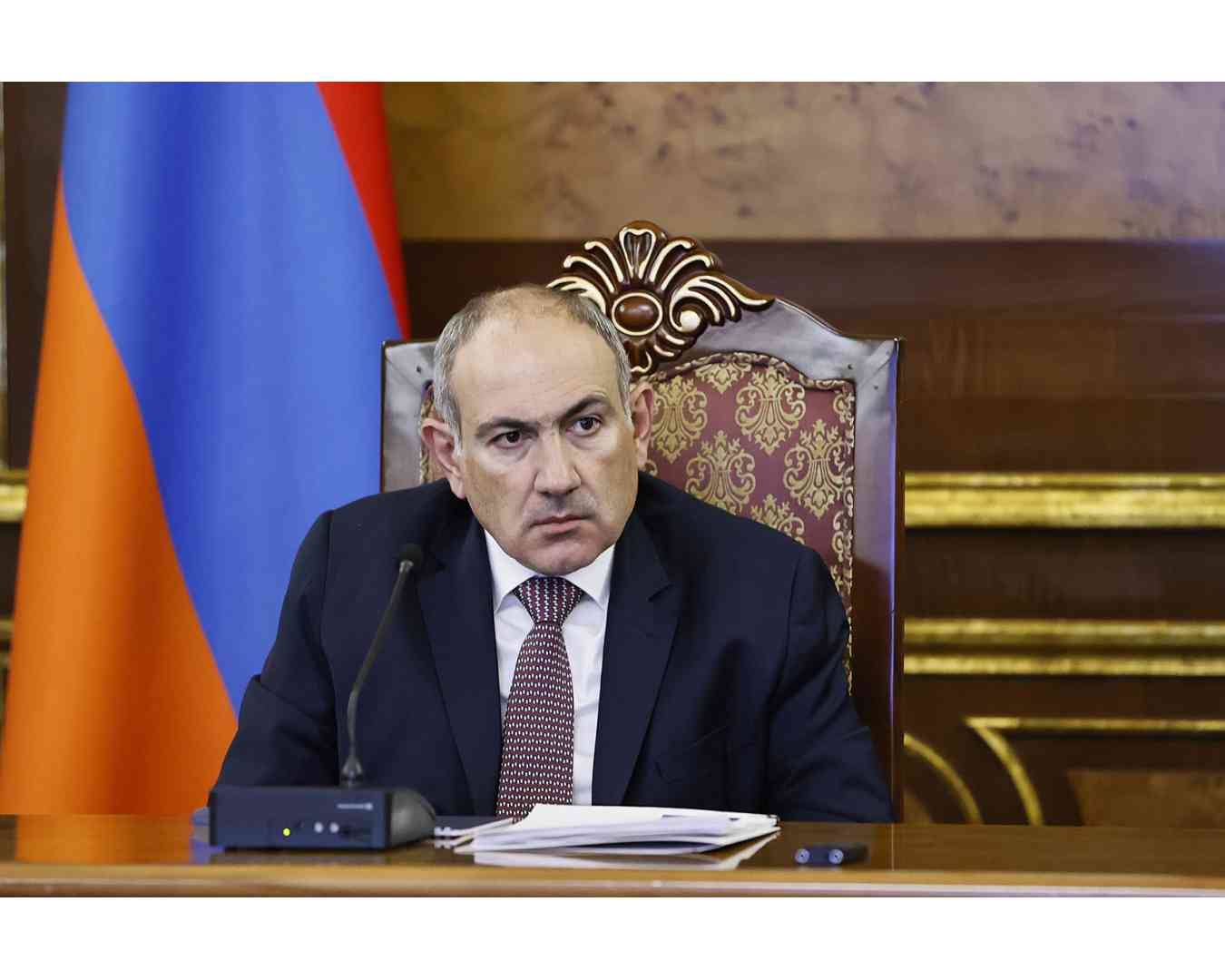
ArmInfo. Armenian Prime Minister Nikol Pashinyan called on waiters to, in turn, encourage their employers to clearly record their entire salary. This will allow them to become beneficiaries of the Universal Health Insurance (UHI) system and take advantage of various income tax programs.
"I have an old friend-a waiter-whom I met while drinking coffee in a cafe in central Yerevan, back when I was an opposition figure. I recently learned that due to certain health issues, he found himself in serious financial difficulties," Nikol Pashinyan said today during a Facebook live broadcast.
The Prime Minister asked his friend why he hadn't used the UHI system, since it covers treatment for this condition.
"However, I learned that an acquaintance of mine, who, let me remind you, works as a waiter at a cafe in central Yerevan, is not a beneficiary (of the VMS), since his salary is 80,000 drams.
I guarantee that if my acquaintance's salary were 80,000 drams, he would never have worked at that cafe. It's simply impossible. But I want to point out that because of this 'shadow,' this person, at some point, found himself in a difficult financial situation.
Meanwhile, if his actual salary had been recorded, he would have become a beneficiary of the health insurance and would have been able to avoid 97-98% of these problems," the prime minister stated.
On January 1, 2026, the implementation of the Universal Health Insurance (UHI) system began in Armenia, and its full implementation will be completed within three years. The first stage has begun, and the system covers children under 18, individuals aged 65 and older (even if employed), persons with disabilities aged 18 to 65, members of socially vulnerable families, and citizens earning over 200,000 drams. The basic cost of an insurance policy in 2026 will be 129,600 drams (10,800 drams per month). This year, individual entrepreneurs will also benefit from the system, but they will be responsible for paying their own insurance premiums. In 2026, 1,571,181 people were enrolled in the system. Of these, only 18.3% are employees with employment contracts and incomes of at least 200,000 drams per month, who pay their own insurance premiums. The remaining 81.7% are covered by state insurance: 39.9% are citizens under 18, 32.5% are individuals aged 65 and over, and another 9.3% are members of socially vulnerable groups. In 2027, mandatory health insurance will be extended to citizens with incomes of up to 200,000 drams, and in 2028, to the rest of the country's population, including farms.