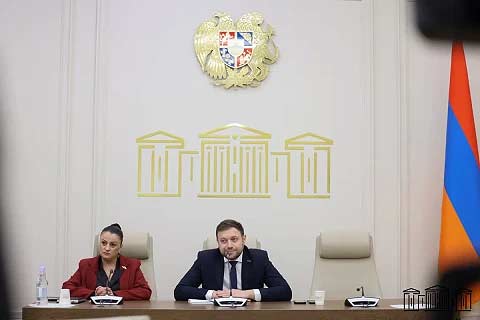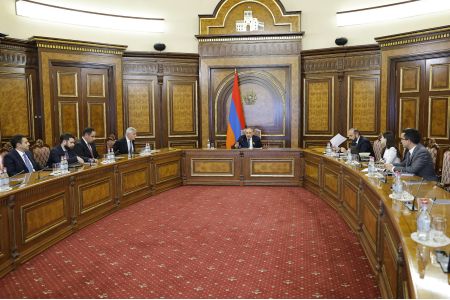
ArmInfo. During the session of the NA Committee on Economic Affairs on May 19, the report on the activities of the Public Services Regulatory Commission of the Republic of Armenia for 2025 was discussed.
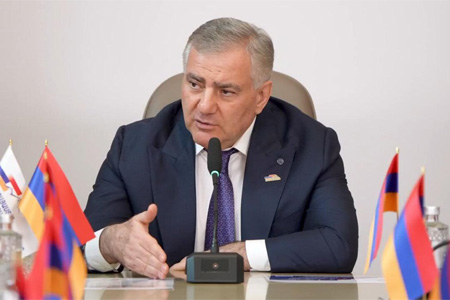
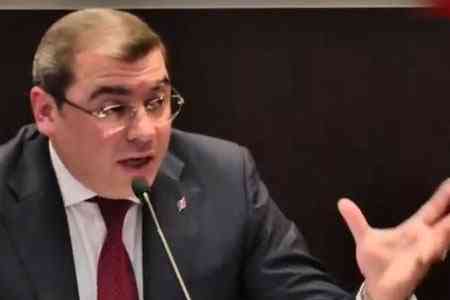
Presenting the results of the 2025 activities, Commission Chairman Mesrop Mesropyan noted that the reporting year was marked by both legislative changes and structural transformations in the market. He said that the revised draft laws "On Electricity," "On Renewable Energy Sources," and "On Energy Saving," developed within the framework of the energy security program of the United States Agency for International Development and the World Bank, were submitted for the Commission's consideration, on which the Commission provided its comments and suggestions. During the reporting year, amendments were also made to key legal acts regulating the energy sector: wholesale and retail trading rules, transmission and distribution network operating rules, gas supply system tariff calculation methods, licensing procedures, and procurement requirements for regulated companies.
The speaker noted that four years after the liberalization of the wholesale electricity market, significant growth has been recorded. "While consumption in the liberalized sector accounted for 5.3 percent of domestic consumption in 2022, it rose to 20.1 percent in 2023, 27.8 percent in 2024, and reached 33.2 percent in 2025. In 2025 alone, approximately 474.5 million kilowatt-hours of 6-10 kV consumer consumption entered the liberalized market," Mesrop Mesropyan emphasized. In 2025, tariffs for natural gas transportation, gas distribution system operator services, and storage were revised, but no changes were required for natural gas tariffs. A similar situation persisted in the electricity and drinking water sectors, where tariffs for electricity, gas, and water remained unchanged throughout the year.
In terms of renewable energy development, as of December 31, 2025, 191 small hydroelectric power plants with a total capacity of 403 megawatts were operating in the country with another 20 under construction and a capacity of 38 megawatts. In the solar energy sector, 100 solar power plants with a capacity of 448 megawatts were operating, with another 42 under construction and a capacity of 183 megawatts. Furthermore, the number of stand-alone solar power plants connected to the distribution grid exceeded 50,000, with a total capacity of 640 megawatts, and an average monthly increase of 15-20 megawatts. Growth was also noted in the telecommunications sector. The number of mobile subscribers at the end of 2025 was 4,151,192, an increase of 66,792 compared to the previous year. The number of mobile broadband subscribers was 3,550,621, an increase of 8.9%. There are 202 licensed fixed-line operators in the country, with 170 in the regions and 32 in Yerevan. The number of fixed broadband subscribers was 624,985, an increase of 3.5%. In 2025, the commission received 3,460 complaints, 1,906 of which were written and 1,554 were oral.
In the reporting year, the commission's budget totaled 1.19 billion drams. Of this amount,1.102 billion drams were spent, and 88.5 million drams were returned to the state budget. At the same time, approximately 10.3 billion drams were transferred to the state budget. The majority of this sum, 9.7 billion drams, came from revenues generated from the use of radio frequencies and permit issuance. Licensing fees contributed 380.23 million drams, and regulated entities paid 227.4 million drams for violations of legal acts.