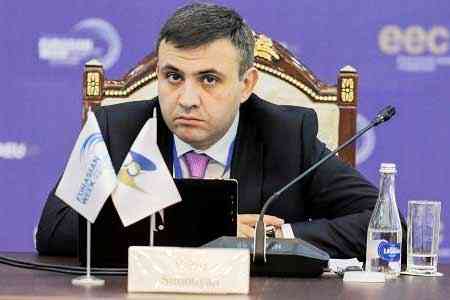



ArmInfo.Professionals in the technological sphere face a serious task of transformation, as stated by Armen Baldryan, Chairman of the ICT Employers' Union, during a press conference on May 20.
"At first glance, it might seem that we have reached a peak in the number of specialists. However, the industry is constantly changing. While programmers were in high demand yesterday, today there is a need for engineers. This is precisely where we face a serious problem with transformation," he noted.
Citing his discussions with foreign partners, he noted that in terms of human resources potential, the latter believe they have reached the maximum. In Armenia, according to the head of the Union, there is untapped potential that can be developed through education, retraining, and advanced training. "We have the potential, the mechanisms are in our hands, and I believe we must work together to transform this potential into energy," Baldryan noted.
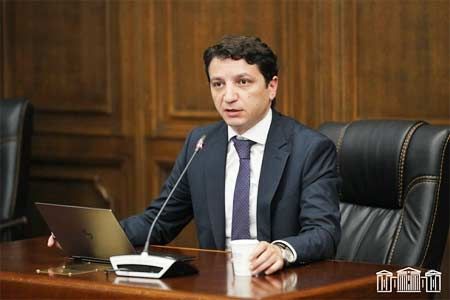
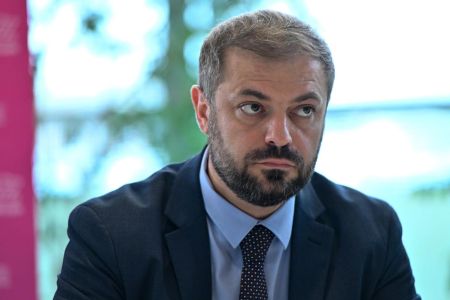
In this vein, Armenian Minister of High-Tech Industry Mkhitar Hayrapetyan, citing official statistics, noted that more than 50,000 specialists work in Armenia's technology sector. "For small countries with small populations, this is undoubtedly an impressive number. And this is a fact that should be valued and recognized. Many countries around the world would like to accumulate similar human capital in the technology sector over decades. However, the industry develops daily, constantly, dynamically, and continuously. Technologies created in the morning may lose their relevance by evening. This certainly offers advantages, but also poses challenges," the minister said. In this context, he noted that companies in the industry must be as flexible and dynamic as possible, and specialists must continuously invest in their professional skills. Furthermore, education policy must be as flexible as possible, and if formal educational programs fail to keep pace with changes, informal educational initiatives must step in to help. "At the same time, industry must actively participate in human capital development and collaborate closely with academic institutions," Hayrapetyan said.
He emphasized that training new personnel in the technology sector requires daily efforts. If a significant portion of the more than 50,000 workers do not undergo retraining and do not acquire new skills and knowledge, they may lose competitiveness, especially with the introduction of new technologies, such as artificial intelligence. "Work in this direction is ongoing, and it is of paramount importance," the minister said.