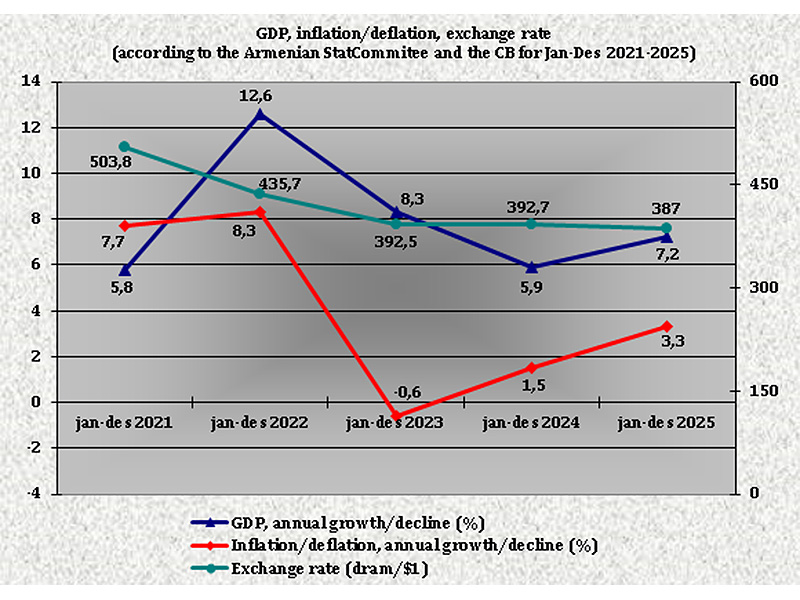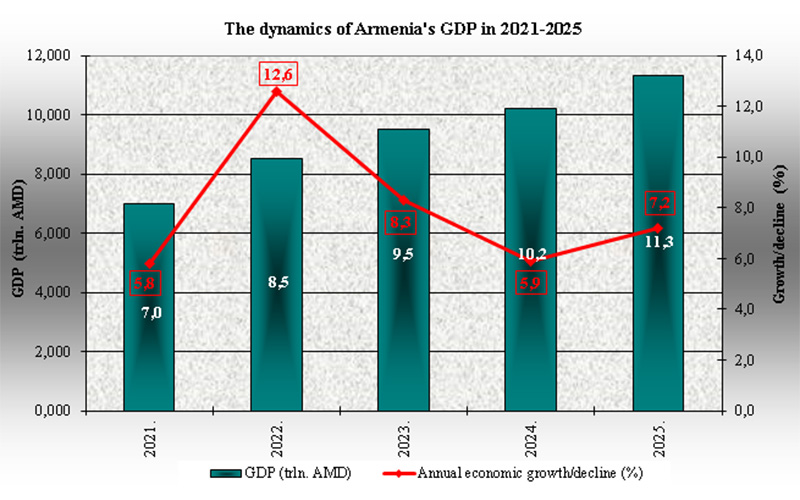


ArmInfo. Fitch Ratings has affirmed Armenia's Long-Term Issuer Default Ratings (IDRs) at 'BB-' with a Positive Outlook., forecasting a slowdown in GDP growth in 2026 to 5.2% (from an actual 7.1% growth in 2025). This was noted in a statement issued by Fitch Ratings. Fitch Ratings Positive Outlook reflects Armenia's higher international reserves, continued solid growth that will support debt stabilisation over the medium term, and prospects for improvement in longstanding geopolitical risks.
"The US-sponsored peace framework with Azerbaijan has significantly reduced near- term military escalation risks, but lingering uncertainty remains regarding the path to successful conclusion, including a potential constitutional referendum. Additionally, increased diplomatic tensions with Russia creates risks for the Armenian economy, particularly given its significant dependence on Russian energy imports," the report notes.
KEY RATING DRIVERS
Election Outcome Supports Policy Continuity: Prime Minister Pashinyan's Civil Contract Party won the June 2026 elections, signalling broad policy continuity, including closer relations with the West, but fell short of the two-thirds majority needed to unilaterally amend the constitution. Removing constitutional references to Karabakh is a condition of the treaty with Azerbaijan and will likely require a referendum, possibly in 2027, posing a source of lingering uncertainty in the peace process.
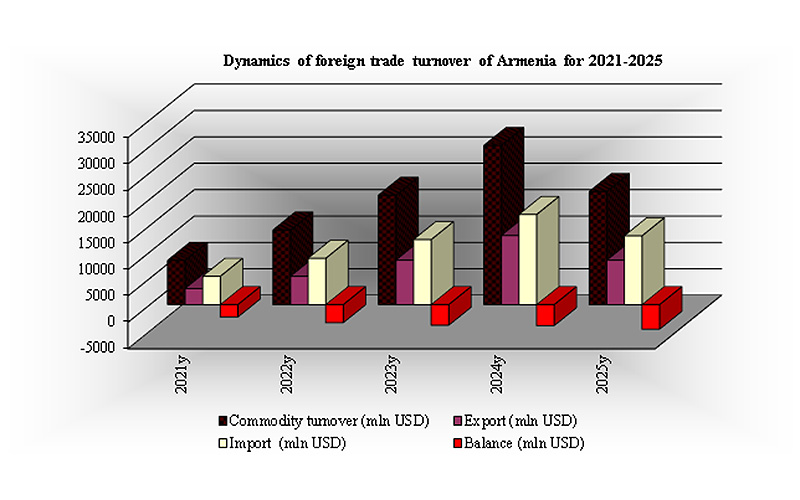
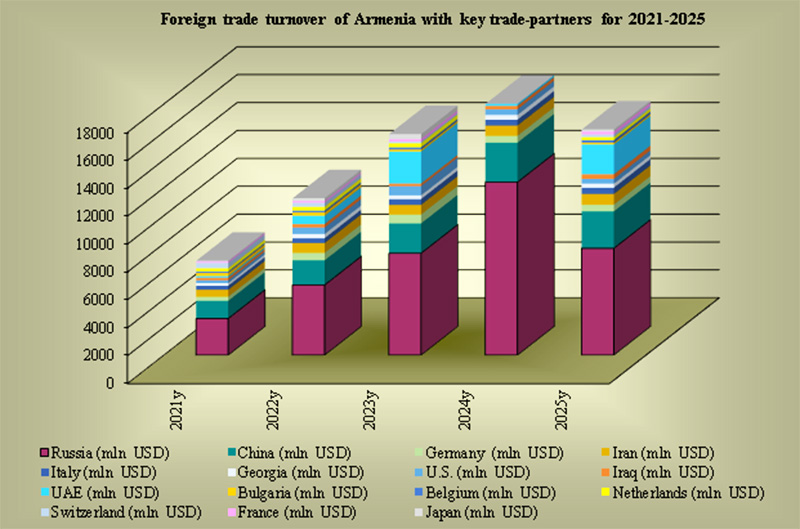
Tensions with Russia: Russia is Armenia's largest trade partner and supplies over 80% of natural gas imports on preferential terms. Russia accounts for 35% of Armenia's goods exports and recently imposed import and transit restrictions on Armenian food products and threatened to end preferential energy and rough diamond trade in response to Armenia's EU accession path. As gas meets 61% of energy needs, a supply cutoff or price increase could negatively affect macroeconomic, fiscal, and external balances.
Strong Growth Prospects: Armenia's economy grew 7.1% in 2025 after several years of similarly strong growth. We project real GDP growth to moderate to 5.2% in 2026 but remain well above the 'BB' median of 2.9%. Armenia's low reliance on oil limits its exposure to the impact of the Iran war, but the impact of Russian import restrictions remains uncertain. The government and the EU are offering financial support and tariff relief to exporters to mitigate repercussions.
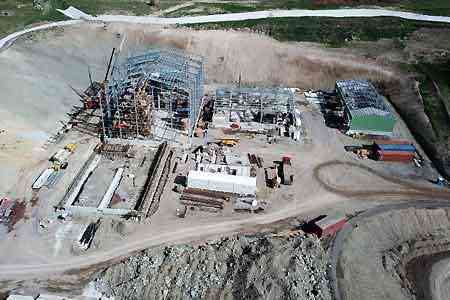
Fitch Ratings project medium-term growth to stabilise at around 5% as recent supply-side shocks subside, but supported by the dynamic ICT sector and the opening of the Amulsar gold mine. Several large-scale infrastructure investment projects could provide further long-term upside including the Trump Route for International Peace and Prosperity, a corridor connecting Azerbaijan to its Nakhchivan exclave and then Turkiye. Plans for a new AI data centre have been scaled up, with investment potentially reaching 12% of GDP. Sustained implementation of the peace deal and reopening of the Turkiye border could further boost growth through higher investment, exports and employment.
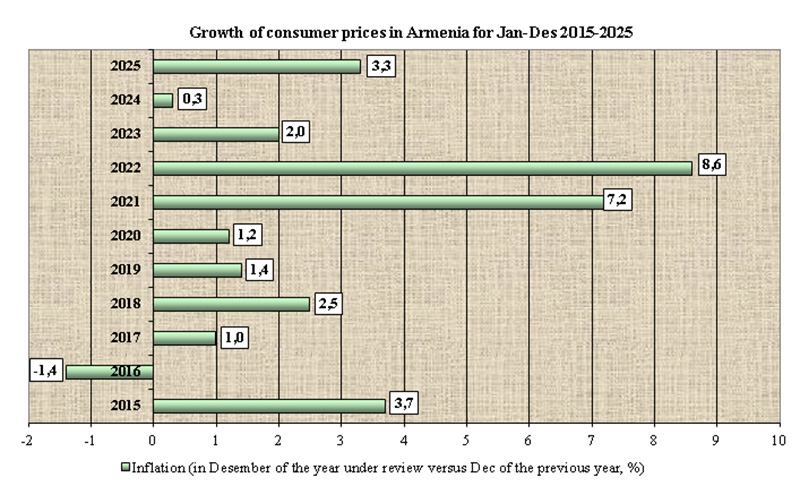
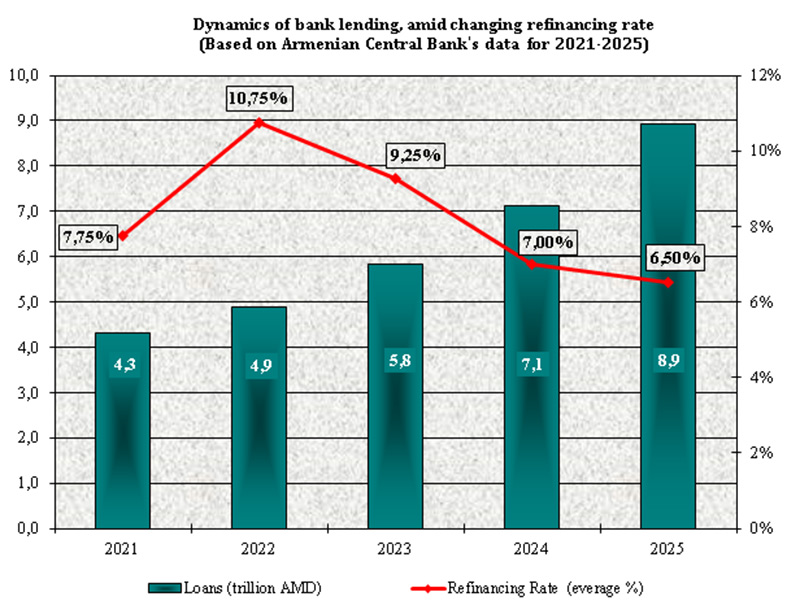
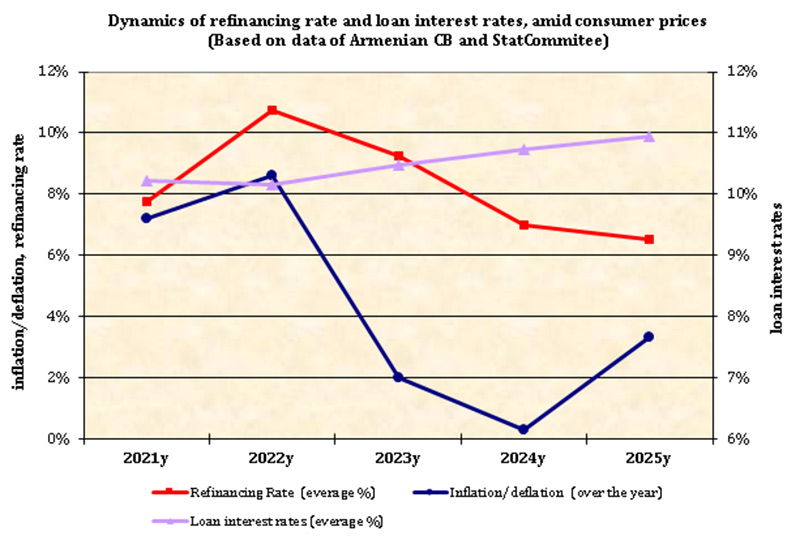
Near-Term Inflation Pressures: We expect inflation to average 4.4% in 2026 before gradually returning to the 3% target. The upward inflation trend predates the Iran war, driven by food, services, and universal healthcare costs. Russian import restrictions could increase the domestic supply of some goods, with a disinflationary effect. We expect the Central Bank of Armenia (CBA) to temporarily raise its main policy rate by 25bp to 6.75%.
Fiscal Overperformance, but Risks Persist: The 2025 general government deficit was 3.7% of GDP, below the budget target but above the 'BB' median of 2.8%. We forecast a slightly higher deficit in 2026, in line with the government's revised budget target. Current expenditure growth remains high due to rising health costs driven by the rollout of universal health care and higher pensions. This is partly offset by declining defence and security spending. Over the medium term, we forecast that a reduction of the deficit to 3.4% of GDP by 2028, above the government's medium-term deficit target of 2.8% of GDP.
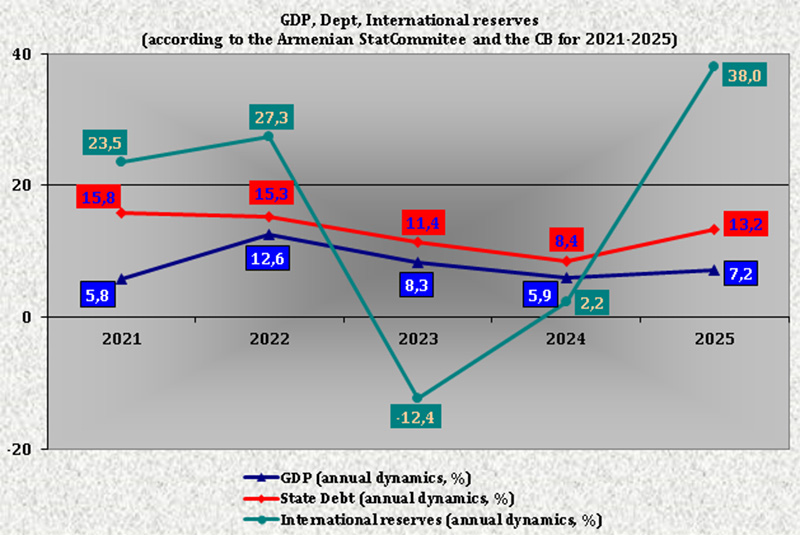
Broadly Stable Debt: General government debt declined to 47.2% of GDP at end-2025, below the 'BB' median of 51.6%. We expect the debt ratio to remain broadly stable, as strong nominal GDP growth offsets small primary deficits, with the possibility for some volatility as a result of currency moves. We expect financing needs in 2026-2028 to be met through domestic sources alongside bilateral and multilateral lenders.
Improved External Buffers Despite Weaker External Position: The current account deficit widened to 7.2% of GDP in 2025 from 4.6%, more than double the 'BB' median. This reflected stronger domestic demand, normalising transit trade, and weaker travel receipts. Part of the current account financing is related to some investments funded by external bank borrowing, but the participation of international financial institutions as funding sources helps mitigate risks. We project the current account deficit will ease in 2026-2028 but remain above those of peers.
FX reserves were a record USD5.9 billion at end-May, as the CBA bought US dollars in the domestic market. High imports needs mean that reserve coverage of current external payments will remain at 3.6 months by 2028, below the 'BB' median of 4.5 months.
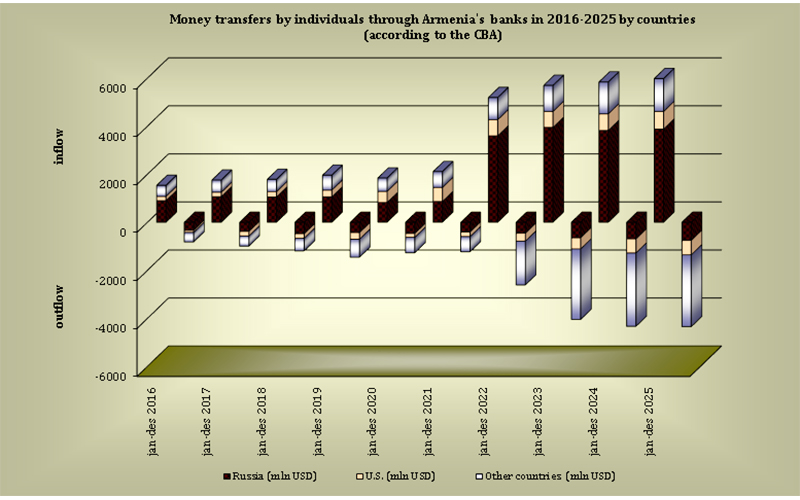
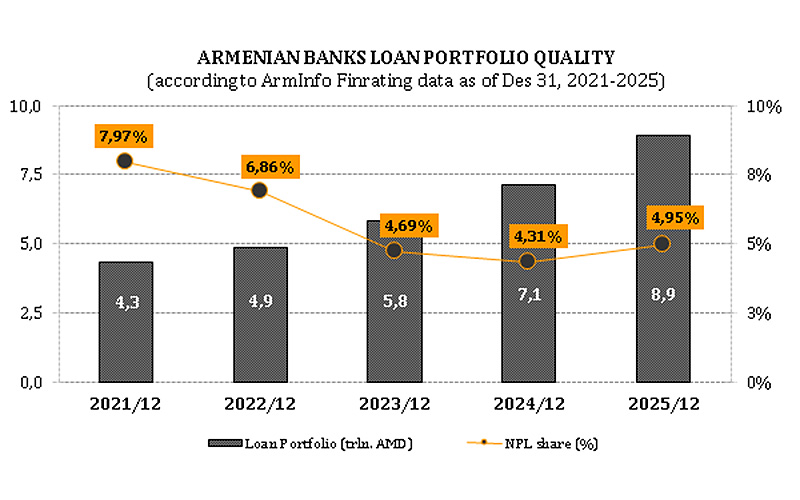
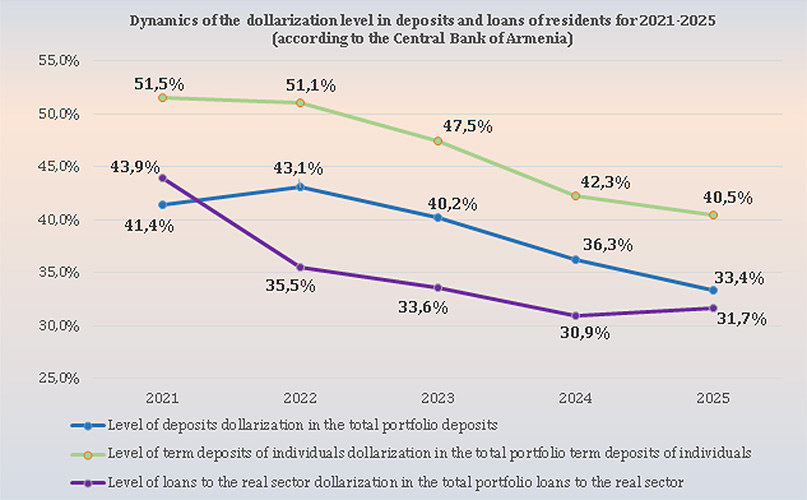
Banking Sector Resilience: Private credit growth remained high at 21.7% yoy in 1Q26. Financial stability risks are mitigated by banks' strong capital and liquidity positions. Profitability has remained robust despite the wind-down of extraordinary financial inflows from Russia, providing an additional buffer against potential shocks. Deposit dollarisation continues to decline, having reached 42.4% in May, as a result of regulatory measures, greater confidence in the dram, and currency appreciation.
ESG - Governance: Armenia has a medium World Bank Governance Indicators (WBGI) ranking at 45.5, reflecting a history of geopolitical conflict (including the 2023 attack on Karabakh), a sound level of rights for participation in the political process, moderate institutional capacity, an established rule of law and a moderate level of corruption.
Rating sensitivities
Factors that Could, Individually or Collectively, Lead to Negative Rating Action/Downgrade
-Structural: Geopolitical risks that undermine political and economic stability; for example, derailment of the current peace process with Azerbaijan or escalation of tensions with Russia.
-External Finances: Increased external vulnerabilities due to sustained large current account deficits or a reversal of improvements in FX reserves.
-Public Finances: Macroeconomic or policy developments that put general government debt on an upward path.
Factors that Could, Individually or Collectively, Lead to Positive Rating Action/Upgrade
- Structural: A sustained decline in geopolitical risks; for example, as a result of meaningful progress in the peace process with Azerbaijan and easing of tensions with Russia.
-Public Finances: Continuation of a fisal stance that supports a stable or declining path of general government debt.
- Macro: Continuation of high growth rates that lift GDP per capita and do not result in macroeconomic imbalances.
Recall, Fitch Ratings upgraded the outlook on Armenia's long-term foreign exchange rating from Stable to Positive in January 2026, affirming the rating at 'BB-'. S&P Global Ratings upgraded Armenia's sovereign rating outlook from Stable to Positive in February 2026, amid rising and potentially improving regional security. Simultaneously, S&P Global Ratings affirmed Armenia's long-term and short-term foreign and local currency sovereign credit ratings at 'BB-/B'. According to S&P Global Ratings forecast, Armenia's GDP growth will be 5.3% in 2026, 4.8% in 2027, and 5% in 2028.