

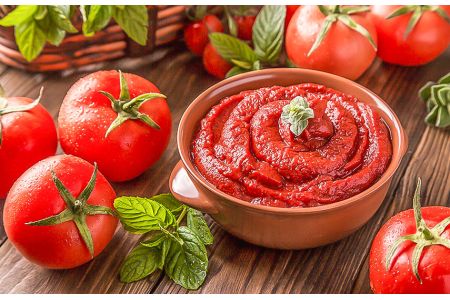
ArmInfo. Armenia is introducing temporary restrictions on the import of tomatoes and tomato paste. The decision was made during a government meeting on July 30.
As noted in the rationale for the draft decision, due to restrictions imposed on the export and transit of quarantine products of Armenian origin to the Russian Federation, export volumes of fruits and vegetables of Armenian origin, including greenhouse tomatoes, have decreased. As a result, a significant portion of exported greenhouse tomatoes is now sold on the local market, leading to a drop in demand for open-field tomatoes. Since the introduction of restrictions on tomato exports, from May 22 to July 22, 2026, greenhouse tomato exports amounted to approximately 800 tons, compared to approximately 7,000 tons exported during the same period last year, exclusively to EAEU member countries.
From 2020 to 2025, the average annual tomato paste import volume was approximately 5,336 tons, while the average annual export volume for the same period was approximately 3,822 tons. Considering that the average annual consumption of tomato paste on the local market is approximately 3,000 tons, it follows that most of the imported tomato paste is re-exported, while some is sold locally after dilution and repackaging. According to information provided by tomato paste producers in Armenia, the average production cost of 1 kg of locally produced tomato paste with a dry matter content of approximately 30% by weight is approximately 450 drams. In 2025, 4,335.2 tons of tomato paste were imported, of which 2,195.8 tons were imported with a dry matter content of 30% by weight or more. The average customs value of 1 kg of tomato paste with a dry matter content of 30% or more was 331.4 drams, and taking into account the established import customs duty of 11.0% (36.4 drams), it increases to 367.8 drams. Thus, the average cost of 1 kg of locally produced tomato paste is approximately 82.2 drams higher than the cost of 1 kg of imported tomato paste.
It should also be noted that when calculating the average cost of 1 kg of locally produced tomato paste, which exceeds 82.2 drams, the fact that tomato paste with a dry matter content of 36% predominates in imported volumes was not taken into account. The situation in the tomato paste market directly impacts tomato procurement and tomato paste production. This is evidenced by the declining purchase volumes (approximately 19,400 tons of tomatoes were purchased in 2025, which is approximately 28,900 tons less than the tomato purchase volume in 2020, or more than 2.5 times). This situation has created an unequal competitive environment for companies producing tomato paste from local raw materials and for those importing tomato paste. If this situation persists, the production, procurement, and manufacturing processes of tomato paste will be jeopardized. For this reason, the decision has been made to impose restrictions on the import of tomatoes and tomato paste.