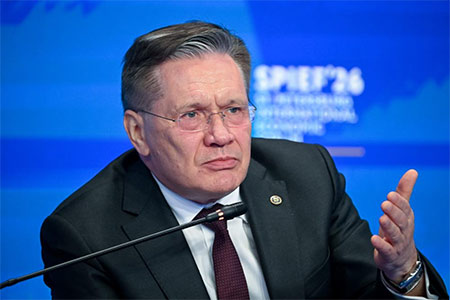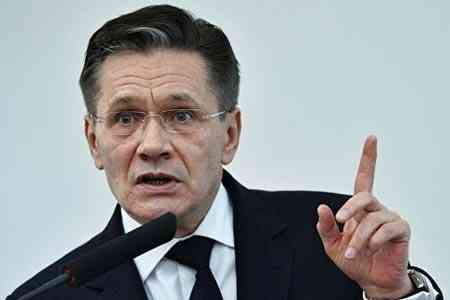
ArmInfo. Armenia's plans to deploy small modular reactors may shift toward gigawatt reactors. Rosatom head Likhachev told SputnikLive on the sidelines of the Eastern Economic Forum. The issue of nuclear power plant construction was discussed in depth during the meeting between Putin and Pashinyan in Bishkek. It was agreed that the head of Rosatom will visit Yerevan on September 29 for a substantive discussion.
"The projected energy deficit in the republic may increase due to the use of data centers (data processing centers), AI systems, and the development of the digital economy. We also see an optimistic energy consumption forecast." "But even if there is an energy surplus, Transcaucasia will have significant export potential, and we are ready to facilitate this," Likhachev added.
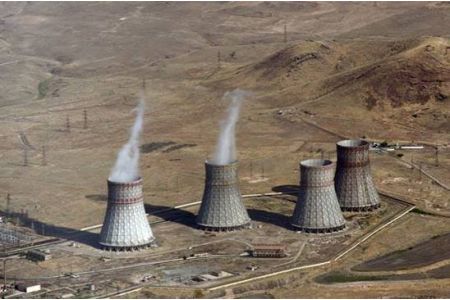
As a reminder, RA Prime Minister Nikol Pashinyan previously noted that a final decision on which nuclear power plant would be built in Armenia and by whom should be made by 2027. He stated that the current NPP's lifespan will be exhausted by 2036. The Prime Minister recalled that Armenia had committed to closing the Armenian Nuclear Power Plant even before the 2018 revolution. However, as the head of government noted, technological advances could allow the plant's second power unit to operate beyond 2036. The Prime Minister emphasized that Armenia is actively moving toward energy independence. This has become a reality relatively recently, thanks to the development of renewable energy, particularly solar energy. "The Republic of Armenia has a huge solar resource, and we are developing it. Today, we have solar power plants with a capacity of 1,213 megawatts, compared to 16 megawatts in 2018, and now, to ensure further development, we will begin the creation of energy storage systems in the Republic of Armenia so that they, by collecting solar energy generated during the day, would provide us with the necessary electricity at night," he said. The Prime Minister noted that by 2031, it is planned to have storage stations with a capacity of at least 800 megawatts, which is approximately twice the installed capacity of existing nuclear power plants.
It should be recalled that the Prime Minister previously stated that there are opportunities to extend the operating life of the second power unit of the Armenian NPP for another 10 years after 2036. He noted that the plant is currently in a cycle of extending the operating life of the second power unit until 2036. Taking into account another 10 years, it will be possible to operate the unit until 2046. During this time, a decision on the new plant should be made. At the same time, nuclear reactor models proposed by Russia, the United States, France, China and South Korea are being studied. "We are conducting transparent negotiations with all partners. Our decision, which will be of a strategic nature, should be based on the most advantageous offer that meets the interests of the republic," the head of government said. He pointed out the importance of conducting research on the international nuclear technology market. Pashinyan recalled that currently the tariff for electricity generated at the ANPP is the lowest in the country. However, as the prime minister noted, today the world's fuel reserves for nuclear power plants will last for 70 years. For this reason, it is very important to know how much 1 kWh of electricity will cost in 40 years. This raises the question of economic feasibility and the possibility of returning on investment. However, as the prime minister noted, there is already experience in re-enriching already used fuel. In any case, Pashinyan emphasized, the issue must be about the price.
It should be noted that since May of this year, the Armenian Nuclear Power Plant has been shut down for a five-month scheduled maintenance. During this period, the main work will be carried out under the second life extension program for Unit 2 of the Armenian Nuclear Power Plant. $165 million saved from the first extension program will be used to address this issue. Previously, the country's authorities announced the adoption of a conceptual decision on the construction of a nuclear power plant with small modular reactors.