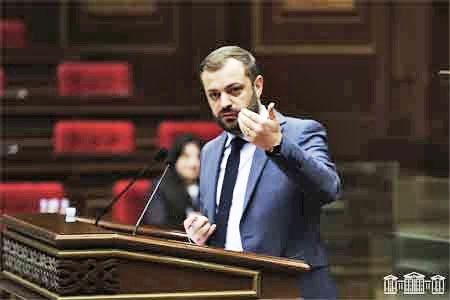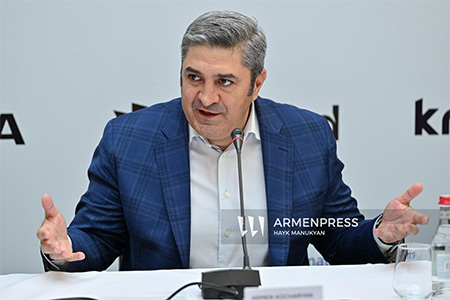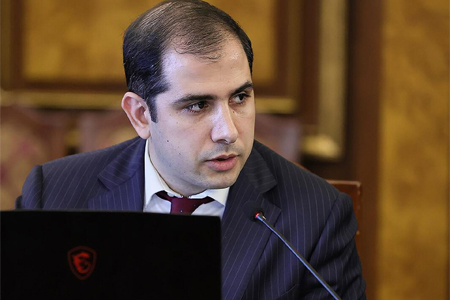



ArmInfo. We have become a state living on debt. This was stated in an interview by Samvel Karapetyan, leader of the Strong Armenia party.
he noted. The politician pointed out that this represents approximately 20% of the total, which is an extremely dangerous figure.
At the same time, the politician lamented that during the nine years that Pashinyan's team has been in power, nothing has been done to create real added value—not a single enterprise has been created that would bring added value to Armenia. He emphasized that the economy needs to be developed through investment, but, according to him, the authorities have brought this level to $90-100 million. Karapetyan noted that these are mainly representatives of the diaspora who come to the country, open and close cafes, restaurants, etc., but this does not have a significant effect on the economy.
The state, within its administrative powers, according to the head of the Strong Armenia party, should, in some way, force banks to stimulate the economy. However, he said they are doing the opposite, given that half of the state's loans are taken from local banks. "This is more expensive and dangerous money because banks must channel it into the economy," he said.
It should be noted that Armenia's public debt as of July 1, 2026, amounted to $14.543 billion, keeping the per capita debt burden at $4.7 thousand. Year-on-year, public debt growth slowed from a double-digit 13% to 5%, which weakened the per capita debt burden growth to 4.3% (from $4.5 thousand a year ago).
However, unlike previous years, the per capita debt burden began to come more from domestic debt than from external debt - $2.4 thousand versus $2.3 thousand, with a less noticeable slowdown in the annual growth of the former, from 16.9% to 7.8%, than the latter, from 11.2% to 2.2%.
According to the Statistics Committee RA, in the structure of Armenia's public debt as of July 1, 2026, the share of external debt decreased year-on-year from 50.1% to 48.8%, while domestic debt increased from 49.9% to 51.2%. Domestic debt began to outweigh the national debt in July 2025, effectively maintaining its dominant position in 2026.
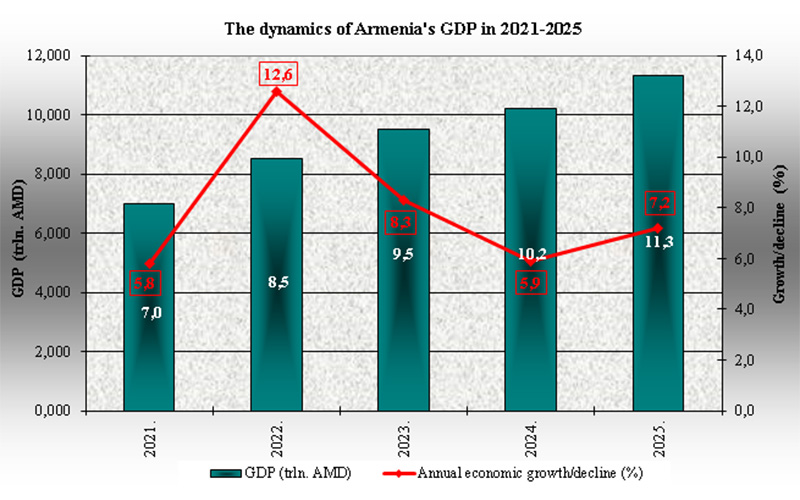
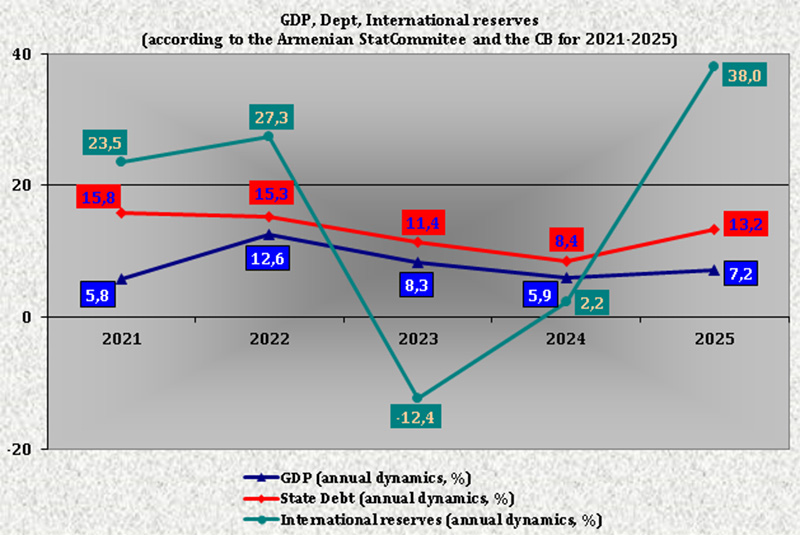
It should be noted that, according to the Statistical Committee of the Republic of Armenia, Armenia's public debt as of January 1, 2026, amounted to $14.54 billion (over 5.5 trillion drams), accelerating in annual growth from 8.4% to 13.2%. This was due to an improvement in the dynamics of external debt, while domestic debt growth continued to slow. In particular, external debt moved from a 1% decline to 9% growth, exceeding $7 billion (2.7 trillion drams), while domestic debt continued to stall in growth, from 19.5% to 17.3%, amounting to $7.5 billion (2.8 trillion drams). Moreover, in absolute terms, domestic debt began to overtake external debt in July 2025, having previously almost equaled it in June. The public debt to GDP ratio for 2025 decreased from 49.7% to 48.9%, with an acceleration in both GDP growth from 5.9% to 7.1% and public debt growth from 8.4% to 13.2%. In particular, the ratio of external debt to GDP further decreased in 2025 from 25% to 23.7%, while the ratio of internal debt increased imperceptibly from 24.7% to 25.2%. According to statistics, economic activity growth in Armenia in January-July 2026 accelerated to 7.7% per annum (from 7.1% in the same period of 2025).