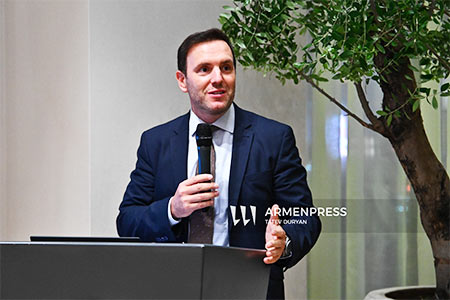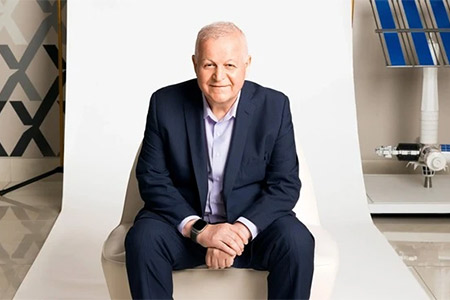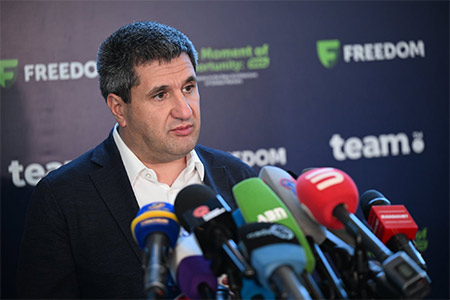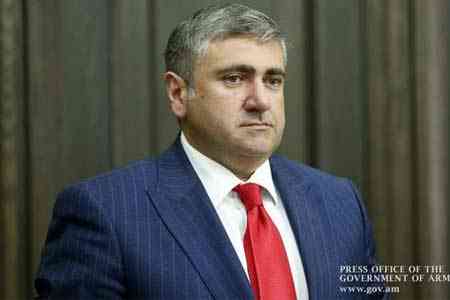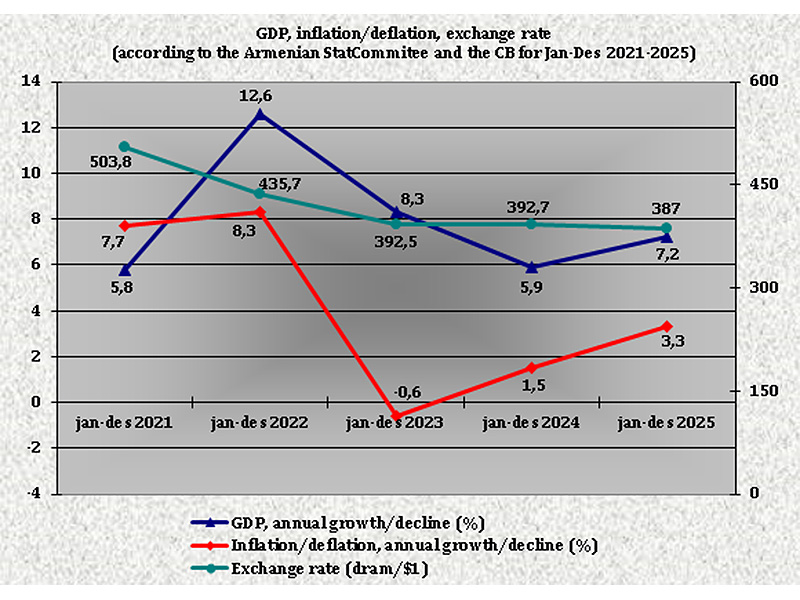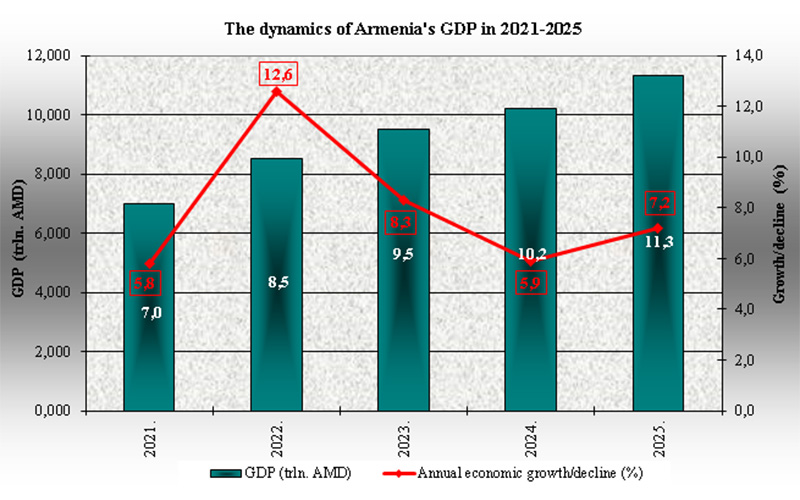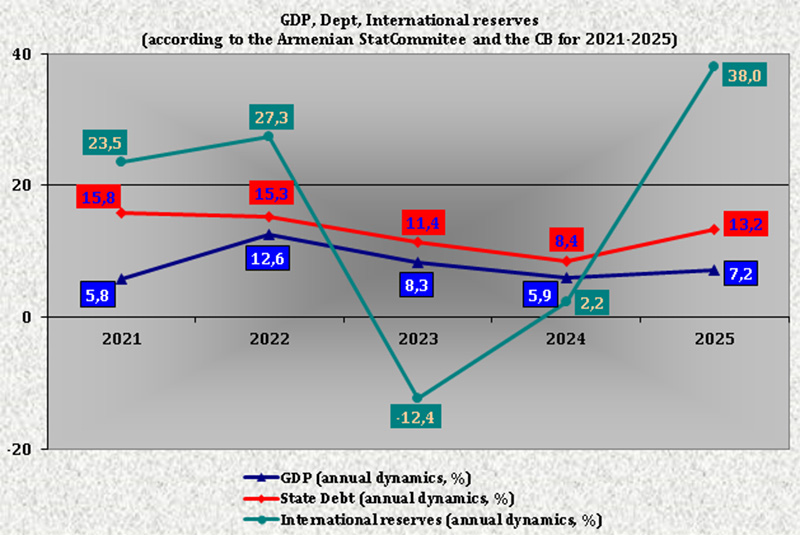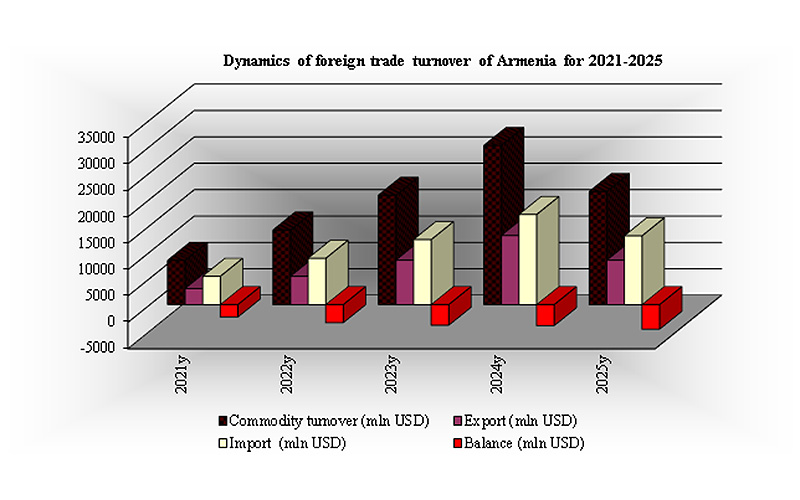



ArmInfo. The government's job isn't to ceremoniously announce growth rates. Its responsibility is to ensure that today's growth translates into more competitive production, more diversified exports, and more stable employment tomorrow. This is how David Ananyan, a member of the Wings of Unity party board and former Chairman of the State Revenue Committee of Armenia, commented on the key indicators reflecting the socio-economic situation for January-August 2026, published on October 5 by the Statistical Committee of the Republic.
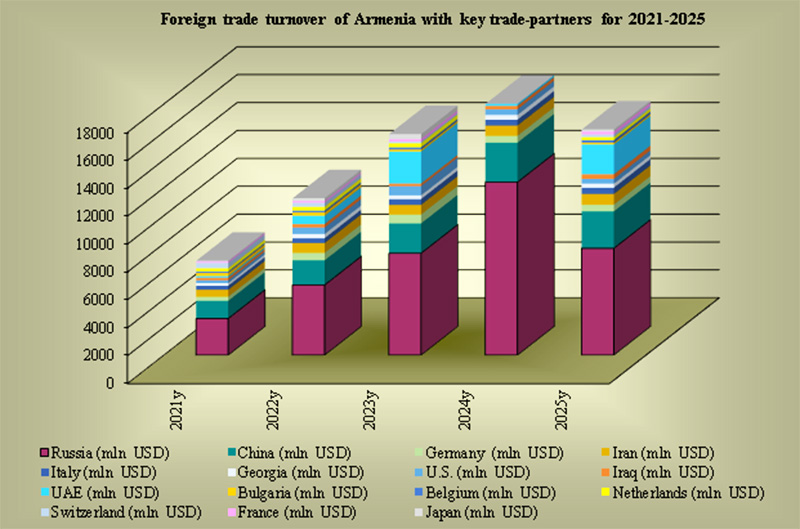
"The economic activity index is 7.3%. However, before presenting this figure as an economic success, it's worth looking at the following pages of the same statistics. Eight-month industrial growth is 7.4%, but in August, compared to the same month last year, a 4.3% decline was already recorded, and in the manufacturing industry, a 6.8% decline. From January to August, mining grew by 24.3%, while manufacturing grew by only 5%. The overall growth rate masks structural asymmetry and the weakening of recent months. The 9.6% decline in electrical equipment production and the 52.1% decline in the mechanical engineering subsector raise the question: to what extent was the previous growth the result of strengthening local production capacity, and to what extent was it the result of temporary activity related to trade and re-export flows to Russia," he asked in a Facebook post. According to Ananyan, the structure of exports is more telling: goods exports fell by 6.5%, amounting to $4.62 billion, while imports increased by 9.3%, reaching $8.65 billion. The goods trade deficit widened by approximately 36%, exceeding $4 billion. "Some would say that the decline in exports is a consequence of reduced flows of precious metals and stones. However, this explanation is only part of the picture. If we exclude the commodity group of precious stones, metals, and products made from them, exports actually grow by approximately 15%. However, if we exclude mining products, the remaining exports would decrease by approximately 1.9%. The share of mining products in total exports increased from 14.5% to 27.6% over the year. In other words, the raw materials focus in the export structure has strengthened, while no significant expansion in other areas has been recorded," the former head of the State Revenue Committee of Armenia continued. According to him, construction grew by 24.7%, but from a development perspective, what is being built in Armenia is crucial. Ananyan noted that 50.7% of total construction volume is accounted for by real estate-related activities, while manufacturing accounts for only 1.6%. "Despite the importance of educational and infrastructure programs, this structure shows that construction growth is primarily concentrated in the real estate sector." "Therefore, the high pace of construction does not yet mean that the country's production and export capacities are expanding in sync," the politician emphasized.
At the same time, he noted that the overall indicators and structure of budget expenditures also paint a different picture. According to him, revenues increased by 14.4%, and current expenditures by 17.8%. At the same time, expenditures on non-financial assets (capital expenditures) decreased from 356.5 billion drams to 267.5 billion, a decrease of 89 billion drams, or 25%.
"Under these conditions, a surplus of 17.7 billion drams was recorded. If capital expenditures had remained at the nominal level of the previous year, all other things being equal, we would have had a deficit of approximately 71.3 billion drams instead of a surplus. Therefore, when discussing the surplus, it is also necessary to clarify the conditions under which it was formed, leading to the reduction in expenditures. "The budget balance is not yet an assessment of development results," he noted.
Ananyan is confident that the social impact of economic growth should also be assessed by the extent to which it provides people with jobs. He noted that, compared to the same period last year, the number of employed people increased by 29.7 thousand. However, the number of people entering the labor market grew faster, and some of them were unable to find work. In particular, the number of unemployed increased from 166.3 thousand to 182 thousand, and the unemployment rate increased from 12.3% to 13%. Moreover, the number of long-term unemployed increased from 88.7 thousand to 101 thousand. In other words, employment growth was not enough to reduce unemployment, and the number of people unemployed for a long time increased.
"When talking about economic growth, the government likes high percentage figures. But the country's future is determined by what's created beyond these percentages: production potential, competitive exports, stable jobs, or the turnover that will grace the next report. Yes, there are promising areas of growth: the information and communications sector grew by 14%, and professional, scientific, and technical services by 12.2%. These opportunities must be transformed into sustainable development pillars. However, concealing the vulnerability of the entire structure through isolated successes is advertising, not economic policy.
The government's job isn't to triumphantly announce growth rates. Its responsibility is to ensure that today's growth translates into more competitive production, more diversified exports, and more stable employment tomorrow. The country isn't developing with statistical optimism. And growth that doesn't strengthen the production base of the future can produce a beautiful report without creating an equally strong economy," Ananyan concluded.