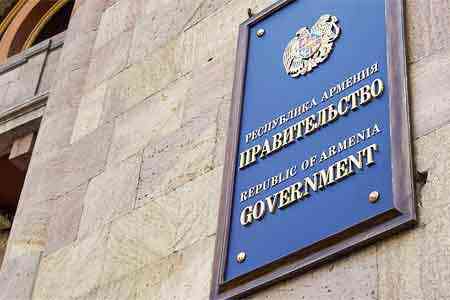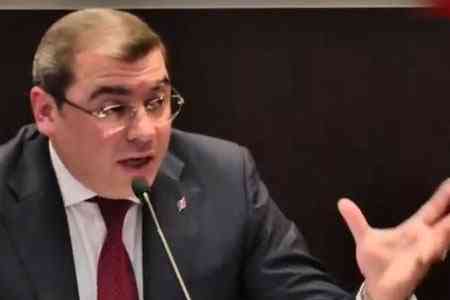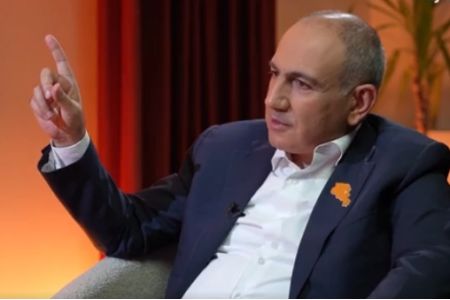


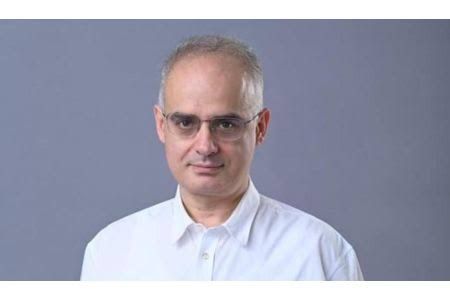
ArmInfo. The development of Amulsar is a much larger problem than the development of a single mine, which is turning Armenia into a raw materials appendage of the global economy. This is stated by Levon Zurabyan, Deputy Chairman of the Armenian National Congress (ANC) under the first president, Levon Ter-Petrosyan.
The politician noted that on October 10, Armenian Prime Minister Nikol Pashinyan pompously announced the launch of Amulsar as a "historic
success" and a symbol of "a new quality of mining industry."
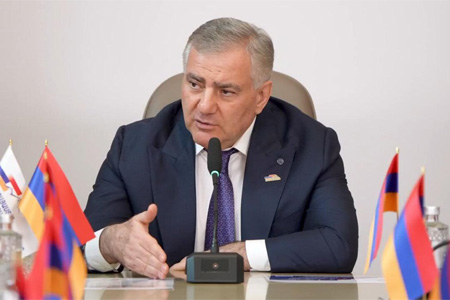
"In reality, Amulsar is a much larger problem than the development of a single mine. It is about choosing a model for Armenia's future. And Pashinyan, in his speech, declared his choice to turn Armenia into a raw materials appendage of the global economy." Or, rather, it wasn't a choice, but an admission of his government's inability to resist external pressure, another capitulation. "Have you asked the people, Nikol? Do we want to turn Armenia into a country that destroys its mountains, extracts gold and raw materials, and exports them, becoming a raw materials appendage of the global economy? Or do we want to turn Armenia into a clean, healthy, technologically advanced country, attractive for tourism, healthcare, information technology, science, and high-yield investments?" the ANC deputy chairman asked.
According to him, the exploitation of Amulsar is especially absurd, given that the mine is located in the immediate economic and environmental context of Jermuk.
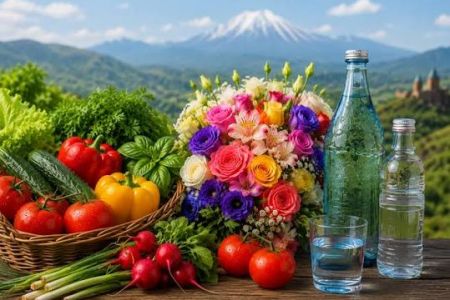
Zurabyan recalled that Jermuk's main assets are its mineral water, clean air, nature, and its reputation as a resort. He noted that it was no coincidence that the Soviet Union granted it the status of a resort of national importance.
"This is a centuries-old economic resource that Pashinyan is destroying with a single wave of his hand. They tell us: let's develop a quarry next to this resource, and in return we'll receive annual taxes. The government boasts about $130 million in annual taxes and royalties. Fine. But where's the other half of the calculation? How much will the potential damage to health cost? How much could the loss of the international brand of the Jermuk health resort cost? How much investment will be lost in hotels, sanatoriums, and rehabilitation medicine if Jermuk begins to be associated in the international market not with health, but with a contaminated mine? The government doesn't provide us with these figures," the politician noted.
According to him, this is because if these figures are presented, it may turn out that the economic balance of the "success story" Completely falsified.
He recalled that in 2019, when the Amulsar issue sparked a major public crisis, the government spoke of the need for additional research, independent assessments, and answers to all environmental questions. The ELARD report documented problems and shortcomings in previous assessments. The need for a new EIA (Environmental Impact Assessment) was even discussed at the time.
"Scientific doubts don't disappear with a political statement. And today, Pashinyan simply declares that these risks have "no place," without providing any justification or new research. And there are no "green" environmental NGOs fighting for this. Because the one art Nikol has mastered is the art of deceiving and breaking his own people, which is precisely why his current masters cherish him. The timing of his statement was also chosen with pinpoint precision, immediately after the pre-election passions had subsided." If something similar had been done before the elections, rigging the elections would have been incomparably more difficult. In fact, this isn't the story of a single mine. Before the elections, Armenia and the United States signed a memorandum of cooperation on important mineral resources," the ANC deputy chairman noted. According to him, international cooperation itself isn't a problem; the question is what role Armenia will choose for itself in this cooperation. "Will we become a region that supplies raw materials, where minerals are mined for foreign industries at the expense of our own people's health? Or will we strive to develop technologies in Armenia, and the economy will be based on processing, science, and the final high-value product?" A gold mine ceases operations after its exploitation, leaving behind destruction and pollution. "The water, air, and nature of Jermuk, if preserved, can create wealth for hundreds of years," Zurabyan emphasized.
The politician noted that minerals are exported only once, while knowledge, information technology, tourism, spa medicine, and clean nature can feed a country for generations.
"So the question is very simple. Should Armenia become a mine or a country?" The answer from a person guided by the interests of the country and the people is obvious. Armenia's future is not in our land. Armenia's future is
in the health and creative potential of our people, in our nature, and in the country we will leave to the next generation," the ANC deputy chairman concluded.
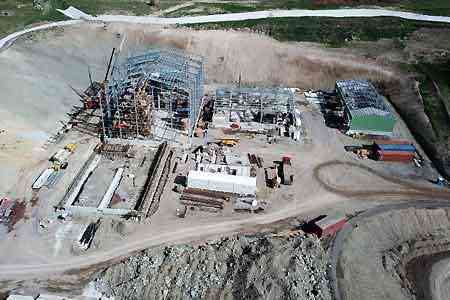
It is worth noting that the Amulsar mine was launched on October 10. Pashinyan, launching the operation, stated that the gold mine Amulsar will produce approximately 210,000 ounces of gold annually. It is noted that the mine's operations will result in annual taxes and royalties paid by Lydian Armenia to the state budget of approximately $130 million, which will have a positive impact on Armenia's GDP of 1.5-2%.
The Amulsar project is expected to create over 4,000 direct and indirect jobs. According to the community development agreement signed between the government, Lydian Armenia, and the communities of Jermuk, Vayk, and Sisian, it is planned to allocate $7-9 million annually for community socioeconomic development programs throughout the mine's lifespan.
The project is being implemented as part of the strategic cooperation between Lydian Armenia and the Armenian government. The company invested approximately $750 million in the project, $150 million of which was secured by a state guarantee issued by the Armenian government.
Environmentalists criticized the Armenian authorities' decision, emphasizing that the mine's operations would cause irreparable damage to the Jermuk resort and Lake Sevan.