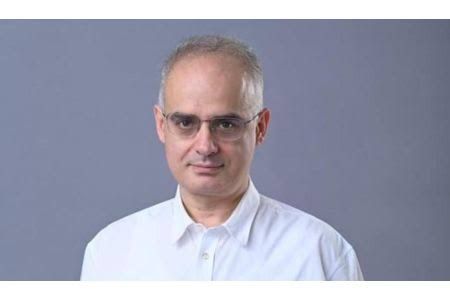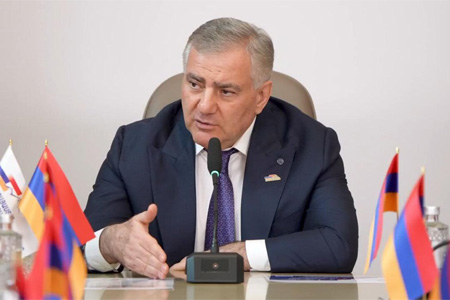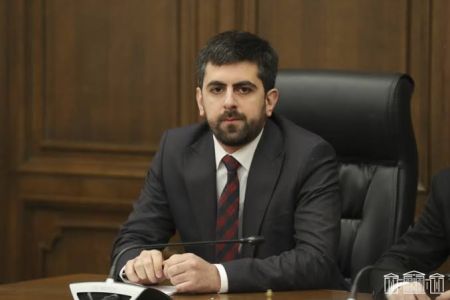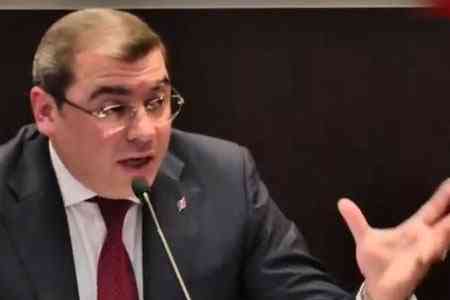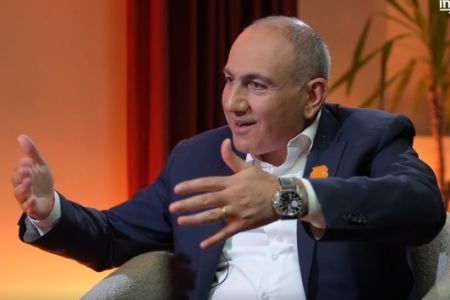


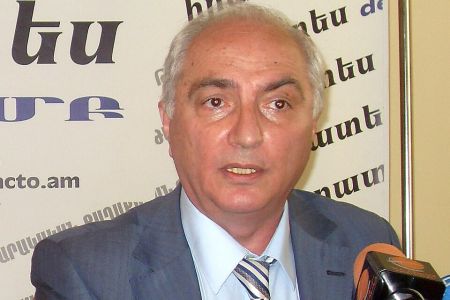
Arminfo. The attractiveness of the integration framework should attract new members to the EAEU (Eurasian Economic Union). This view was expressed on October 13 during a video bridge on the topic: by Aram Sargsyan, leader of the Democratic Party of Armenia and coordinator of the Miasin public movement.
, he said, citing Uzbekistan, Tajikistan, Georgia and Azerbaijan as examples. One of the reasons, in the expert’s view, may be that within the EAEU, countries seek to market their products primarily on the Russian market, given its opportunities and scale. However, according to Sargsyan, the aforementioned states do not need special preferences, since under bilateral agreements they market their products in the Russian Federation. In this regard, he pointed to the need to find new forms for developing the Union, naming industrial and scientific cooperation as priorities.
Touching upon the situation in Armenia, the politician noted that society is divided into two parts: . In Sargsyan’s opinion, following the path of diversification, as declared by the country’s authorities, is possible only when one’s state is at least 75% self-sufficient. , he stated.
At the same time, Sargsyan drew attention to the fact that the Armenian prime minister is most likely reconsidering some of his positions based on the realities that have developed around Armenia and in the world as a whole. Initially, as the party leader noted, Pashinyan said that elections were being held in order to have alternatives, whereas now he states that everything depends on whether Armenia is admitted to the EU and whether the Armenian people vote for it ? , Sargsyan pointed out.
It should be recalled that Armenia became a full member of the Eurasian Economic Union (EAEU) on January 2, 2015.
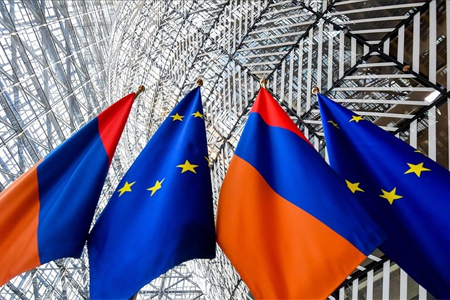
Already in March 2026, the National Assembly of the Republic of Armenia, at a plenary session, adopted in the second and final reading the draft law "On Launching the Process of Armenia’s Accession to the European Union". Sixty-four parliamentarians voted in favor of adopting the document, while 7 voted against; there were no abstentions. The bill was developed by the civic initiative "Euroqve", which organized the collection of 60,000 citizens’ signatures, against the required 50,000. Thus, the initiative obtained the right to draft the document, which was submitted to the country’s parliament in accordance with the procedure established by law.
This was followed by restrictions from the Russian side. Starting at the end of May this year, Russian authorized agencies — Rospotrebnadzor and Rosselkhoznadzor — gradually introduced restrictions on supplies from Armenia to Russia and the EAEU market of fresh agricultural products, flowers, fish, fish products, as well as dairy products. At the same time, Armenia traditionally sent approximately 80-90% of the export volumes of these product groups to the Russian Federation. Due to the difficult situation in which Armenian producers and exporters found themselves, the government began developing support programs to stimulate exports to the EU and other countries.
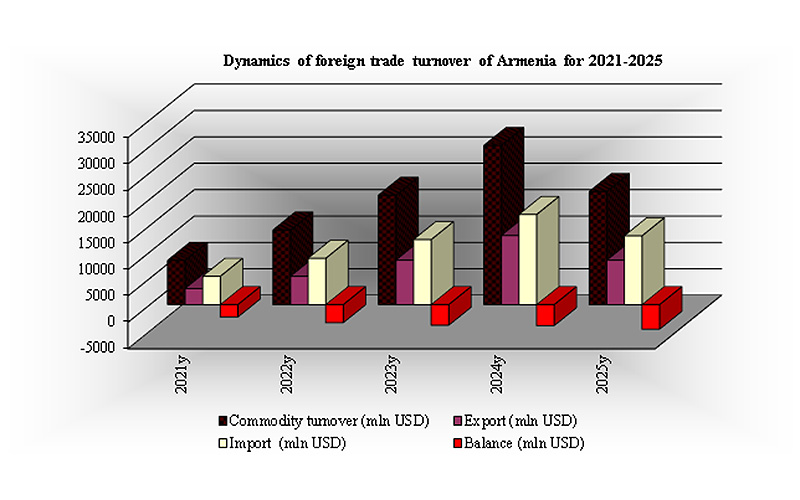
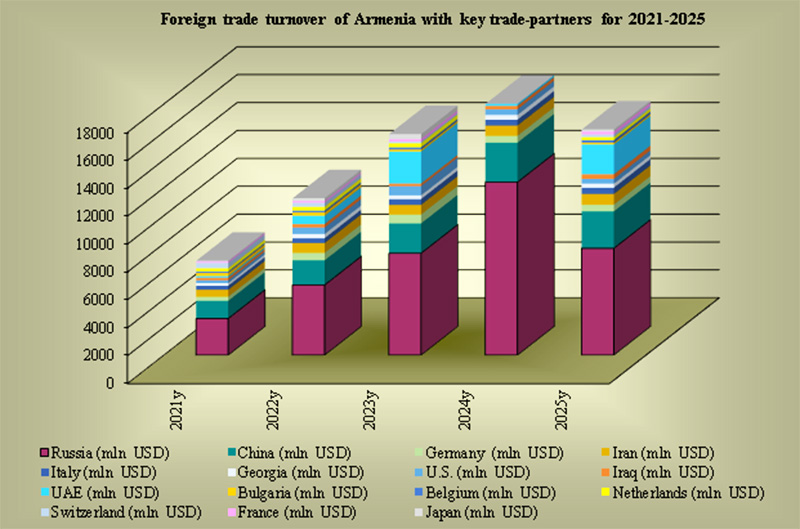
Thus, the following picture emerged in mutual trade with Russia in January-August 2026: turnover decreased by 19.2% to $3.6 billion. Exports amounted to $1.6 billion, down 9.1% year-on-year, while imports amounted to $1.9 billion, down 26.1% year-on-year.
Trends with the EAEU countries are also not encouraging. The volume of mutual trade during the reporting period decreased by 17.2%, amounting to $3.8 billion. At the same time, exports declined by 8.5% to over $1.7 billion, against a 23.4% decrease in imports to $2 billion.