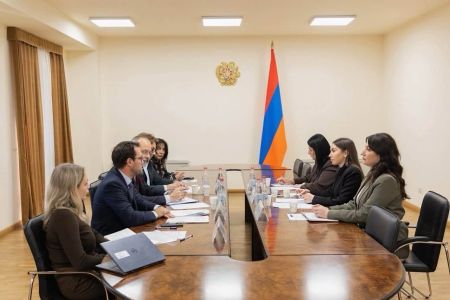


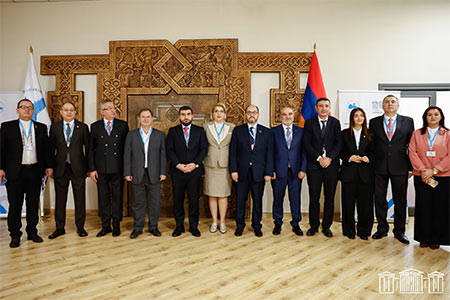
ArmInfo. The 67th meeting of the Social and Humanitarian Policy Committee of the Parliamentary Assembly of the Black Sea Economic Cooperation (PABSEC) opened in Yerevan on November 12, according to the press service of the National Assembly of the Republic of Armenia.
According to the source, parliamentary delegations from Armenia, Greece, Romania, Turkey, Albania, Moldova, and North Macedonia participated in the meeting.
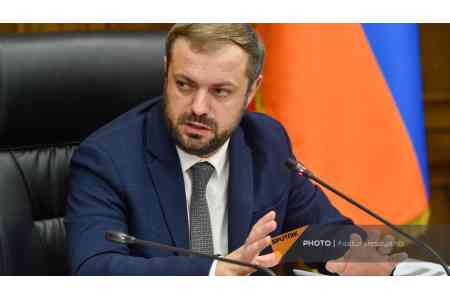
Basilios Giogiakas, Chairman of the PABSEC Social and Humanitarian Policy Committee, delivered a welcoming speech. Welcoming the participants, he emphasized the importance of preserving social capital in the Black Sea region, noting the unique role of education. "The PABSEC facilitates the implementation of all educational cooperation initiatives among member states," the speaker emphasized.
According to him, Armenia can play an important role in the region as a country committed to cooperation and dialogue.
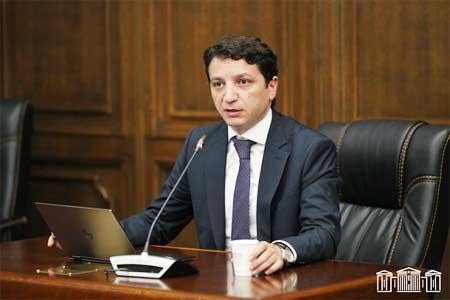
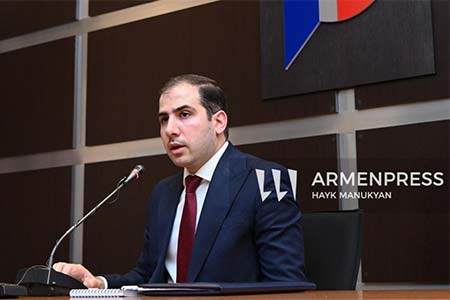
"As one of the founders of the Parliamentary Assembly of the Black Sea Economic Cooperation, the National Assembly of Armenia is interested in strengthening cooperation within the Assembly, building mutual trust, and fully realizing the organization's potential," stated Vahagn Aleksanyan, Deputy Chairman of the National Assembly of the Republic of Armenia.
According to him, today the South Caucasus and the entire Black Sea region are undergoing important transformations. The future of the region largely depends on the ability to overcome existing contradictions, foster an atmosphere of trust, and create new opportunities for cooperation.
"Armenia has always advocated for the establishment of peace, stability, and good-neighborly relations in the region." "Sustainable peace must be based on the principles of sovereignty, territorial integrity, equality, and mutual respect among states," the NA Deputy Speaker emphasized. He also attached great importance to the peace process between Armenia and Azerbaijan and the implementation of initiatives aimed at unblocking regional communications. "In particular, the implementation of the TRIPP project can create new opportunities for the development of regional economic ties. We are convinced that open borders, developed infrastructure, and economic connectivity can become important prerequisites for strengthening trust and lasting peace in the region," said Vahagn Aleksanyan, expressing hope that Assembly member states will also support these opportunities by contributing to the development of regional cooperation.
Speaking about the topic of the committee meeting, the Assembly Deputy Speaker emphasized that today, the competitiveness of states is determined not only by natural resources, geographical location, or economic potential, but also, above all, by human resources. The Deputy Chairman of the Assembly expressed hope that the discussions would contribute to the development of practical proposals and new cooperation initiatives for the benefit of the countries and peoples of the region.
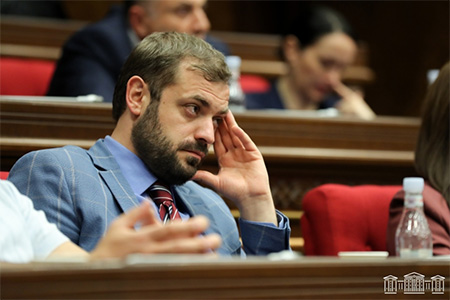
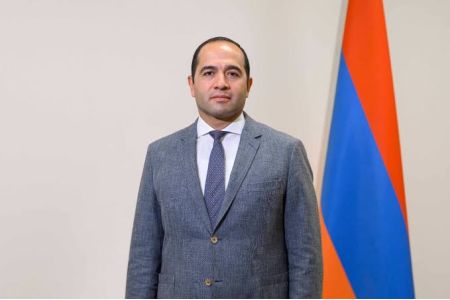
Babken Tunyan, Head of the Armenian Delegation to the PABSEC, considered the meeting's agenda topic to be extremely relevant. "Human capital is not only an important prerequisite for economic growth and competitiveness, but also the foundation of societal stability, social well-being, and the long-term development of states," the speaker emphasized.
He assured that the discussions would provide an opportunity to compare countries' experiences and formulate practical proposals aimed at preserving and developing human potential in the region.
Boris Kolisnichenko, Deputy Secretary-General of the PABSEC, conveyed the welcoming words and best wishes of the Secretary-General to the committee. He thanked the National Assembly and the Armenian delegation for their warm hospitality and the high-level organization of the committee's work. Emphasizing the importance of the session's agenda topic, the rapporteur noted that the Black Sea region has always been distinguished by strong educational traditions, scientific achievements, and highly qualified specialists. "However, we are witnessing a demographic decline, a crisis, and a shortage of specialists in healthcare and digital technologies. This reminds us that the greatest wealth of our countries is not only infrastructure and natural resources, but also people and human capital," said Boris Kolisnichenko. He emphasized the need to train qualified specialists and take appropriate measures in this direction. Following the approval of the Committee's agenda and the minutes of the 66th meeting, held in Tirana on 4 March 2026, a discussion of the draft report on the topic "Preserving Human Capital in the Black Sea Region: Education, Health Workforce, and Digital Skills" took place. Representatives of several countries addressed the topic. They discussed the importance of developing and preserving human capital in their countries, the need to invest in this sector and develop new programs, strengthening the link between education and employment, and also touched on demographic issues and the causes of emigration.
Participants reaffirmed their commitment to developing parliamentary dialogue and finding joint solutions to common problems. Delegates agreed on the need to deepen regional cooperation and take practical measures to promote prosperity and economic development in their countries.
Following the discussions, the participants approved the draft report. At the end of the session, it was decided to hold the next, 68th, meeting of the committee in Moldova in 2027.