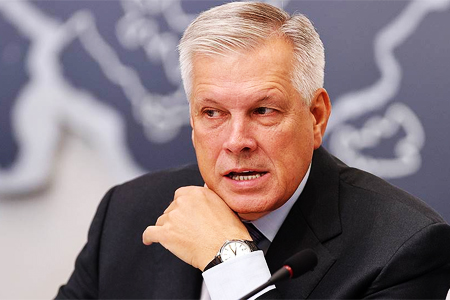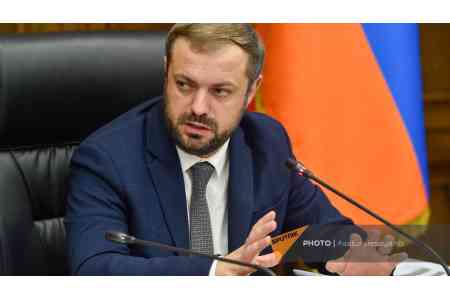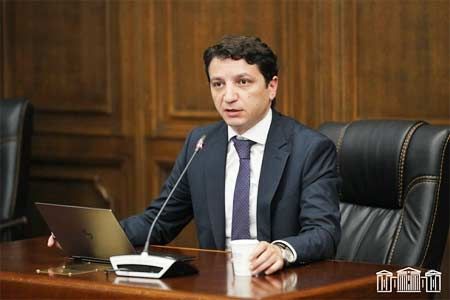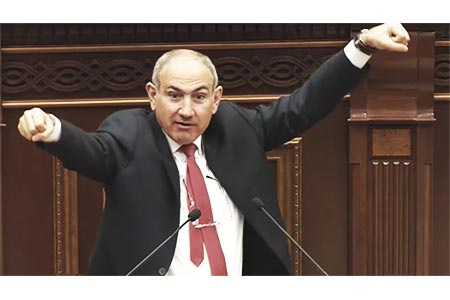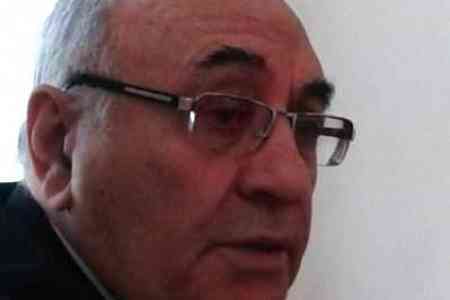
ArmInfo. Unlike other generation facilities, nuclear power engineering does not forgive mistakes. This was stated by the chairman of the Union of Veterans of Atomic Energy of Armenia, former General Director of the Armenian NPP Suren Azatyan at a press conference in Yerevan on July 19.
According to him, the problems of the Armenian nuclear energy should be weighed, taking into account all the existing challenges. In this context, the Union sent a letter to the Prime Minister of Armenia with a proposal to organize hearings with the participation of all interested parties with the obligatory presence of the Minister of Energy Infrastructures and Natural Resources. The specialist recalled that at present the station is implementing a program to extend the life of the second power unit, which should be put into operation before December 31 of this year. Otherwise, the daily simple Armenian NPP will be a heavy burden on consumers.
"Taking into account the lowest tariff from the nuclear power plant at 8.9 drams per 1 kW / h of electricity, a simple station will force the operator to purchase four times more expensive electricity from thermal energy facilities, which is 240 million drams daily," Suren Azatyan said referring to the data head of the Ministry of Energy. He also called for the implementation of the program to calculate all the nuances, especially in terms of ensuring the safety and quality of ongoing work.
Suren Azatyan mentioned the problem and extremely low involvement of the Armenian companies in the project. "I suggested that Russian colleagues consider the creation of a consortium of domestic companies for subcontracting programs, but this initiative was not met with understanding," said the former general director. He expressed his dissatisfaction with the fact that the work that Armenian specialists can perform has been redirected by the Russian, who receive a salary of four or even five times more than their Armenian counterparts. "All this can not but cause concern and can lead to outspoken sabotage by the workers themselves, especially since a significant part of the work does not require financial investments at all, it is enough to use the opportunities that worked only six years, the first block as a donor for the second" Suren Azatyan said.
He also did not exclude the possibility of going beyond the budget of the credit program financed by the government of the Russian Federation. "If everything continues in the same spirit, then everything is possible," the former head of the station said, responding to a question from ArmInfo. He also noted that station personnel should be present during the work or installation of new equipment, which, in principle, does not happen. "Russian experts will ultimately leave, and the operator will have to work with new equipment, which has only a general idea," Suren Azatyan said, pointing out also the importance of training young personnel for the country's nuclear energy. Recall that the general contractor of the project worth $ 300 million is the company "Rusatom Service", and the customer - the Armenian nuclear power plant. The program is implemented with a $ 270 million loan from the Russian government and a $ 30 million grant. The project is expected to be implemented by the end of 2019, which will allow the station to operate for another 10 years - until the end of 2026. However, the Armenian government does not exclude the possibility of extending the life of the second power unit after 2026. The Armenian nuclear power plant consists of two units with Soviet (Russian) WWER reactors. The first unit was commissioned in 1976, the second in 1980. In March 1989, after the Spitak earthquake, which killed 25 thousand people, the station's work was stopped. In November 1995, in connection with the most acute energy crisis, the second power unit of the station with a capacity of 407.5 MW was involved. In March 2014, the Armenian government decided to extend the lifetime of the second power unit by 10 years.