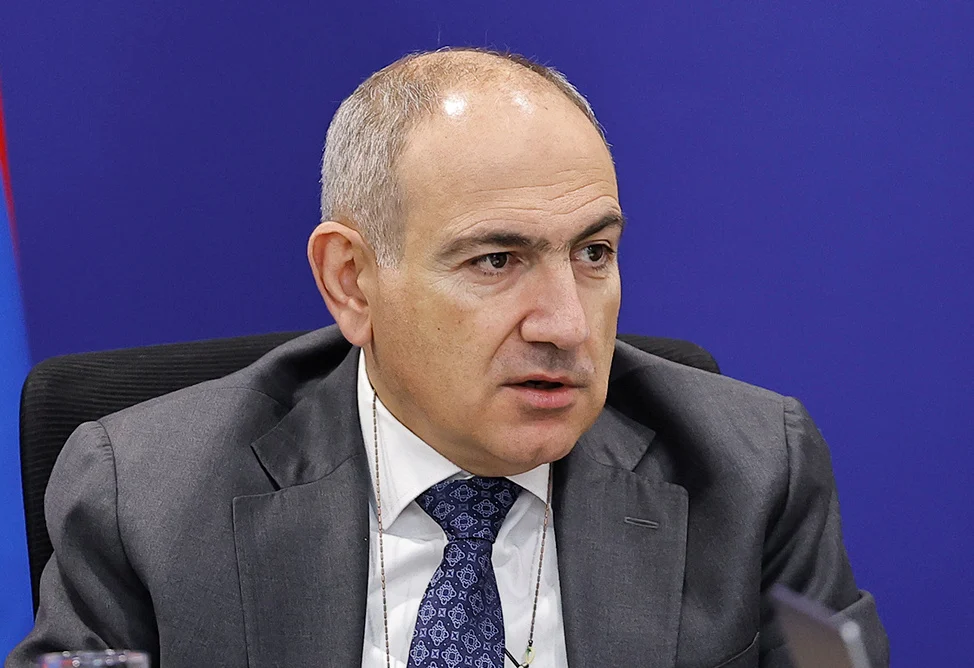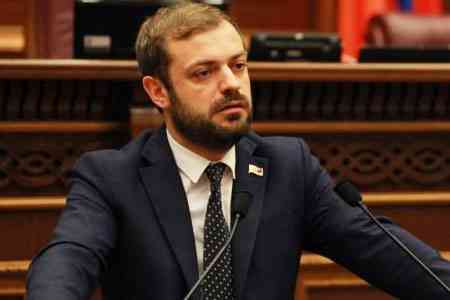


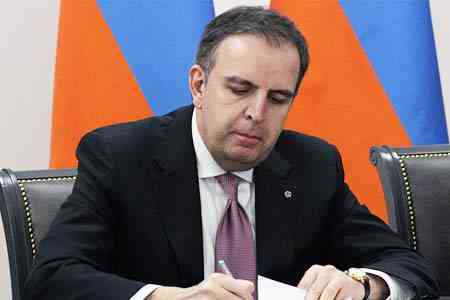
ArmInfo.The issue of constructing the Iran-Armenia railway is still on the agenda of bilateral relations. Deputy Foreign Minister Karen Nazaryan announced this on November 6 during hearings in parliamentary commissions.
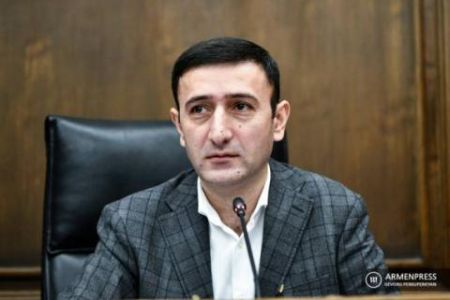
According to the Deputy Minister, specialists are discussing the construction project of the Iran-Armenia railway, since only they can assess the feasibility of the program, worth about $ 2 billion. "In this issue we can only rely on the opinion of our specialists," Karen Nazaryan said. Given the above, as indicated by the representative of the Foreign Ministry, at this stage it is difficult to predict whether and when this railway will be built.
Karen Nazaryan also touched upon the issue of Iranian gas supplies to Armenia in the context of the latest US anti-Iran sanctions. As the Deputy Minister pointed out, since 2008 Iranian gas has been supplied to Armenia within the framework of the "Gas for Electricity" program. The program has already managed to prove its effectiveness, which inspired the European partners, who, in the light of recent sanctions threats, may try to learn from Armenian experience. "Being a small country, we are able to export our experience," Nazaryan stressed.
Earlier, on September 4, ArmInfo reported that the Rasia FZE company, which pledged to attract investment in the construction of the Armenia-Iran railway, is demanding compensation from the Armenian government in the amount of $ 160 million. As stated by the RA Minister of Transport, Communication and Information Technologies, the company registered in Dubai filed a lawsuit in international arbitration, and notified the official Yerevan about it. Ashot Hakobyan found it difficult to name the reasons for the appeal, noting only that a copy of the claim, drawn up in English, was sent to the government and is being studied. Nevertheless, according to the Minister, the position of Armenia is quite strong. "We are sure that we are right," Hakobyan said, adding that the Armenian side is studying the possibility of attracting a large international law firm to protect its interests. He noted that according to the Memorandum signed in 2013, the company was obliged to attract investors to the Iran-Armenia railway construction program in four stages; however, apart from developing a feasibility study for the project, it did nothing more.
To recall, earlier the former Minister of Transport, Communication and Information Technologies Vahan Martirosyan stated that Armenia is threatening to revise the agreement with the only company that has pledged to attract investments in the project for the construction of the Armenia-Iran railway. The former minister noted that in accordance with the agreement with a private foreign company, it should attract an investor for the construction of the railway. "I met the director of the company twice, suggested speeding up the process, otherwise Armenia is ready to revise the clauses of the agreement," Martirosyan said. He pointed out that this was about Rasia FZE and its director, Joseph Borkowski. The last meeting with him, as noted by the former minister, was held in July last year.
The fact that the Iran-Armenia railway project, recognized as economically feasible by the Ministry of Transport of Armenia, will have no life, became clear already at the beginning of last year, when by the decree of the Government of January 12, 2017, the "Directorate of Railway Construction" CJSC under the Ministry of Transport, Communications and Information Technologies of Armenia was liquidated. Then the ministry tried to reassure media representatives, noting that this would in no way affect the implementation of the program. It is noteworthy that the project, the start of which was announced back in 2012, has not yet been finalized. The routes of connection with the existing railway through the coast of Sevan (Sevan station), and the other through the Ararat valley (Yeraskh station) are discussed. At the same time, the project payback period is estimated at 22 years. Back in May 2012, the Armenian and Iranian parties signed a concession agreement, under which discussions were held on the feasibility study and the main tasks of designing, building and financing this project. Thanks to the cooperation between Armenia and the investment company "Rasia FZE", a technical rationale was developed for the feasibility of the Southern Railway project.
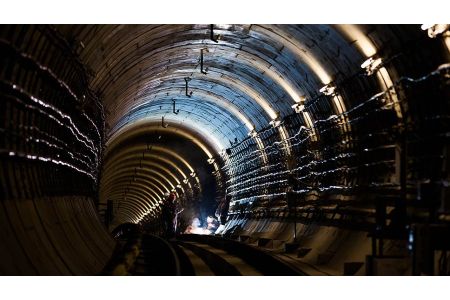
On the basis of the facts studied, it was proposed to build a railway for six years. The project cost was estimated at $ 3.5 billion. It is planned that the total length of the road in Armenia will be 305 km. It will have 86 bridges with a total length of 19.6 km and 60 tunnels with a total length of 102 km. Construction according to the presented program will be completed in 2022. It is assumed that the volume of freight by rail route from the station Gagarin (Gegharkunik region) to Agarak (Syunik region) will be 25 million tons per year. This road, which is 44 km shorter than the previously planned Gavar-Agarak section, will be connected to the existing railway network. The launch of the projects "Southern Railway of Armenia" and "Southern Highway of Armenia" (Iran-Armenia) was announced in January 2013. At the same time, a trilateral Memorandum of Understanding on regional cooperation aimed at the development of the Southern Railway of Armenia was signed between South Caucasus Railway CJSC, the Ministry of Transport and Communications of Armenia and the Rasia FZE company registered in the United Arab Emirates. After that, nothing more substantive about the "Rasia FZE" and the negotiations with it was announced.
Meanwhile, according to economic analysts of ArmInfo, the economic inefficiency of the construction of this road is justified by three major factors. This is, first of all, the deadlock of the Armenian railway and the impossibility of its direct access to the "Russian area", secondly, even with a hypothetical possible unblocking of the Abkhaz section of the railway in the future, the presence of the Iran-Armenia highway currently under construction will make the Iran-Armenia railway, due to its small length, ineffective. Thirdly, perhaps the most important factor is added to this initially low efficiency: the Astara-Rasht-Qazvin railway project implemented by Russian Railways. This is a transport corridor that connects the existing railways of Russia, Azerbaijan and Iran. The project was implemented within the framework of the North- South international transport corridor, the purpose of which is the integration of transport and information highways of Russia, Azerbaijan, Iran, India and Oman. According to analysts, the project of the Iran- Armenia railway is exclusively politically motivated and that is why during the last 5 years it has practically not been able to get off the ground.