


ArmInfo. Eurasian Development Bank (EDB) analysts point to a downward trend in the equilibrium real effective exchange rates of all the countries of the Bank's region of operations (except Armenia), which has intensified under the influence of the negative effects of the COVID-19 pandemic. This is stated in the bank's report "Assessment of Unobservable Economic Variables in EDB Member Countries''.
As in the situation with GDP, the coronavirus pandemic, according to the results obtained, currently has more impact on the real effective exchange rate gap than on its equilibrium growth rate. The devaluation of national currencies in the first half of this year led to their significant undervaluation in most of the EDB member countries. The Tajik somoni remains overvalued, the depreciation of which was small in March - June 2020, and the Armenian dram is close to equilibrium.
According to the authors of the report, before the start of the COVID-19 pandemic, the pace of equilibrium devaluation was declining, including under the influence of the registered growth in potential GDP.
In the first half of 2020, in most of the EDB member countries, the indicator slightly increased, which may be a consequence of the increased global uncertainty and turbulence in the global and regional financial markets caused by the COVID-19 pandemic. In Belarus, the equilibrium depreciation of the exchange rate increased by 0.3-1. 1% in relation to the pre-crisis level and reached 1.7-2.3% y -o-y, in Kazakhstan - by 0.4-0.9% (up to 3.1-3.5% y-o-y), in the Kyrgyz Republic - by 0.2-0.7% (up to 3.2-3.4%), in Russia - by 0.1-0.5% (up to 1.3-1.7% y-o-y). In Tajikistan, the indicator remained approximately at the level of the end of the previous year and amounted to 1.6% y -o- y. In Armenia, the trend towards equilibrium appreciation of about 0.5% y / y continues.
Further dynamics of equilibrium exchange rates largely depends on the development of the COVID-19 pandemic and the restoration of potential economic growth. In the event of a negative scenario, the trend devaluation of national currencies may continue to increase.
"If a repeated large-scale spread of the infection is prevented, and domestic government measures of economic support are effective, we should expect a renewed trend towards a slowdown in equilibrium depreciation in most countries in the EDB region," the report says.
To note, according to the Central Bank of Armenia, at the end of June 2020, the real effective exchange rate index (1997 = 100) was 149.64, and the nominal effective exchange rate index was 316.75, which compared with the May indicators (154.33 and 321.13 ) indicate weakening. Further in July, the real effective exchange rate index (146.54) continued to weaken, while the nominal effective exchange rate index at 318.03 demonstrated strengthening. But the annual (June 2020 to June 2019) and semi-annual growth of these indices means strengthening: in June 2019 - 145.41 and 302.85, and in December 2019 - 143.70 and 302.12.
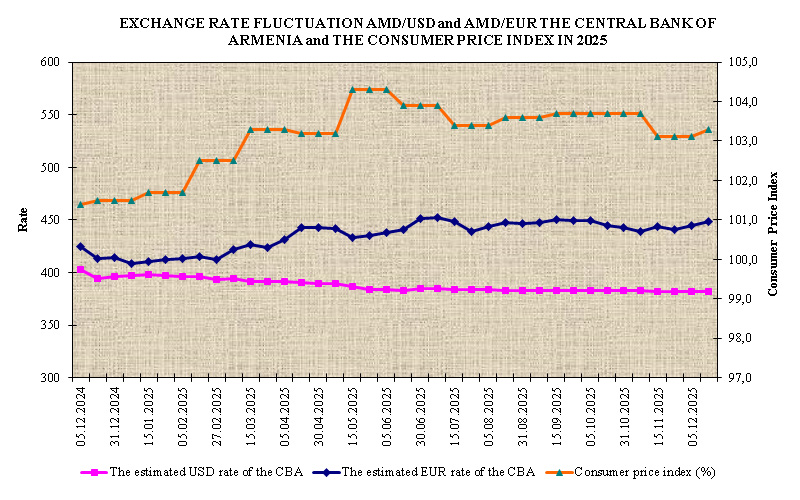
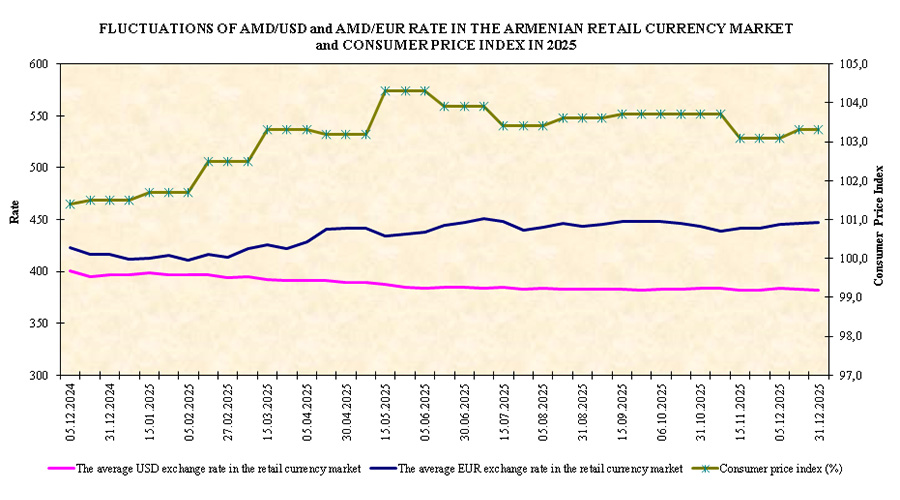
In the retail foreign exchange market of Armenia, by the end of June 2020, the AMD exchange rate against the dollar was 482.5 AMD / $ 1, against the euro - 542.5 AMD / 1 euro, and against the Russian ruble - 6.9 AMD / 1 ruble. In y-o-y semi-annual terms, the dram slightly depreciated against the dollar by 1.1-0.7% and against the euro by 0.3-2.2%, while appreciated against the ruble by 9.2-10.4%.